




 View Count:15
 Date:2026-10-29
Where does power adapter mould actually start? Not on the glossy flame-retardant housing but on the DC cable sheath, the plug overmould and the cable seat moulded inside the housing, and a buyer who finds it rejects the whole cable lot. The housing resin takes iHeir-IPL at 0.8%-1.0% of part weight, the sheath and overmould compound takes iHeir-JS117 at 0.5%-1.0%. This article covers both dosing stages, the flame-retardant compatibility check and the carton release test.
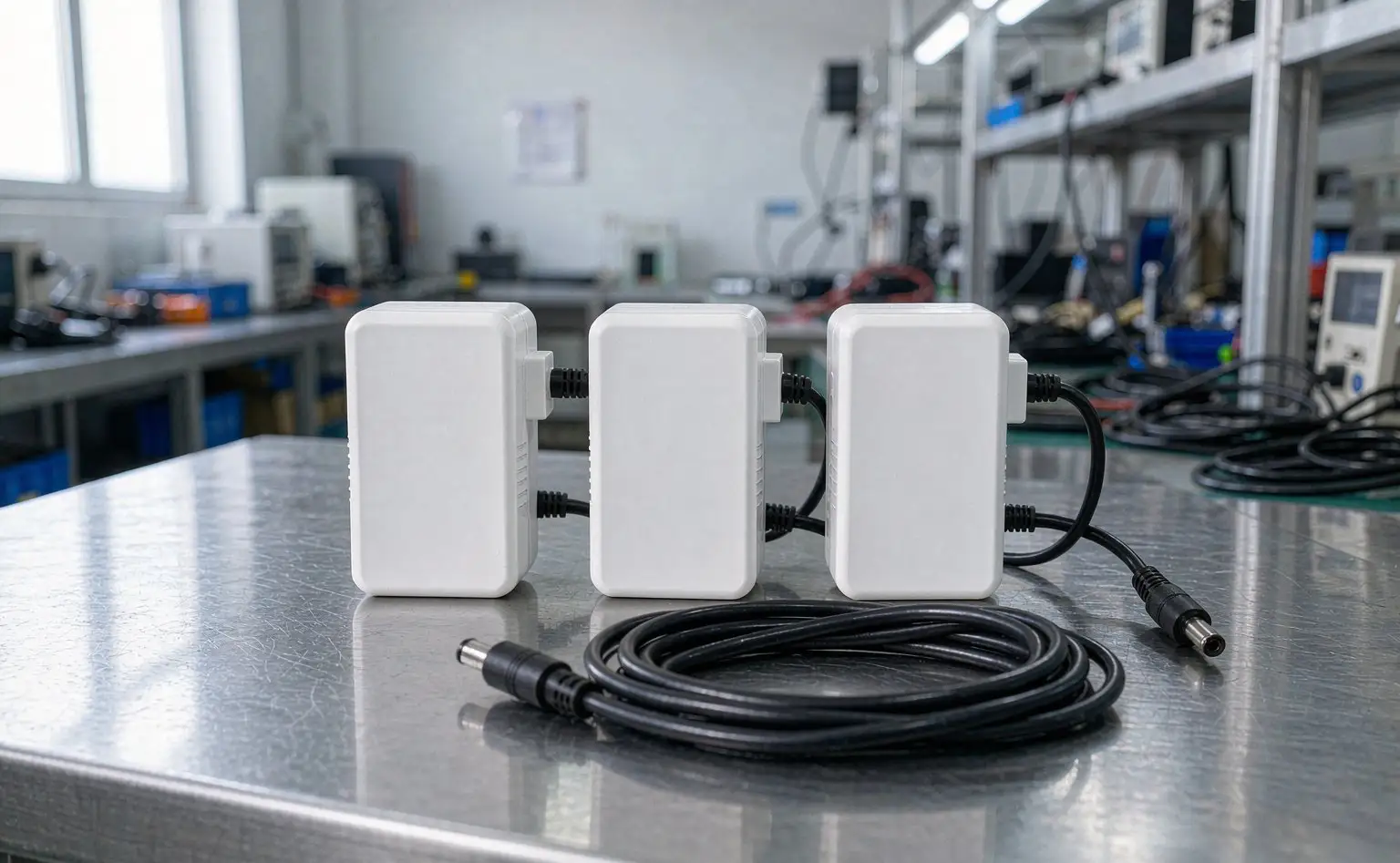
1. Mould starts on the sheath and the plug overmould
An adapter is three parts: the flame-retardant housing (a PC/ABS moulding), the DC cable (PVC sheath over copper), and the plug with its strain-relief overmould (PVC or TPE). Mould hardly ever grows on the glossy housing. It grows on the cable sheath, the plug overmould, and the cable seat inside the housing.
The materials supply what mould needs. A PVC sheath compound carries plasticiser, stabiliser and calcium carbonate filler, and those are carbon sources. TPE overmoulding is softer and rougher, so it holds moisture and dries slowly. The PC/ABS housing is dense, but condensation collects between the internal ribs and clip seats, and once that air is still, mould starts in those corners.
The second location is the finished-goods store and the sea leg: cables coiled tight in the carton, water condensing on the carton wall as the container cools at night, then running down the cable to the plug root. The third is regrind. Where the regrind ratio is high or drying is short, moisture flashes in the barrel and leaves micro-voids inside the moulding. Those voids are where mould settles, and no dose fixes a wet regrind.
2. Housing compound and sheath compound are dosed separately
The table lines up the housing, the sheath, the overmould and packing. The housing is dosed on part weight, the sheath on compound weight, and the stage differs: mixing before moulding for one, dry blend before extrusion for the other. The two compounds are never mixed.
| Part | Material | Product and level | Stage | Control point |
|---|---|---|---|---|
| Flame-retardant housing | PC/ABS pellets | iHeir-IPL 0.8%-1.0% of part weight | Mixing, with pellets and colour masterbatch | Dispersion, plus a flammability and colour trial |
| DC cable sheath | PVC compound (powder system) | iHeir-JS117 0.5%-1.0% of compound weight | Dry blend, high-speed mixer | 8-10 minutes mixing, original heat profile |
| Plug and strain relief | PVC or TPE | JS117 0.5%-1.0% of overmould compound | Dry blend or compounding | No change to the process temperature |
| Packing and export | Carton, liner bag | No additive, humidity control only | Packing and container loading | Carton vented, no carton against the wall |
Two boundaries. First, an antimicrobial does not replace drying: a cable coiled damp defeats any dose. Second, a treated housing does not mean a treated cable: two lines, two compounds, and treating one end leaves the other growing mould.
3. Housing: the inorganic antimicrobial goes in at mixing
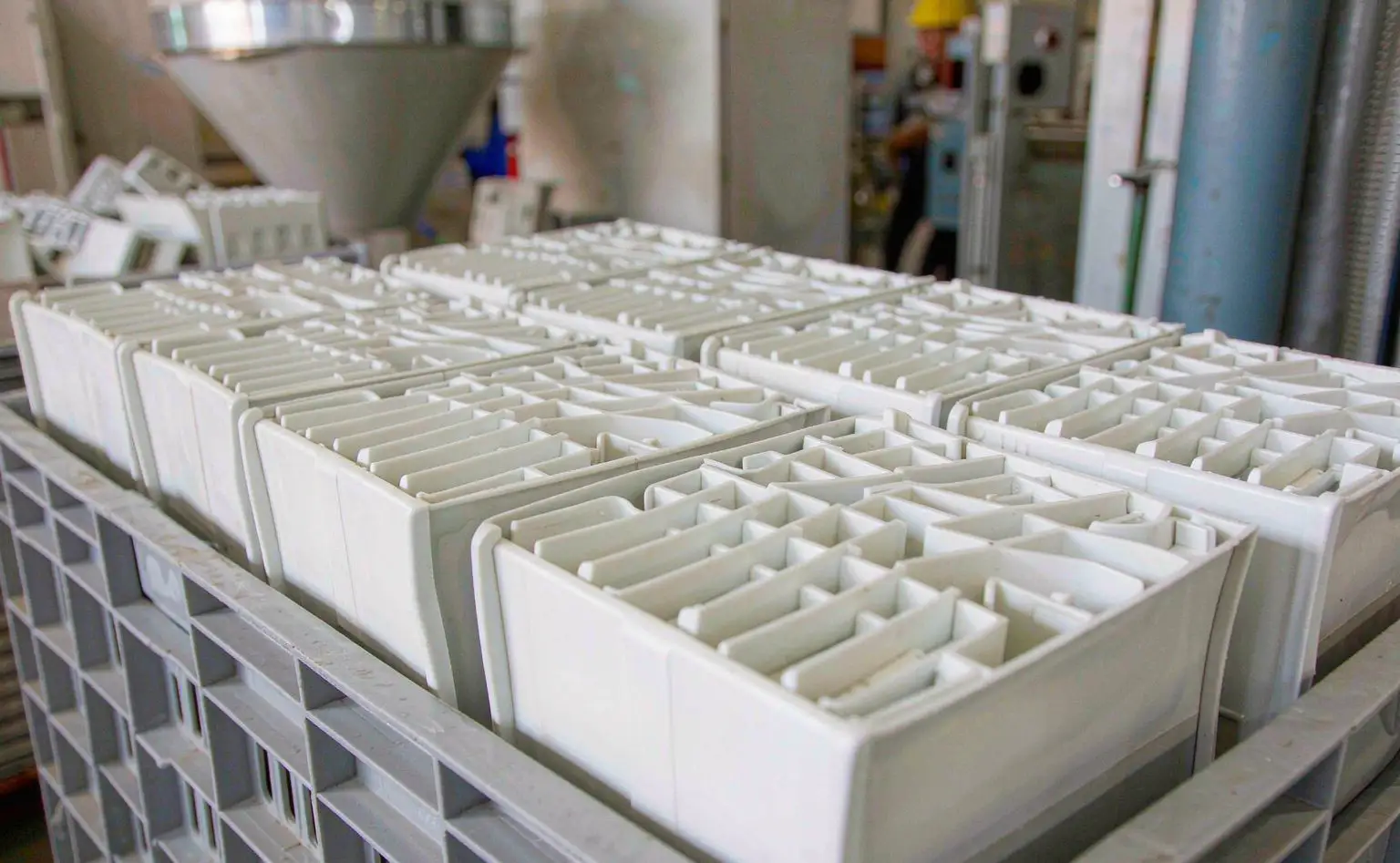
The housing uses iHeir-IPL inorganic plastic antimicrobial at 0.8%-1.0% of part weight. It is a white powder, whiteness above 90, mean particle size 1-2μm, heat stable to 300℃, supplied in 25kg fibre drums with a 12-month shelf life. The powder itself does not discolour, so white and light housings are fine.
It goes in at the mixing step: with the pellets, the colour masterbatch and the flame-retardant masterbatch into the high-speed mixer for 5-8 minutes, then straight to the moulding machine. For a family with many colours and short runs, make an antimicrobial masterbatch first and let it in by ratio — weighing is more accurate and the powder does not stratify in the hopper.
Three points to watch. Flame-retardant compatibility: flame-retardant PC/ABS usually runs a phosphorus or silicone system, so mould a trial shot first and confirm the flammability grade has not moved and the formulation on the yellow card has not been broken. Colour drift: an inorganic powder shows first on white housings, so keep a colour plaque per batch. Dispersion: pre-blend with a scoop of pellets or go the masterbatch route.
Do not drop below 0.8%. An inorganic antimicrobial works by slow release at the surface, and a low dose cannot hold an effective surface concentration through a year of storage. Above 1.0% the cost is hard to justify and impact strength starts to feel it. If cost is the pressure, attack the regrind ratio and the drying time first.
4. Cable sheath: how the powder is dry-blended
The sheath uses iHeir-JS117 plastic anti-mould powder at 0.5%-1.0% of compound weight. Active content is above 97%, bulk density 380 kg/m³, D50 around 110μm. It is insoluble in water, so a sheath in a damp environment does not lose the additive to leaching, which is what matters on a long sea leg.
The stage is the dry blend: a PVC sheath compound is a powder system, so JS117 goes in with the other powders into the high-speed mixer for 8-10 minutes. Keep the heat profile as it is; raising the temperature to chase dispersion only makes the blend cake and the extruder feed run uneven. For TPE overmoulding or bought-in pellets, switch to compounding on a twin-screw, and never hand-scoop powder into the machine hopper.
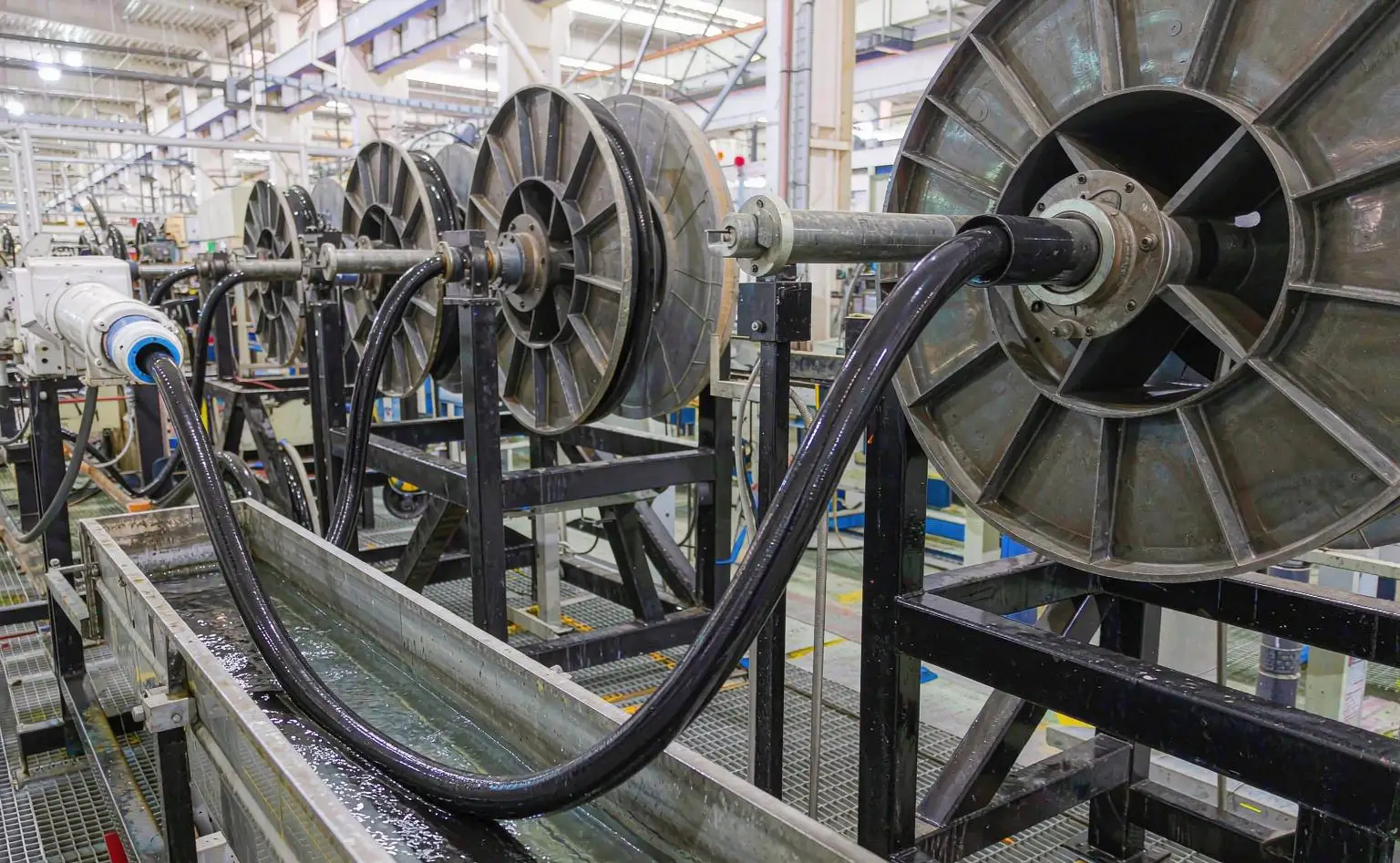
The extrusion temperature needs no adjusting: run the window your PVC sheath already uses, typically 165-185℃ on the barrel with a slightly hotter head, and JS117 decomposes far above that. What does need watching is the cooling trough. Dirty or hot water leaves a film on the sheath, and once it is wound into a coil that film has nowhere to go. Change the trough water daily, fit a filter, and blow the cable dry before take-up.
5. Finished-goods store and export: carton sampling and damp-heat release
At packing, three things: coil the cable so it is not crushed tight and leaves a vent path; keep some headspace in the liner bag; keep cartons off the floor and off the wall, and hold the store at 60% RH or below. In coastal warehouses run dehumidifiers rather than opening windows on a rainy day.
Sample every batch at three levels. Appearance: cable surface, plug root, the cable seat inside the housing. Performance: antibacterial rate to GB/T 20944.3 or ISO 22196, mould resistance to ASTM G21 or GB/T 1741. Whole carton: 30 days at 30℃/85% RH, then open and inspect the outer cable and the plug overmould. The moisture logic matches condensation in sea freight containers: water runs down the wall, and the cartons against it go first.
One word on selection: the housing is a moulding and takes the inorganic antimicrobial, the sheath is an extrusion and takes the powder fungicide — do not swap them. IPL will not disperse in a PVC powder system, and a flame-retardant housing needs surface antibacterial performance, where the inorganic route is more reliable. Masterbatch versus direct powder is covered in antimicrobial for engineering plastics.
6. Questions on the yellow card, colour and mouldy lots
Q: Does adding an antimicrobial mean re-testing the UL yellow card? The card records the material formulation and flame-retardant system, and adding an inorganic antimicrobial is a formulation change. Ask the compound supplier whether the additive is already covered; if not, run the confirmation before a buyer audit finds it.
Q: Will IPL yellow a white housing? IPL is a white powder and does not itself discolour. What yellows a housing is a high regrind ratio, long residence time in the barrel and short drying. Check those three before blaming the additive.
Q: Can a cable whose sheath already has mould be saved? Surface bloom can be wiped off, and after wiping the insulation and withstand tests must be re-run. Where a black line shows when you strip the sheath, cut the cable and re-run it. Any reworked batch needs the dry blend and the blow-dry again.
Four points to take away: dose the housing at mixing with iHeir-IPL 0.8%-1.0% of part weight, with a flammability and colour trial first; dose the DC cable and plug overmould at the dry blend with iHeir-JS117 0.5%-1.0% of compound weight, 8-10 minutes at the original heat profile; change the cooling trough water daily and blow the cable dry before take-up; hold the store below 60% RH and release on 30 days at 30℃/85% RH.


