




 View Count:25
 Date:2026-11-17
How should welding machine mould be treated? The additive goes into the case resin at compounding, the coils are baked hard after varnish dipping before fitting, and the carton carries vapour-phase sheets. Crates open abroad to a grey bloom on the plastic and white fuzz on the coil ends. The route is 0.5%-1.0% iHeir-JS117 plastic anti-mould powder by finished weight, coils baked through before fitting, and 0.1-0.2 g iHeir-D gas-phase sheets per carton. This article gives the dosing point, the drying criteria and the sheet count.
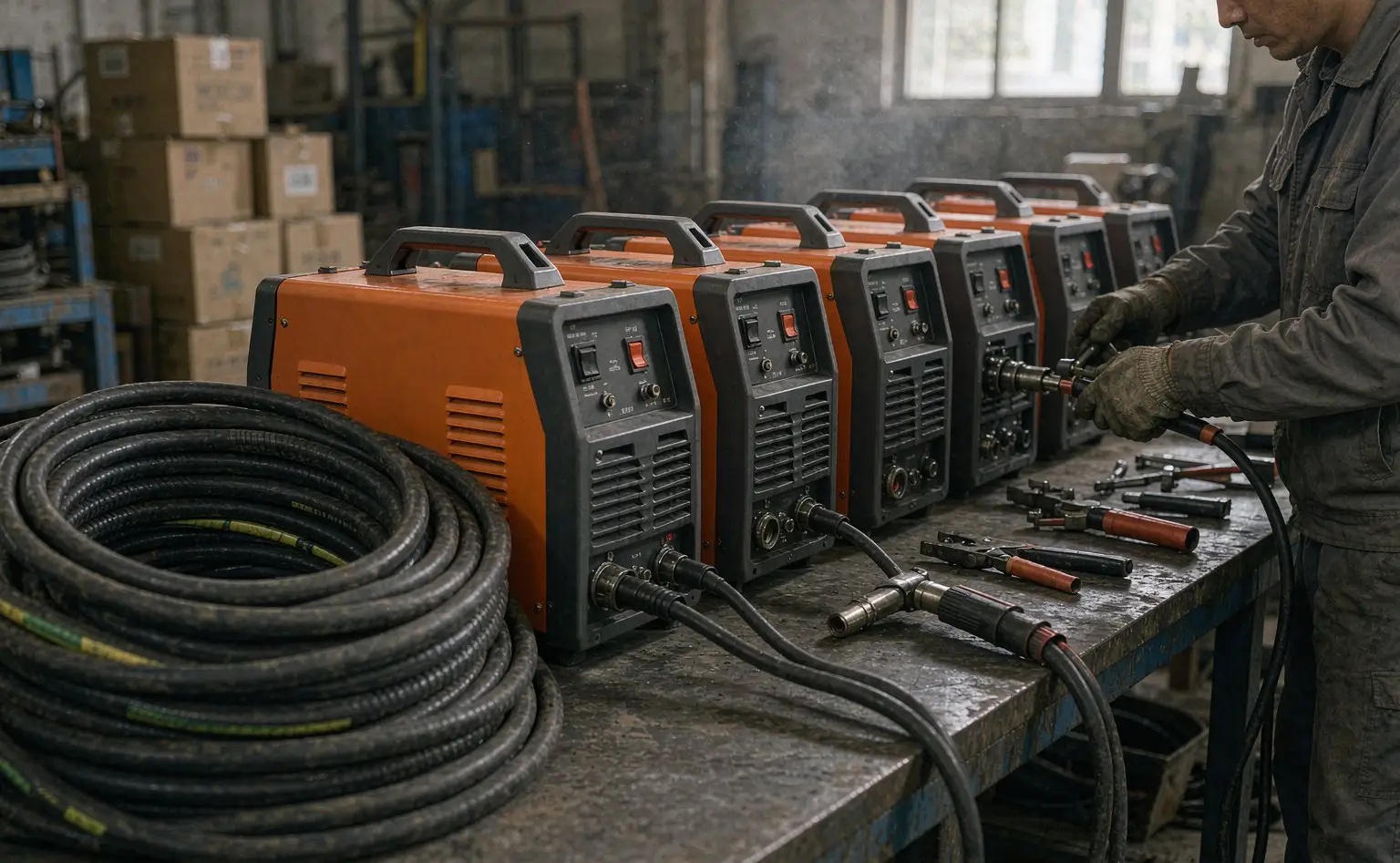
1. Where welder mould comes from: case, coils, sheet metal, packing
An inverter welder is a moulded front, a sheet-steel back, transformer and choke coils, a heat sink and a fan, run through dipping, baking, assembly, a test weld and packing.
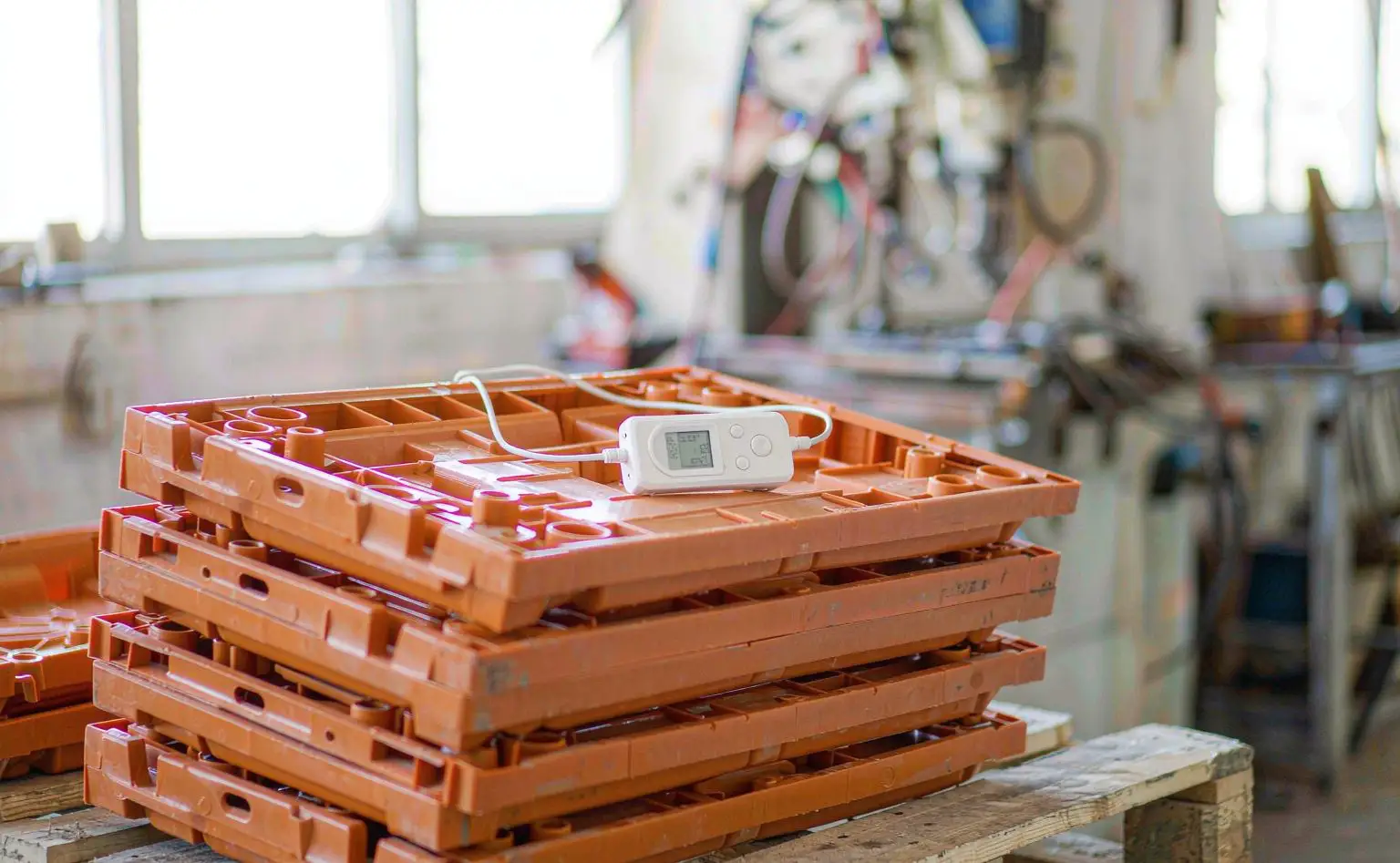
The moulded case comes first. The front is usually ABS or a PC/ABS blend with knobs, a window and louvres; the skin is dense but the internal ribs are thin and catch condensate, and one day-night swing in the store fogs the inner wall. The plastic feeds nothing; growth sits on release agent, dust and fingerprints.
The coils come second. A short bake skins the varnish over while the inside stays wet, sealing water between layers, and the cooling winding draws room air back in. Fuzz on a coil holds that water, pulls insulation resistance down and ends in a turn-to-turn short.
Sheet metal and packing come third. The back and chassis are powder-coated steel, thin at edges and screw holes, and cartons at 12%-14% moisture are dry by normal standards yet still fill a container over a month at sea.
2. How the case resin is dosed: at compounding, by finished weight, well dispersed
This goes in at compounding; dosing at the moulding machine is too late and never even.
Where in the line. Feed it with the pellets at the main throat of the twin-screw compounder on a loss-in-weight scale, and run the front case and panel in one lot where they share a grade.
How much. iHeir-JS117 is recommended at 0.5%-1.0% on the weight of the finished part. A thin-wall front case is covered at 0.6%-0.8%; a panel with a display window facing the room takes 0.8%-1.0%.
Dispersion. Bulk density is near 380 kg/m³ and D50 around 110 μm, so dry blending clumps it: pre-mix three to five minutes with a little resin powder before the main feed.
What it will not do. In this range it barely touches impact strength or gloss on ABS, though pale colours need a chip and flame-retardant grades a bench trial.
3. How the coils are treated: dip properly, bake hard, do not fit hot
This stage decides the outcome: the film is the barrier, provided it is baked through.
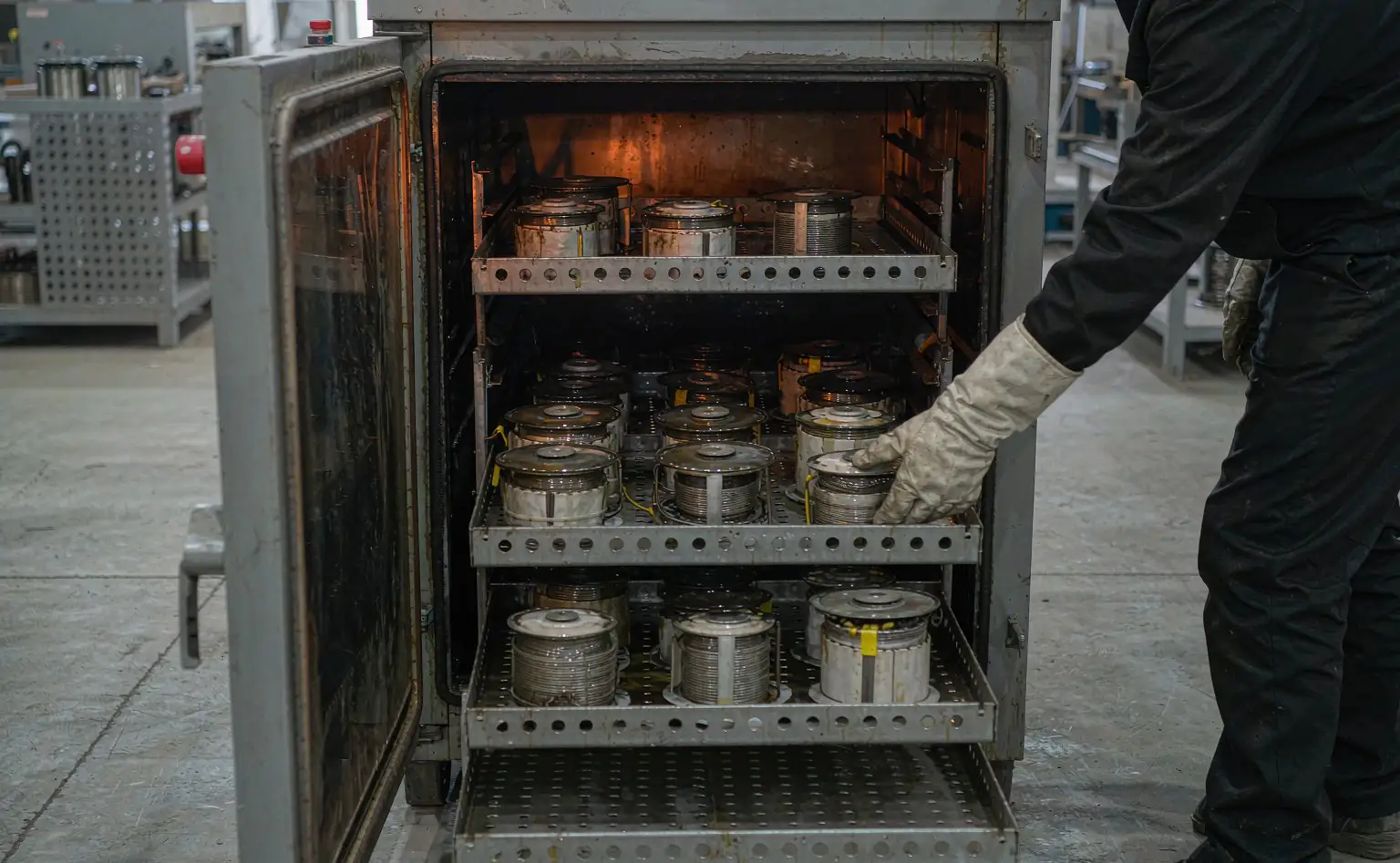
Dry before dipping. Put wound coils in an oven at 100-110℃ for two to four hours. A damp coil lets varnish creep into wet voids, and the voids left after cure hold water.
Dip and drain. Follow the varnish maker’s viscosity and dwell, typically ten to twenty minutes in the tank and fifteen to thirty draining; varnish that stays put cures into a thick block that shrinks unevenly and cracks.
Bake criteria. Ramp in two stages: 80-90℃ for one to two hours to drive solvent, then 130-140℃ for two to three hours to cure. Judge on result, not the clock: weight loss under 0.5% between two weighings, or a cold resistance of 100 MΩ or better. Cool below 50℃ before assembly.
Does the coil end need its own treatment? No. An intact film is the best barrier there is. For a humid export order, raise the sheet count instead. The same logic on motor end caps is in motor end caps and foam inserts.
| Part | Material | Product and level | Stage | Control point |
|---|---|---|---|---|
| Front case and panel | ABS / PC-ABS | iHeir-JS117 0.6%-1.0% on finished weight | Compounder feed | Pre-mix 3-5 min, loss-in-weight metering |
| Transformer and choke coils | Enamelled wire, varnish | No additive, pre-bake, dip, two-stage bake | Dipping and cure | Cold insulation resistance at 100 MΩ or better |
| Back and chassis | Powder-coated steel | No additive, pretreatment and cure | Coating | Film intact at edges and screw holes |
| Shipper carton | Corrugated board | iHeir-D 2-4 sheets (0.1-0.2 g each) | Before sealing | Upper inner wall, 5 cm off the case |
| Container | 20 ft / 40 ft | Carton sheets only, nothing extra in the box | Loading | Doors closed first, vent left open |
One boundary. Resin at compounding, varnish and bake at winding, sheets in the carton; paper cannot rescue a bad compound.
4. Sheet metal and the torch end: an intact film beats any additive
Back, chassis and brackets take no additive; they rely on pretreatment and coating.
Pretreatment. Keep the degreaser clean and the phosphate layer even, and blow liquid out of welds and screw holes; powder over residual water blisters during cure and starts rust.
Powder cure. Work inside the powder maker’s window, typically 180-200℃ for ten to fifteen minutes, and measure the real spread in the oven.
Torch fittings. Fit bare copper studs the day they are cleaned, passivate with a neutral agent and skip oily rust wax.
5. Packing and container: sheet counts and an air gap
Packing is the last chance to make up for anything upstream.
Let the machine cool. A warm machine condenses the moment it meets a cool carton, so hold it in packing until the case no longer feels warm.
Sheet count per carton. Two for a small single-phase machine, three to four for a package with a feeder or cooler, at 0.1-0.2 g each; fix them on the upper walls of two sides, 5 cm clear of the case and never pressed to the panel, because a tight fit protects a patch only.
The corrosion limit. iHeir-D can corrode poor-quality metal in damp conditions, so where the studs or copper busbars carry thin plating, run a seven-day bag test at three times the normal dose; if the copper darkens, move the sheet to the wall with neutral paper in between.
Container. No sticks are needed: the carton is already dosed, and wall condensation is handled by closing the doors first and leaving a vent. Heat-treated cases still get a moisture check, and anything above 20% is swapped. Comparable practice for packaged electrical gear is in switchgear cabinet supports and drying rods.
6. Questions from the line
Q: Does the case additive affect the flame rating?
A: At 0.5%-1.0% it hardly moves most ABS systems, but flame-retardant grades are sensitive. Run a UL 94 and glow-wire chip test, and file the change with the body where the part is listed.
Q: Can the coil bake be judged on time alone?
A: No. Oven spread reaches 15-20℃, so after the same three hours the front row is dry and the back is not. Sample two or three coils by weight loss.
Q: The cases are already moulded, can anything be added now?
A: A surface coat is a stopgap, not a fix. The durable route is back into the compound for the next run, and vapour-phase sheets in the carton to cover storage and the sea leg.
Q: How many sheets does a carton need?
A: Read it off internal volume and time sealed: two for a small machine, three to four for a package, at 0.1-0.2 g each; add one for a voyage over 45 days.
Four closing points: feed 0.5%-1.0% iHeir-JS117 on finished weight at the compounder throat, pre-mixed for three to five minutes and metered on a loss-in-weight scale; pre-bake wound coils at 100-110℃ for two to four hours, dip, then ramp 80-90℃ before curing at 130-140℃, and fit only when cold resistance reads 100 MΩ or better; leave the back and chassis to pretreatment and powder cure with intact film at edges and screw holes; bring the finished machine to room temperature before packing and put two sheets in a small carton or three to four in a package at 0.1-0.2 g each, 5 cm off the case, with a three-times-dose bag test first on thin-plated copper. Mould resistance can be verified to ASTM G21 and GB/T 1741, and lead times are on the iHeir-JS117 product page.


