




 View Count:15
 Date:2026-11-20
How is drone mould handled? Start with the shell compound: a housing with no additive can only be wiped, and the spots return because the packing never changed. Dose the shell pellets with iHeir-IPL at 0.8%-1.0% of part weight at mixing, let the battery cool and dry the bay after a flight, then leave one iHeir-D sheet at 0.1-0.2 g in the bay and one in the case. A drone is rejected on appearance, so one spotted shell sends the batch back for re-inspection. This article covers dosing, the bay and the packing.
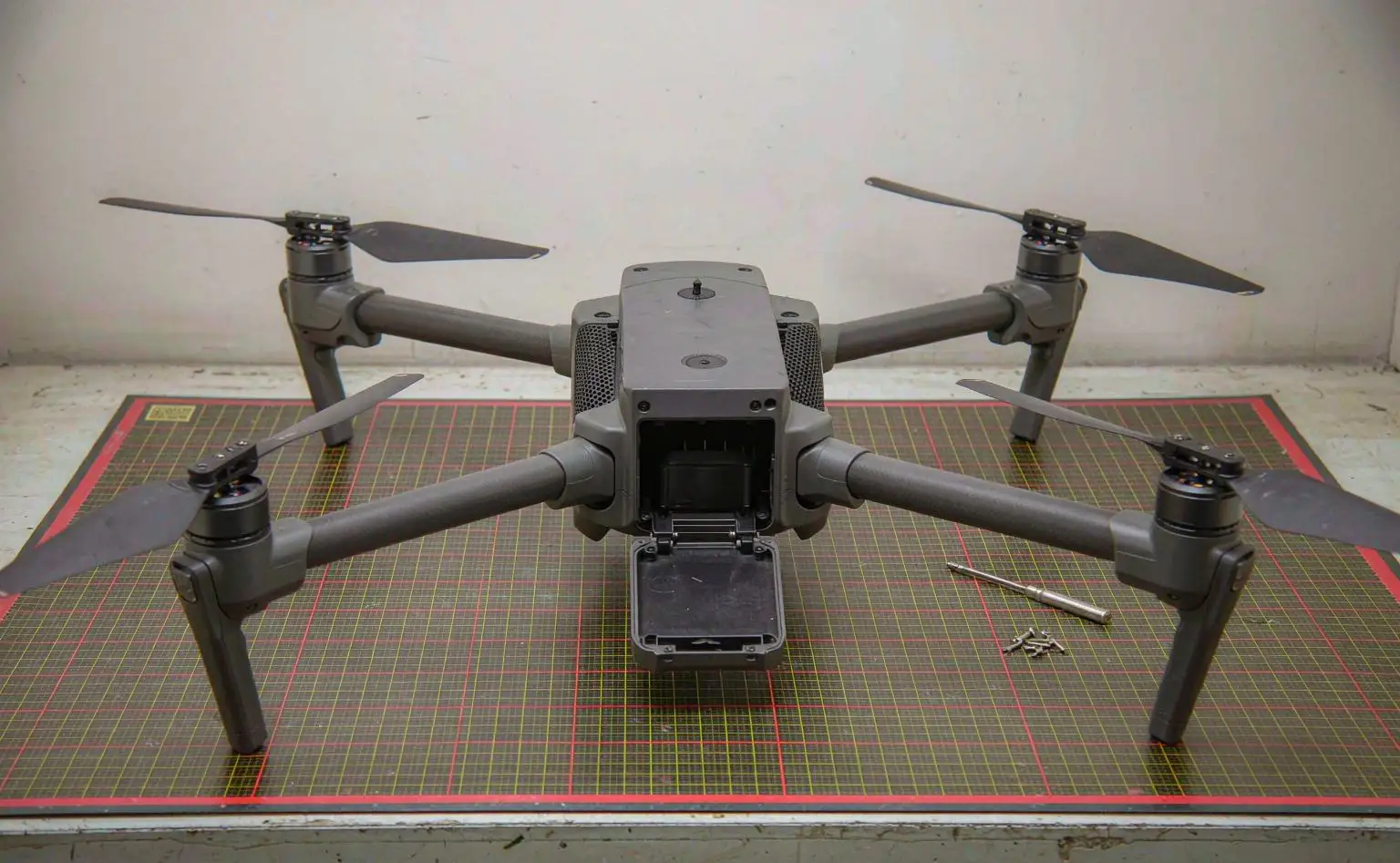
1. Where it grows: shell compound, battery bay, case
The compound carries no protection of its own. Housings are usually PC, PC-ABS or glass-filled nylon, and the material has no antimicrobial action. Sweat at assembly, rain on a test flight and store humidity land on the surface, and the growth colonises the compound face. Wiping clears it and it comes back, because the substrate has nothing in it.
The battery bay condenses. After a flight the pack is warmer than ambient, and putting it back into the bay means vapour condenses on the wall and the pack as it cools. The cover closes on that water, and spots and smell follow within days.
The case foam holds it. Hard cases are lined with EVA or PU foam, and an open-cell foam that has taken water dries very slowly. With no sheet in the case, the foam is a permanent damp pad.
Telling them apart. Spots on plastic are grey-green or black, in patches with soft edges, and leave a slight residue on wiping. Whitening and powdering is moulding stress or ageing, not growth. Where both appear, wipe the growth first and then judge the material.
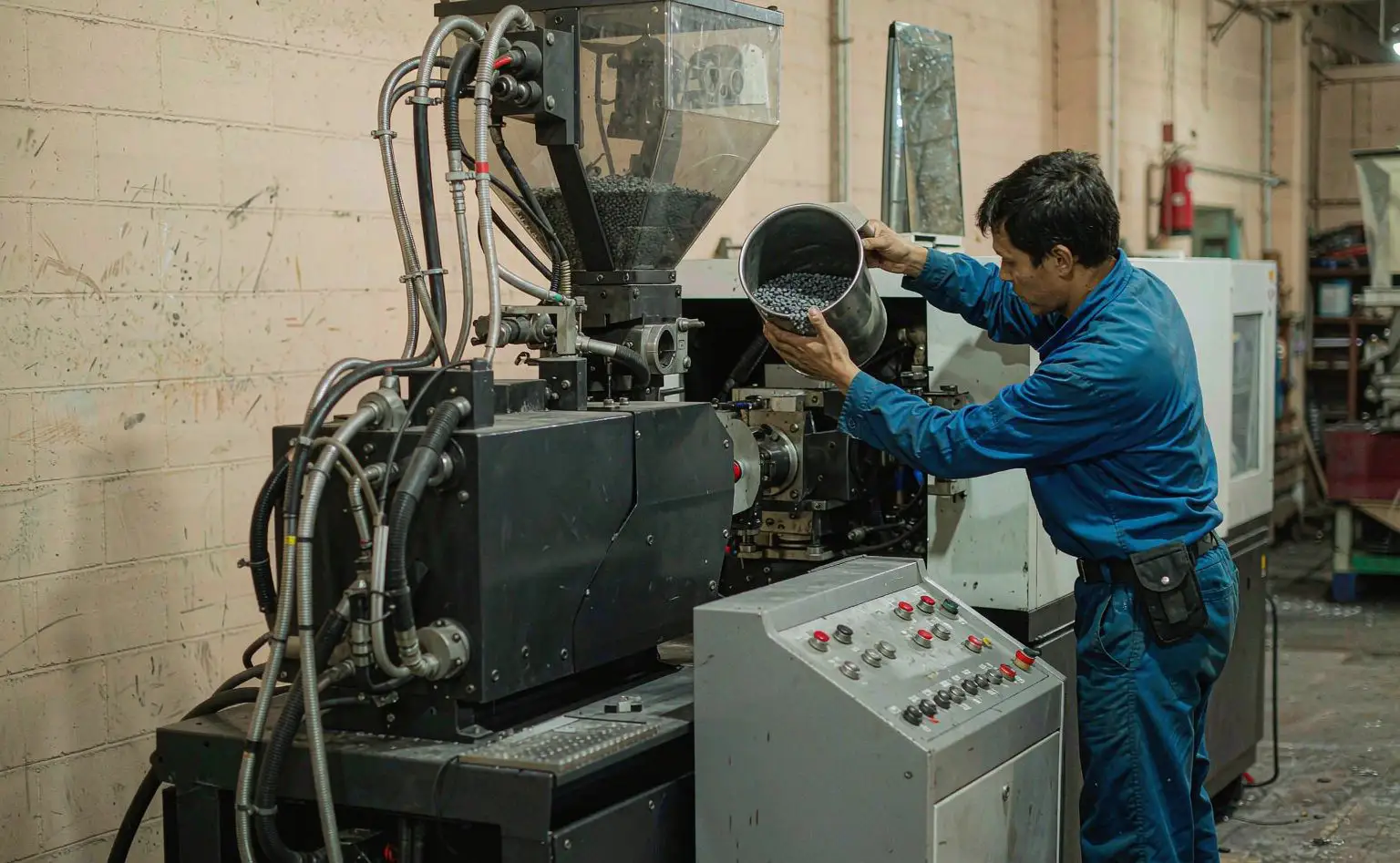
2. Shell pellets: dosing at 0.8%-1.0%
Dose on part weight. iHeir-IPL goes in at 0.8%-1.0% of finished part weight, at the upper end for thin walls and pale colours. Once the recipe is set for a mould, keep it fixed rather than adjusting by feel.
Direct or via masterbatch. Small runs can blend straight into the pellets before the hopper. Larger runs do better with a 10%-20% masterbatch diluted down, which disperses more evenly and stops the powder separating in the hopper.
Dry before blending. PC and nylon take up moisture, and pellets moulded damp carry water inside the part that only shows up after assembly. Dry to the material process card, then blend.
No visible change. IPL is 1-2 μm with whiteness above 90, so dark grey and black housings look identical and pale ones do not yellow. Antimicrobial rate is 99.99% or better and can be verified to ISO 22196 and GB/T 20944.3.
Packaging and storage. 25 kg fibreboard drums, sealed and dark at ambient for 12 months. Tie the inner liner after opening and discard anything caked.
| Part | Material | Product and level | Stage | Control point |
|---|---|---|---|---|
| Upper shell, arms | PC / PC-ABS / glass-filled nylon | iHeir-IPL 0.8%-1.0% of part weight | Mixing or masterbatch let-down | Pellets dried, evenly blended |
| Battery bay | Plastic cavity and pack | iHeir-D 0.1-0.2 g per sheet | After the pack cools | Sheet on the wall, off the contacts |
| Carry case | Hard shell and foam | iHeir-D one sheet per case | Under the foam | Foam dried, liner film inside |
| Export carton | Outer carton | Sheets by case count, rods in the container | Packing and loading | Shell off the carton wall |
One boundary. IPL handles the organisms in the plastic, the process handles water in the bay, gas-phase sheets handle the air in the bay and the case. A dosed compound still fails if the bay goes into the case wet.
3. Battery bay: cool, wipe, then sheet
Do not case it hot. A pack straight off a flight goes back into the bay warm, and closing the cover traps the vapour. Leave it 20-30 minutes in air until it is back at ambient.
Wipe the wall. Dry the bay wall and the area around the contacts with a dry cloth before the pack goes in. Do not use wet wipes, which add more water than the condensation did.
Sheet on the wall, off the contacts. One iHeir-D sheet at 0.1-0.2 g taped to the bay wall or the inside of the cover. Keep it off the cell contacts and the vent holes; the product page warns of corrosion on poor-quality metal parts in damp conditions, and contacts are exactly that.
Run a compatibility test. Three times the normal rate, paper in between, closed for a few days, then check the pack casing for tackiness and the contacts for dulling. Packs are sensitive parts, so this is not a step to skip.
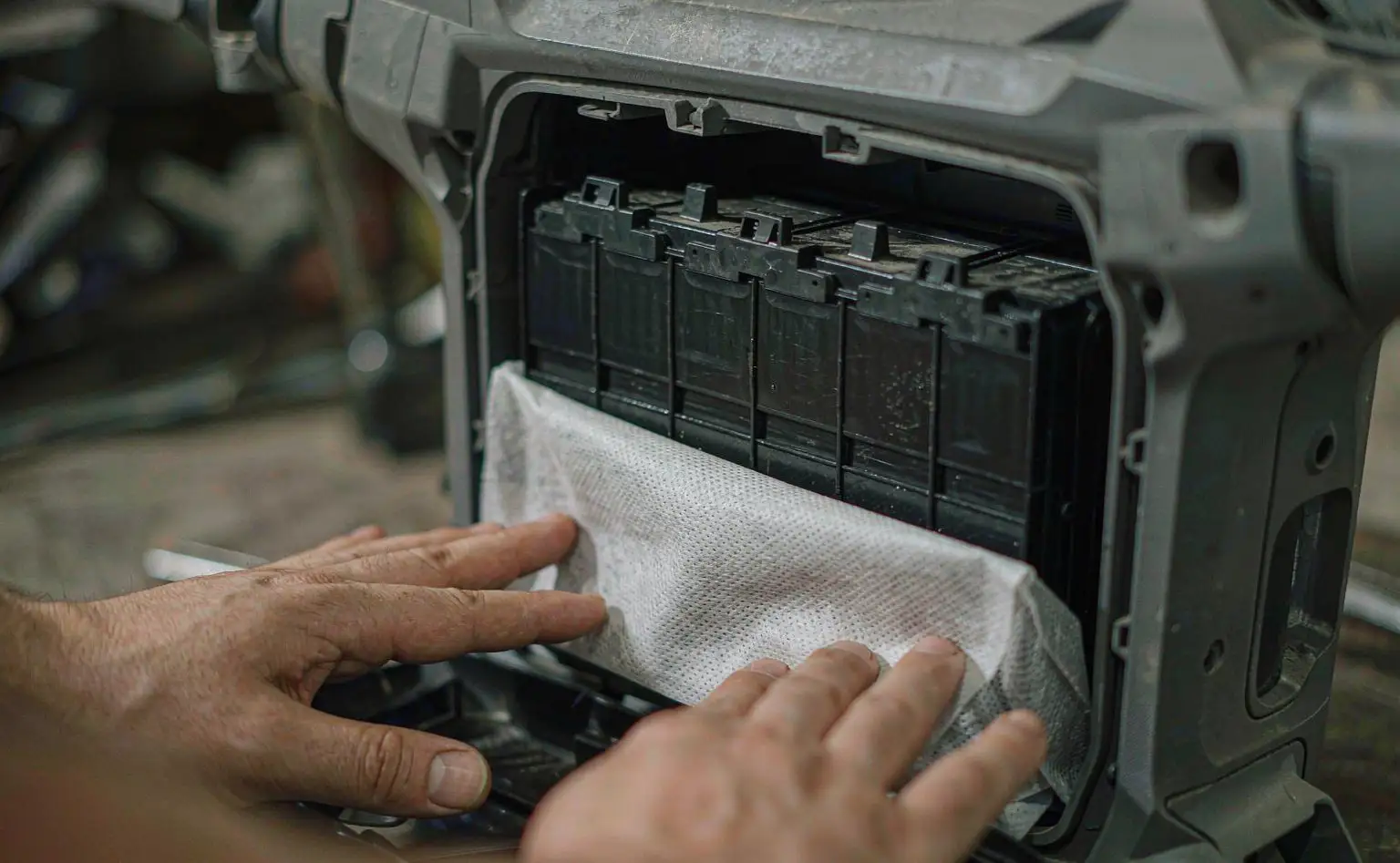
4. Case and packing: dry the foam first
Control foam moisture. Test incoming EVA and PU foam and dry anything above spec to below 8% before use. Do not stack cut foam on the floor; pallet it and keep it off the wall.
One sheet per case. Put one 0.1-0.2 g sheet under the foam or inside the lid. A larger case with more lining takes one more, not a multiple of the drone count.
Liner film inside the carton. Export cartons take a barrier film with a few pin holes for venting, and the shell stays 2 cm off the carton wall.
Manuals and labels too. Manuals, warranty cards and stickers all take up moisture. Dry them before packing or switch to a moisture-resistant stock; when these spot, the customer sees it the moment the box opens.
5. Export and storage
Hold the store dry. Below 60% RH, pallets 10 cm off the floor and 20 cm off the wall, with a dehumidifier through the wet season rather than open windows.
Check the container. Reject boxes with damp floors or walls, wipe up standing water and ventilate for half an hour before loading.
Rods for long voyages. Past 30 days at sea, hang desiccant rods by container size and keep the sheets in the cases. Comparable plastic housing work is in electric hammer housing injection and export packing, and a housing with silicone parts in smart lock housing and silicone keypad.
Incoming check. Ask the customer to look at the bay and the shell seams first; spots there mean the sheets were short or the pack went in warm.
6. Questions from buyers
Q: With the additive in the compound, do we still need sheets?
A: Yes. IPL works on the plastic surface and cannot control the air in the bay or the case, so both lines run together.
Q: Does the additive affect strength or colour?
A: At 0.8%-1.0% evenly dispersed the mechanical effect is small, and IPL is an inorganic carrier with whiteness above 90, so pale parts do not yellow.
Q: Is a sheet in the battery bay safe?
A: On the wall, clear of the contacts and vents, after a compatibility test. Do not press it onto the cells or block the vents.
Q: Does the case really need a sheet?
A: Recommended. Foam that has taken water dries very slowly, so an unsheeted case keeps feeding moisture. One sheet at 0.1-0.2 g per case is the working figure.
Dose the shell pellets with iHeir-IPL at 0.8%-1.0% of part weight at mixing or through a masterbatch, with the pellets dried first; let the pack cool 20-30 minutes, wipe the bay, sheet the wall clear of the contacts after a three-times compatibility test; dry case foam below 8% and put one 0.1-0.2 g sheet in each case; hold the store below 60% RH and hang container rods by container size. Antimicrobial performance can be verified to ISO 22196 and GB/T 20944.3, and samples and lead times are on the iHeir-IPL product page.


