




 View Count:30
 Date:2026-10-16
Which step should stop plastic basin mould? The mixing step, because a basin is a single PP part and the agent lasts longest inside the material. Basin walls pressed together in a stack barely ventilate, and container condensation leaves spots on the rim and the base once the goods reach the buyer. Dark basins take iHeir-ECO plastic antimicrobial agent at 0.3%-0.5% of PP weight, light basins take iHeir-IPL inorganic plastic antimicrobial agent at 0.8%-1%. This article explains the split by colour and the storage rules.
1. Plastic basin mould: why one masterbatch step is enough
A basin is simpler than most plastic parts: one body and one rim, no assembly and no lining, the whole thing a single moulding. The simpler the part, the more the protection should go into the material once — mixed with the masterbatch, the agent travels with the melt through the base, the wall and the rim, and no later spray or dip is needed.
A spray applied after moulding is especially poor value on a basin. Basins ship in stacks, so packing, handling and nesting rub the surfaces together and the coating wears off quickly; in use they are washed again and again, and the coating has even less chance to stay. Dosed into the material, a scratched cross-section is still protected, which is what a thin-wall everyday part like this really needs.
What has to be settled first is the choice of agent. Basins are mostly PP, and white and dark parts do not ask the same thing of an additive: white and light parts fear yellowing above all, while dark and ordinary parts care more about dispersion and cost. Pick the right type and one step is enough; mix the two or pick the wrong one and problems appear instead.
2. Colour and duty: the two plastic antimicrobials compared
The table lines up the colour and duty, the agent type, the dosing operation, the figure and the points to watch, as a first draft of the selection and process sheet.
| Colour and duty | Agent type | Where it is dosed | Figure or criterion | Points to watch |
|---|---|---|---|---|
| Ordinary and dark basins | Organic, iHeir-ECO | Into the mix, blended with the granules before moulding | 0.3%-0.5% of PP weight | Keep the melt below 320 degrees; mix well before forming |
| White and light basins | Inorganic silver, iHeir-IPL | Into the mix, blended before moulding | 0.8%-1% of compound weight | Whiteness above 90, light colours stay true; tolerates 300-320 degrees |
| Stacking and store | Finished basin | Humidity control, off wall and floor, lots kept apart | Relative humidity below 60% | Wall against wall collects moisture first; add desiccant to export cartons |
Three rows make the split clear: white and light parts run on the inorganic grade, chosen for colour stability and heat tolerance; ordinary and dark parts run on the organic grade, chosen for dispersion and cost; and the last row is the stacking and storage that backs both up. Once the choice is made, only the dosing position and the storage remain.
3. Ordinary and dark basins: ECO at 0.3%-0.5% of PP weight
Ordinary and dark basins take iHeir-ECO plastic antimicrobial agent at 0.3%-0.5% in a PE or PP system, counted on the weight of the compound rather than the finished basin. It is a grey-white powder of 100% purity, supplied as a masterbatch and added at the plasticising or mixing stage, compatible with ordinary injection moulding and needing no extra equipment.
Its dispersion and its cost suit this grade best: the agent runs through the whole basin, so the thick-to-thin transition between base and rim is evenly covered, and a dark part has no colour worry to begin with. Watch the processing temperature as on any plastic part — thermal stability reaches 240 degrees and the melt should stay below 320 degrees, because an excessive temperature drives the active off and wastes the dose. How to choose between masterbatch and powder is set out for plastic anti-mould masterbatch or powder.
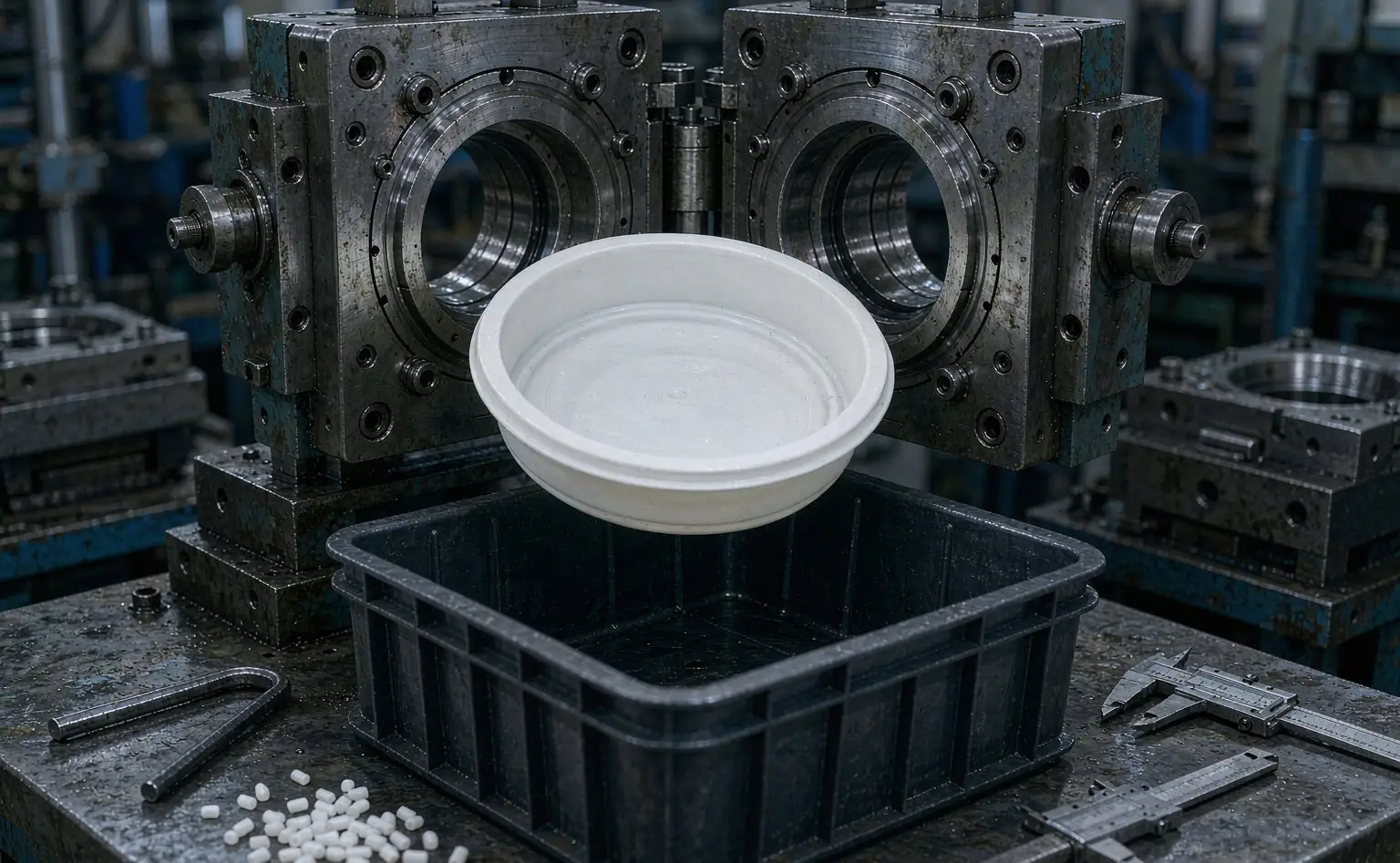
4. White and light basins: IPL at 0.8%-1%, heat resistant and colour true
White and light basins switch to iHeir-IPL inorganic plastic antimicrobial agent at 0.8%-1%, counted on the weight of the compound. It is a silver-ion inorganic agent, a white powder with a whiteness above 90 and an average particle size of 1-2μm, and after surface treatment it is compatible with a range of resins and has little effect on the processing performance of the material.
There are two reasons to switch. First, colour stability: the inorganic grade is the friendlier choice for light parts, so white and cream basins are less likely to yellow over time. Second, heat tolerance: it withstands 300-320 degrees, which suits lines with a narrow moulding window or a hot zone near the die, and it resists acid, alkali and washing, with an inhibition rate above 99.99%. One caveat: its dose is higher than the organic grade, so the cost has to be recalculated at 0.8%-1%, and the fine particles with their large surface area need a long enough mixing time or they cluster.
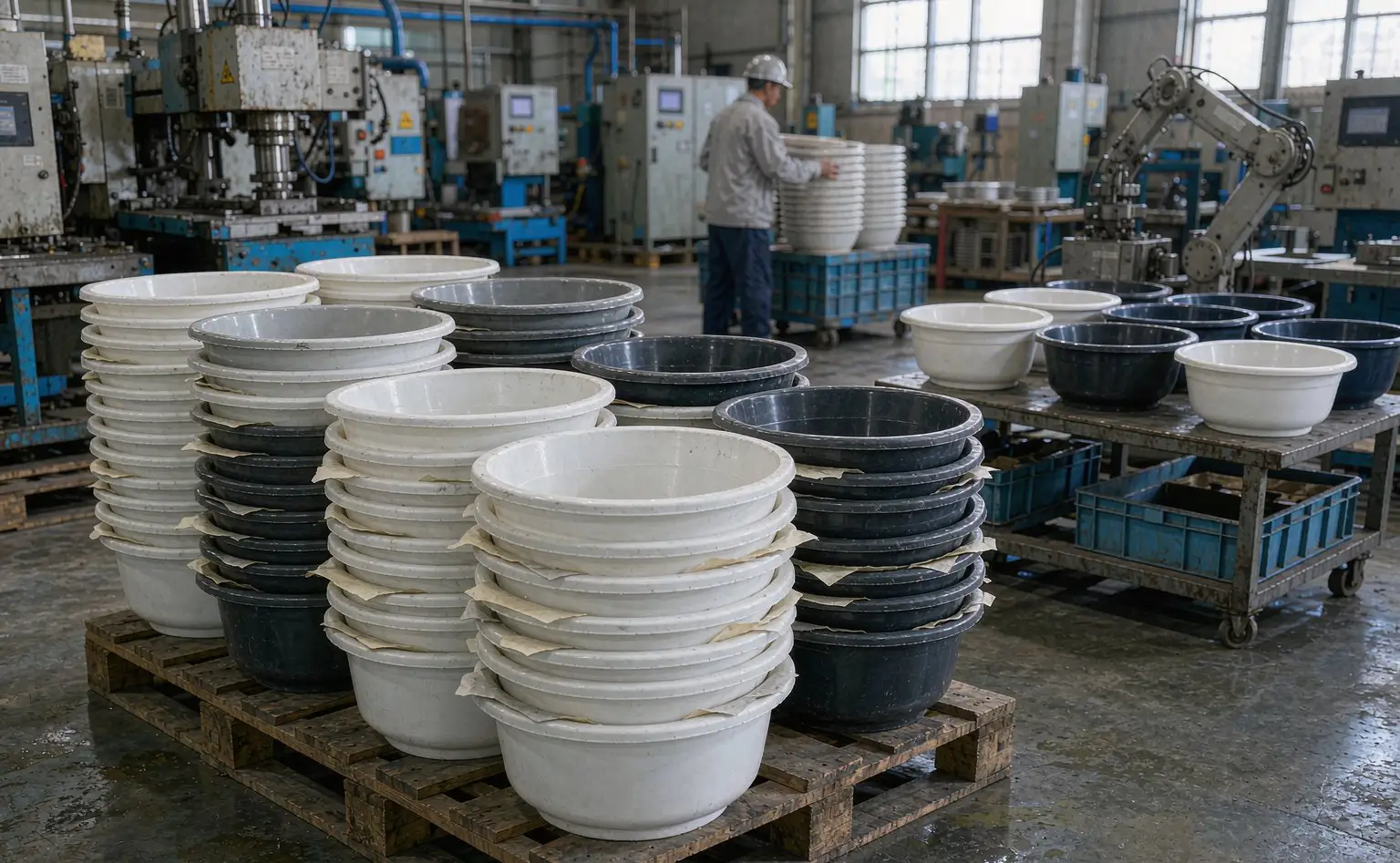
5. Moulding temperature, stacking and export storage
Choosing the agent is only half the job; the later stages decide whether it stays. Control demoulding and cooling at the press, because basins stacked while still warm carry heat and moisture between them, and blow the dust off after trimming, since dust takes up water and holds dirt in a damp shop. The two grades work in different temperature windows, so re-check the machine settings when you switch, rather than carrying the previous grade’s figures across.
Storage runs on three rules: hold the store below 60% relative humidity; do not press the basin walls airtight against each other, but leave a slip of paper or a small gap so the air between them can exchange; and add desiccant inside the carton for export lots. Condensation in the container is a separate job, set out for plastic parts going mouldy in stock before export, and the way housewares lines sequence the whole job follows antibacterial and anti-mould practice for housewares.
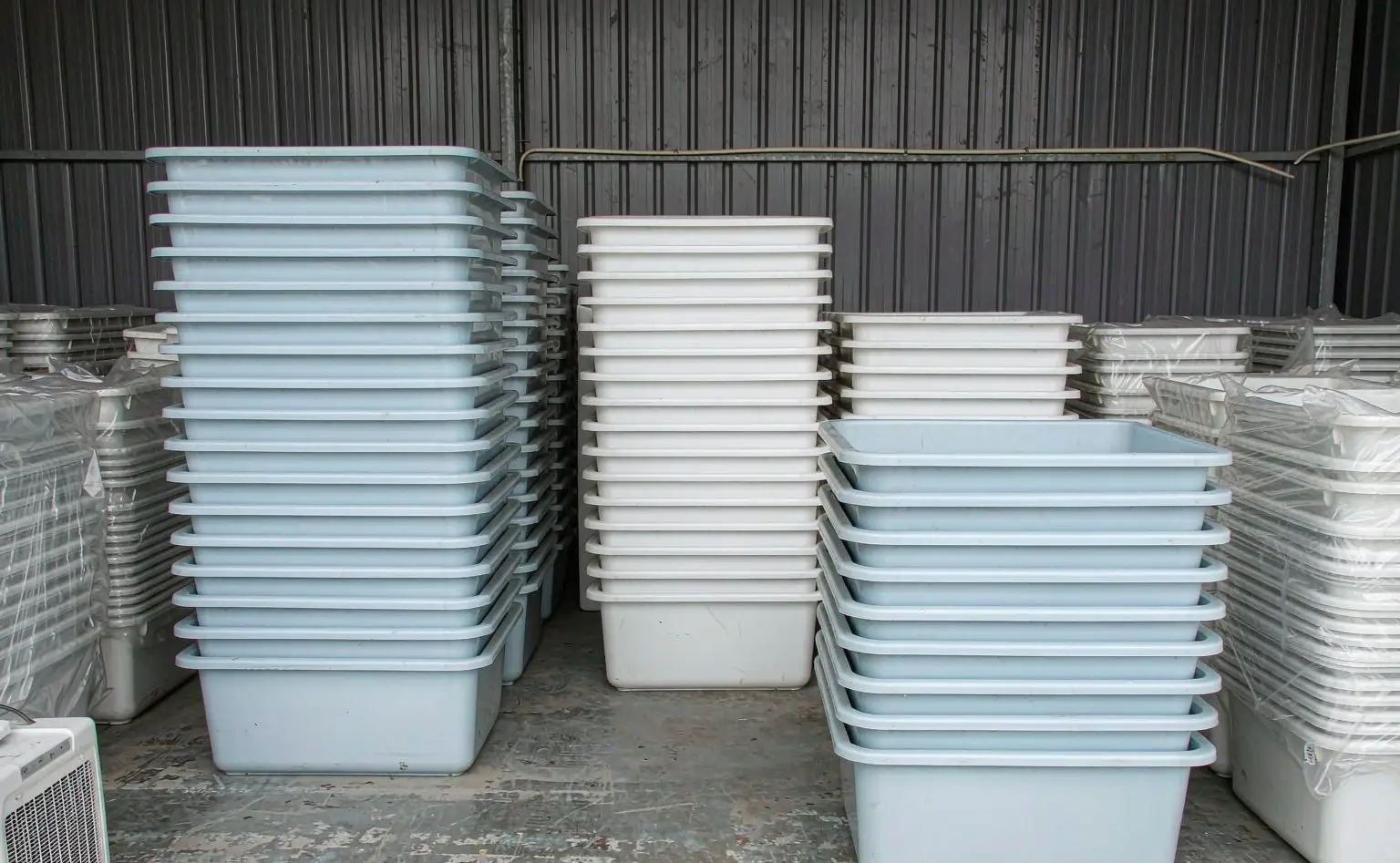
6. Questions: a final spray, and whether a bigger dose beats humidity
Can a spray on the finished basin replace internal dosing? Not advisable. Basins ship in stacks and are washed constantly, so a spray is rubbed off or washed away quickly, and the base and the inner wall cannot be coated evenly at all. Internal dosing puts the protection into the material, so a scratched cross-section is protected too, which a spray cannot do.
If warehouse humidity is high, will a bigger dose carry it? No. The agent keeps the material itself from growing mould; it does not deal with the water that collects in the gaps between stacked basins. Above 60% relative humidity, condensation keeps forming and spots and smell still appear. The dose is set by colour and duty, and going beyond the recommended figure buys very little while the cost rises. Samples and TDS are available for both products.
One line to remember the split: ordinary and dark basins take iHeir-ECO plastic antimicrobial agent at 0.3%-0.5% of PP weight; white and light basins take iHeir-IPL inorganic plastic antimicrobial agent at 0.8%-1%, colour true and tolerant of 300-320 degrees. Mix well, cool the parts before stacking, and hold the store below 60% relative humidity, so the work done in that one step stays in the goods.


