




 View Count:24
 Date:2026-09-11
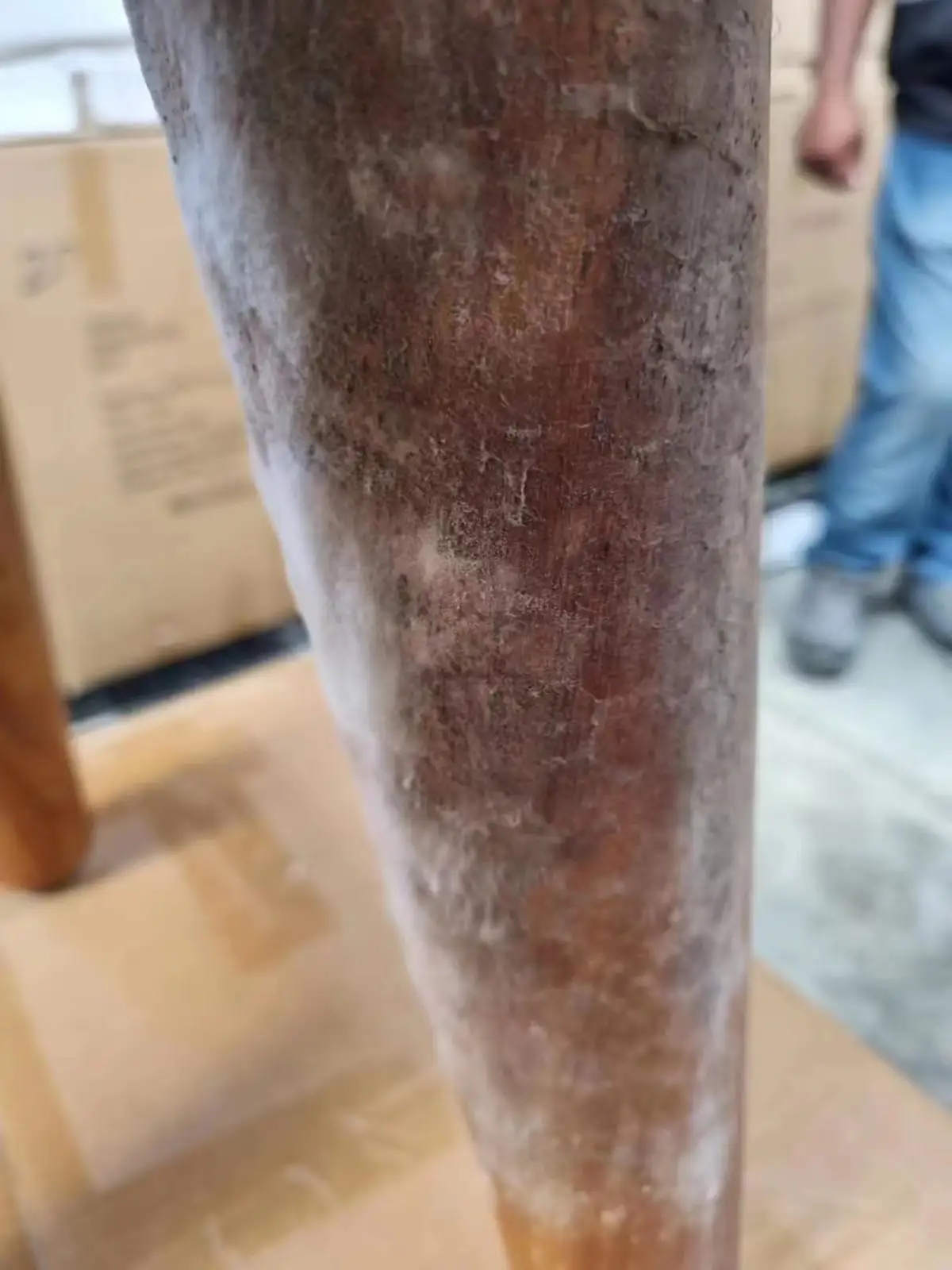
In Bangtou, Xianyou — the heart of China’s classical rosewood furniture trade — the most painful scene is this: a hongmu circle chair ordered six months earlier, and while applying the final wax coat before delivery, the craftsman finds a patch of white mold inside the armrest. Owners often ask how such precious hardwood can mold. The answer: dense heartwood resists decay, but sapwood, glued joints and the sugary dust of the white-wood stage are exactly what mold feeds on. Once mold roots into a blank and gets sealed under wax or lacquer, it resurfaces within two years and the rework costs 30-50% of the factory price. This guide follows the actual Xianyou production flow — kiln drying, blanks, waxing, storage, export — and shows where mold control belongs in each step.
1. Hardwood Molds Too: Drying and Equilibrium Moisture Content
Of the three mold conditions — spores, nutrients, water — a factory controls water. Chinese standard GB/T 3324 asks for 8-16% wood moisture content (MC), but Xianyou’s coastal climate sits at 14-16% equilibrium while northern Chinese interiors run 8-10%: set the drying target by the destination, not the factory location — 10%±2% for northern orders, 12-14% for the south.
Do not over-dry. Below 8% hardwood cracks as internal stress releases; run the kiln at 60-70 °C, lower MC by no more than 2 points a day, and rest stock 7-15 days before cutting. The classic Xianyou mistake: the kiln reads 10%, but after cutting the core rebounds above 14% and blanks mold within a month — measure in layers; the core number is the real one. Remember also that a rosewood piece spends a year or more between log and delivery, moving through humid coastal summers, kiln drying, northern transport and southern warehouses; whenever MC drifts past 16% with surface nutrients present — dust, hand oils, glue spots — spores will land and colonize. For the underlying mechanics, see our bamboo and wood mold analysis.
2. Cutting and Carving: The Golden Window Is the Blank Stage
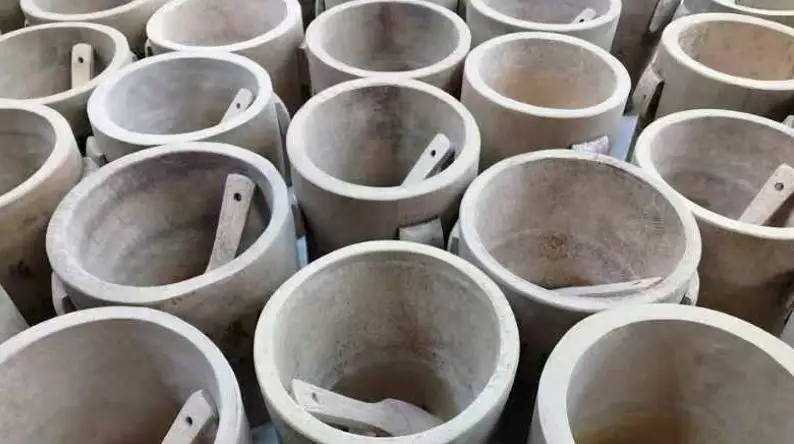
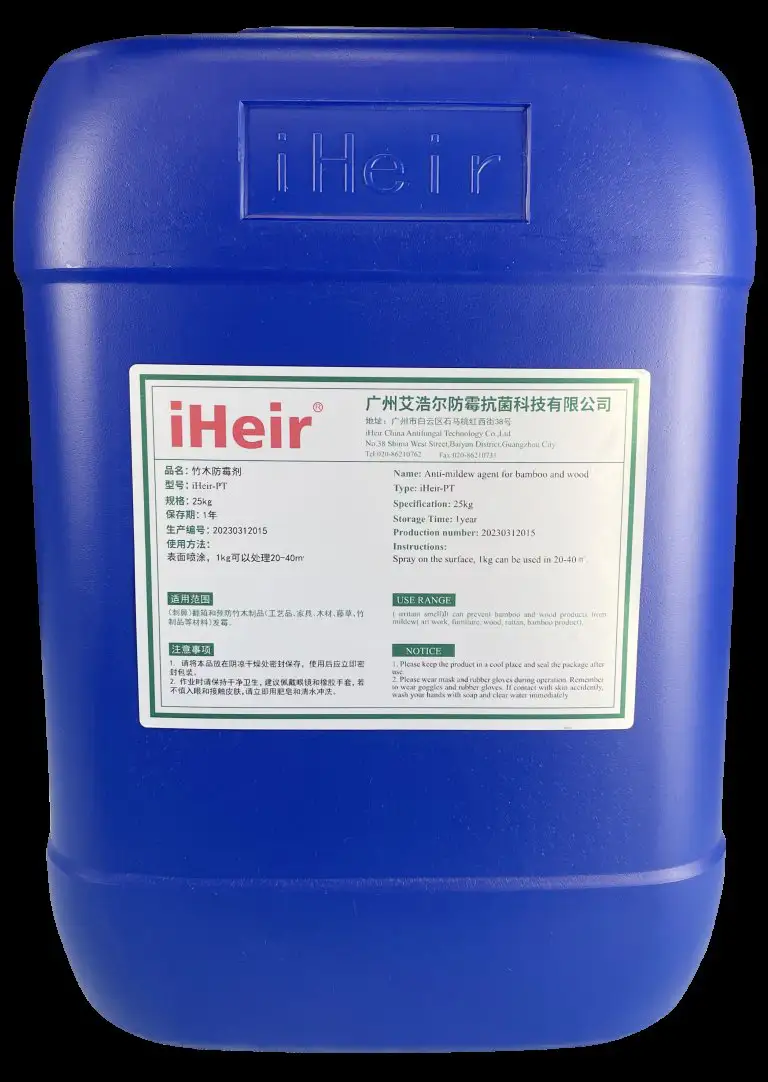
The blank stage is the cheapest, most effective point to treat — no finish blocks penetration. Three steps: treat within 48 hours of cutting — dip parts for 1-3 minutes in iHeir-JP bamboo and wood anti-mildew agent diluted 1:10-1:20, or spray at 20-40 m² per kg of solution; for high-volume boards use iHeir-MA soaking preservative with combined anti-mold, anti-rot and anti-insect action (process comparison in soaking vs spraying vs powder). Stack blanks off floor and wall — pallets 15 cm up, 30 cm from walls, 40 cm ventilation aisles, sanding dust cleared daily because damp dust is the richest culture medium. Cap blank storage at 60 days — re-spray anything older; cut to 30 days in plum-rain season.
3. Before Waxing or Lacquer: Protect the Finish, Not Fight It
Xianyou finishes are mostly hot wax or raw lacquer. After the final sanding, remove dust completely, then flow beeswax at 60-80 °C in thin, even coats — uneven wax patches absorb moisture in the rainy season and become mold landing pads. For blanks that picked up slight damp, wipe once with iHeir-QF anti-mildew cream before waxing so the actives keep working under the wax. Crucially, never spray water-based agents onto a finished waxed surface: wax repels water, the liquid beads into white marks, ruins the sheen and never reaches the wood. Finishing-stage protection must have been done at the blank stage. Note also that lacquered pieces need the same blank-stage discipline — raw lacquer is applied in many thin coats over weeks, and each open-coat day is a mold window if the blank was untreated.
If finished goods already show mold: light surface bloom comes off with iHeir-QF plus a dry buff; mold under the film needs iHeir-Clean mold spot cleaner then local re-wax; discoloration in the wood itself means back to the sanding bench.
4. Finished-Goods Warehouse: The 70% Line
Xianyou’s humidity spikes past 85% in the May-June return-south winds and the July-September typhoon season, and ground-floor workshops double as warehouses with constant capillary moisture from concrete slabs. Four red lines: two hygrometers per 300 m² and dehumidifiers on whenever RH passes 70% — a 90 L/day unit costs a fraction of one hongmu rework; double pallets plus a vapor-barrier sheet on ground floors; vent display cabinets weekly and put 1-2 CH-10 drying and deodorizing packs inside sealed display cases; and rotate FIFO — every finished piece stored over 90 days gets a monthly MC spot-check, and anything up more than 2 points gets actioned. The Nankang solid-wood furniture guide shares the same warehouse logic.
5. Export: MC Certificates and ISPM15-Free Packing
Rosewood furniture faces 30-45 day ocean transits to Europe and the Americas — far tougher than domestic shipping. Before loading: re-test MC on every piece at three points and attach the record to the packing list; place 2-3 CH-10 packs inside each piece and hang 8-12 T-1000 container desiccant sticks per 40HQ to capture condensation; and choose plywood (ISPM15-exempt) pallets and crating over raw wood, skipping fumigation delays and avoiding chemical residue near the furniture. Our export pallet mold guide covers packing choices in depth.
6. Care Advice for Collectors + FAQ
Ship a care card with every piece — it is a value-add that cuts after-sales mold to near zero: keep indoor humidity 45-60% (humidifier in northern winters, dehumidifier in southern plum rain); wax quarterly after a dry dusting; if white mold appears, wipe within 48 hours with a soft cloth and neutral cleaner, blow cold to dry, and never sun-dry or scrub with a wet rag. Mold that reaches the substrate means factory rework, so early response is everything.
FAQ
Q1: Heartwood naturally resists decay — is treatment really needed?
A: Heartwood extractives resist decay fungi, but household mold (Aspergillus, Penicillium) feeds on sapwood, glue lines, dust and trapped moisture; and in the blank stage every part of the piece is exposed.
Q2: Does dipping affect wax adhesion later?
A: No. iHeir-JP/MA at the stated ratios, dried 24-48 h, leaves no residue film after sanding; wax bonds normally. In contrast, sanding moldy blanks and waxing over the root is what causes under-film regrowth.
Q3: How do you treat hollow carved pieces?
A: Dip first for full inner coverage; for assembled carvings use a low-atomization gun at low pressure, double-spraying corners, diluted from 1:15.
Q4: One buyer cracks in the north, another molds in the south — how to balance?
A: Set factory MC per destination (Section 1) and ship CH-10 packs plus the care card as standard. Workshops that made MC-plus-care standard cut cross-region complaints by roughly 60%.
Rosewood mold control is won at the blank stage and the 70% warehouse line: dry to destination, treat at cutting, final wipe before waxing, enough desiccant in every container. Follow the sequence and under-film regrowth — the costliest failure mode — simply stops happening. For iHeir-JP/MA samples or a plant-wide anti-mold SOP template, contact us for a workable plan.