




 View Count:27
 Date:2026-09-11
A container of hair wefts leaves Xuchang for Lagos and lands with a buyer’s video: white mold across the wefts, wrapping paper soaked through, USD 40,000+ of goods pulled back for re-washing. The quieter loss is more common — no visible mold, but a stale, sour smell on unboxing that gets the shipment discounted 15-30% as “not as described”. Human hair products are uniquely exposed: keratin is itself a first-class nutrient for mold, raw hair carries sebum and sweat salts, and wig-wearing adds a warm, humid, close-to-skin service life. Anti-mold, antibacterial and odor control therefore have to run as a process line through the whole factory — not a perfume spritz before dispatch. Here is the Xuchang workflow, gate by gate.
1. Why Wigs Mold and Smell: Protein Plus Sebum
Human hair is over 90% keratin; mold secretes proteases that break it down directly — the fundamental difference from plastics or hardware. Odor has two roots: incomplete washing of raw hair, where residual sebum and sweat salts are decomposed by bacteria into sulfur compounds, and damp-storage mold metabolism, which carries its own earthy, ammoniac notes. Synthetic fibers (PP, PET, high-heat fiber) do not feed mold, but wig caps, bases, stitching and glue lines are organic — that is why some factories see “the fiber is fine, the cap molded”.
Buyer standards are tightening: EU/US chain-store and e-commerce contracts increasingly write total plate count and mold clauses into wig POs, and inspection grades mold or odor as a Critical defect. Anti-mold is now compliance, not an option, for Xuchang exporters.
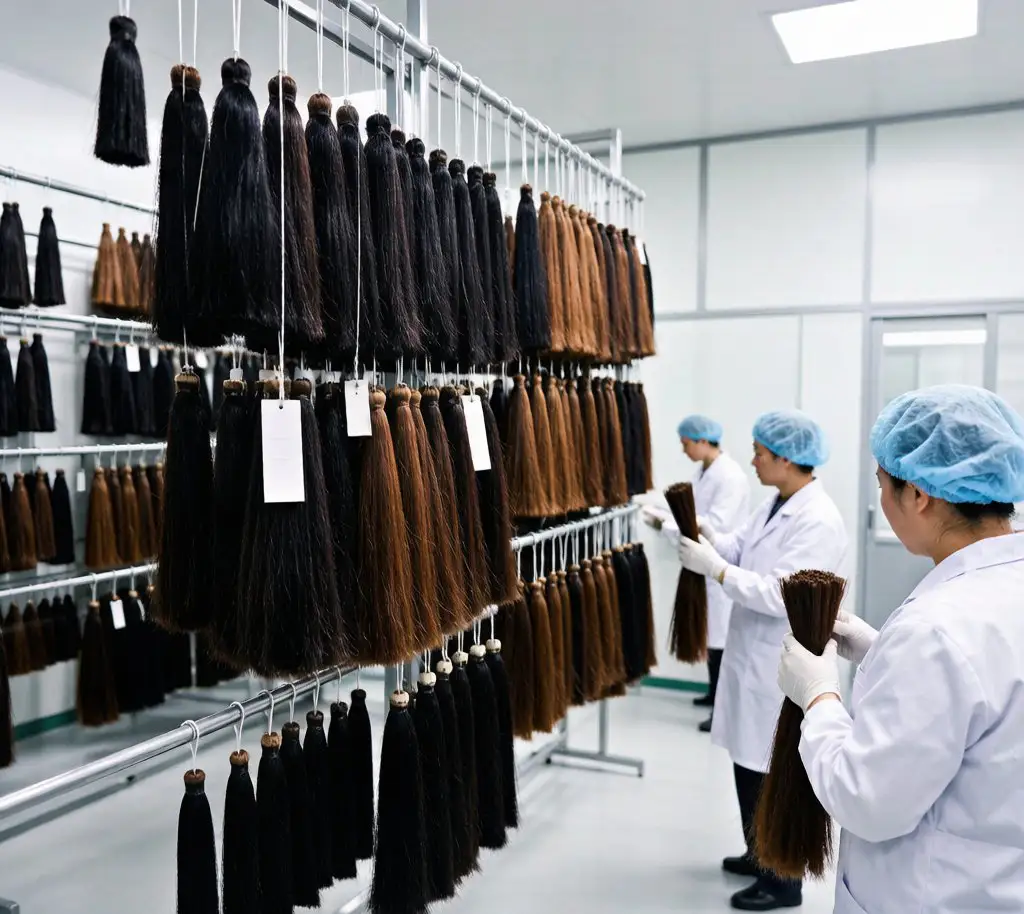
2. Raw Hair: Washing and Sanitizing Is the First Gate
Raw hair arrives loaded with sebum, sweat salts and environmental microbes. Wash properly: two rounds at 40 °C with neutral detergent, then a 15-20 minute sanitize soak at 0.3-0.5% hydrogen peroxide or chlorine solution, rinse clean, and spin-dry. The critical step is drying: hair must leave the dryer at or below 10% moisture before storage — damp bundles stacked overnight give mold a full breeding cycle, and many mold investigations trace back to exactly that habit. Store by lot, FIFO, and hold the raw-hair warehouse under 65% RH year-round.
Combine the last rinse with finishing to save a step: dilute iHeir-333 textile antimicrobial agent 1:50 and soak 5-10 minutes. The actives bond to the keratin surface, holding down storage bioburden and adding a hygiene margin for the wear phase. The finishing logic transfers directly from home-textile antibacterial finishing.
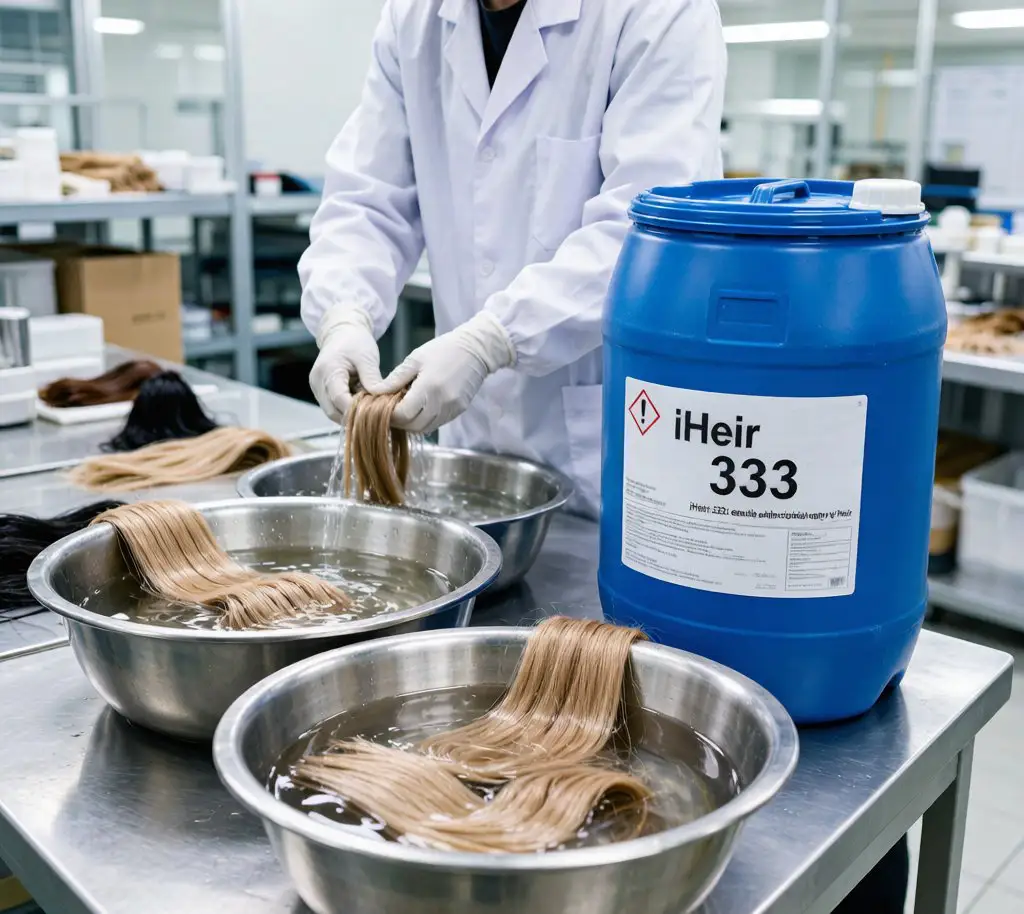
3. Synthetic Fiber and Accessories: Anti-Static and Anti-Mold Together
Synthetic wefts do not mold, but three accessory points carry the risk: caps and bases (polyester knit plus adhesive) — inspect incoming rolls for damp clumping and re-test accessories stored over six months in humid seasons; thread and glue — protein-containing glue batches mold first, so pick mold-resistant adhesives or slip a iHeir-D gas-phase anti-mold agent into the box for slow-release protection of cured glue lines; contact packaging textiles — inner caps and tissues touching the hair should use non-woven treated with silver-ion antimicrobial finishing so packaging suppresses rather than carries microbes.
Synthetic anti-static and anti-mold solve themselves together: static pulls dust in winter, and dust plus humidity equals mold nutrients — an anti-static/antimicrobial finish (same iHeir-333 system at synthetic-process concentrations) removes both conditions at once.
4. Packing Wefts So They Stay Dry
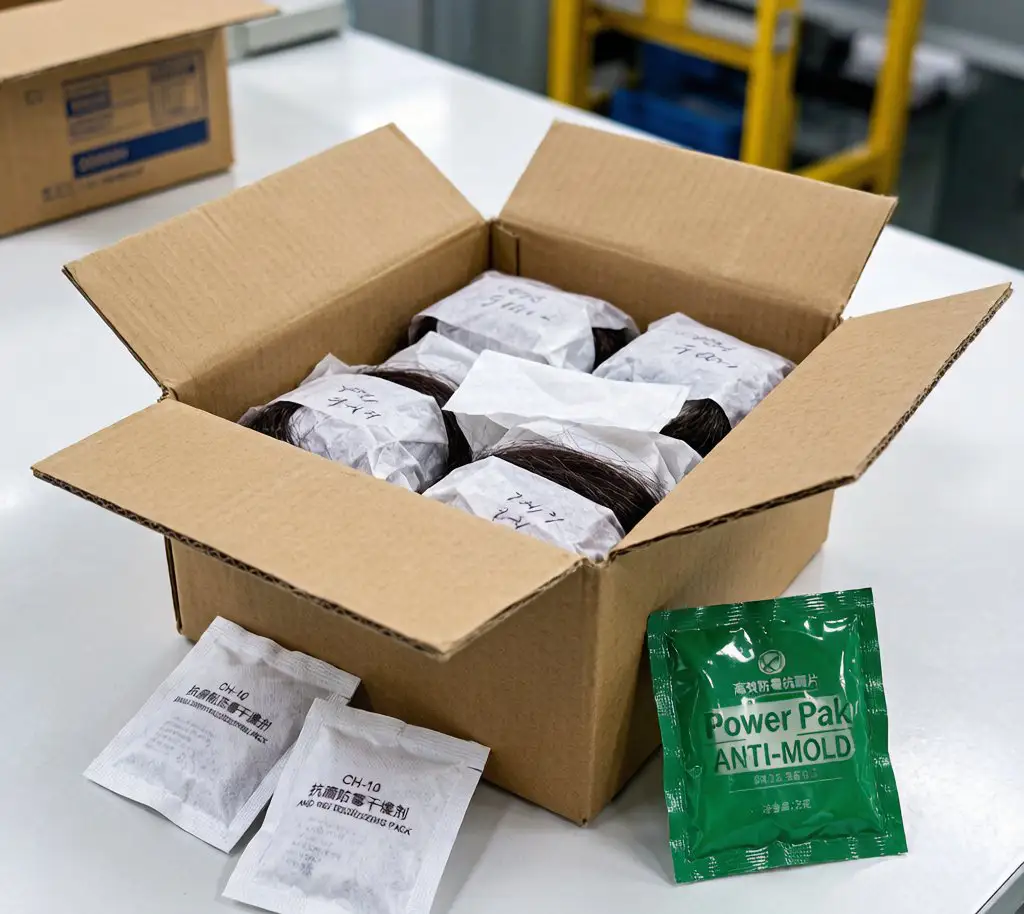
Packing is three layers working together. Inner wrap: each weft bundle or topper first in anti-mold packaging paper or a PE sleeve (selection logic in our anti-mold packaging paper guide) so hair never touches the outer carton. Desiccant: one CH-10 anti-mildew drying and deodorizing pack per topper or per 10 wefts — it is the right pick for hair goods because it handles moisture, mold, bacteria and odor in one sachet, including the trapped-carton smell of a long transit. Outer carton: five-ply BC corrugated, confirmed dry before packing (a damp carton is a common water source), stacked tight to cut trapped air.
5. Storage and Ocean Freight: Red Lines and Stick Counts
Xuchang summers are hot and wet; hold the finished-goods warehouse at two red lines — dehumidifiers on above 65% RH, and everything off floor and walls with ventilated aisles. Ocean freight is the bigger variable: 35-45 days to Lagos, 25-35 to Europe or the US, and cross-latitude temperature swings produce container rain heavy enough to soak cartons. Hang 8-12 T-1000 container desiccant sticks per 40HQ (each absorbs 2-3 kg of water) on the wall posts and photograph the loading for the record. Container-level sticks plus carton-level CH-10 is a two-tier system that effectively eliminates “wet box, molded goods”. On high-value cargo this costs a few hundred dollars per container; one molded container costs a hundred times that.
6. Wear-Phase Safety and Test Reports + FAQ
Hair goods are worn against skin, so the safety story must be airtight: all antimicrobial finishing is completed and heat-fixed before leaving the factory, leaving no free agent on the fiber; use food-contact-grade chemistry (iHeir-333 is tested to textile antibacterial standards); and supply quantitative ISO 22196 reports (≥99% reduction is the commercial bar) plus GB/T 20944 textile antibacterial results, with skin-irritation (patch test) statements for EU/US programs. When buyers audit, presenting the wash-finish-dry-pack process card together with current reports lands far better than verbal assurances. For antibacterial finishing comparisons across fiber types, see our textile anti-mold buying guide.
FAQ
Q1: A weft batch got damp but shows no mold yet — rescue steps?
A: Dry immediately (kiln at ≤60 °C or cold-air plus dehumidifier rest), inspect bundle by bundle, re-spray 1:50 iHeir-333, and repack. Never load damp goods — three container days will raise visible mold.
Q2: Is synthetic-wig odor handled the same way as human hair?
A: No. Synthetic odor comes from glue and packaging — vent it and adsorb with CH-10. Human-hair odor needs the wash-plus-antimicrobial route. When both ship in one container, segregate the zones.
Q3: The buyer demands 99.9% antibacterial — how do we evidence it?
A: Commission an ISO 22196 quantitative test at a CNAS lab and report both mean and lowest reduction; the Xuchang norm is sampling every bulk lot and sending report copies with the shipment.
Q4: Can worn wigs (aftercare or refurb batches) be re-treated safely?
A: Yes. Neutral wash, sanitize soak, antimicrobial finish, low-temperature dry, individual wrap — with finishing records kept, and the same wear-safety statements as new product.
Xuchang mold and odor control is a conveyor of four gates: wash thoroughly, finish with one antimicrobial pass, dry to spec, and pack with enough desiccant from carton to container. Run all four and mold and odor complaints converge to zero. For iHeir-333 finishing trials, CH-10/T-1000 container plans or report templates matched to your product mix — human hair, synthetic or blend — contact us for a workable plan.