




 View Count:12
 Date:2026-11-09
How should colour steel sandwich panel mould be handled? A stack that sits outdoors on site for a month, or rides a container through a wet season, comes back downgraded as a whole lot once the first spots show. The routine is iHeir-FP foam antimicrobial at 0.5%-1.5% of the foam weight, plus one iHeir-D vapour sheet at 0.1-0.2g of active matter per sheet under and over each stack. This article covers dosing, edge sealing and stack storage.
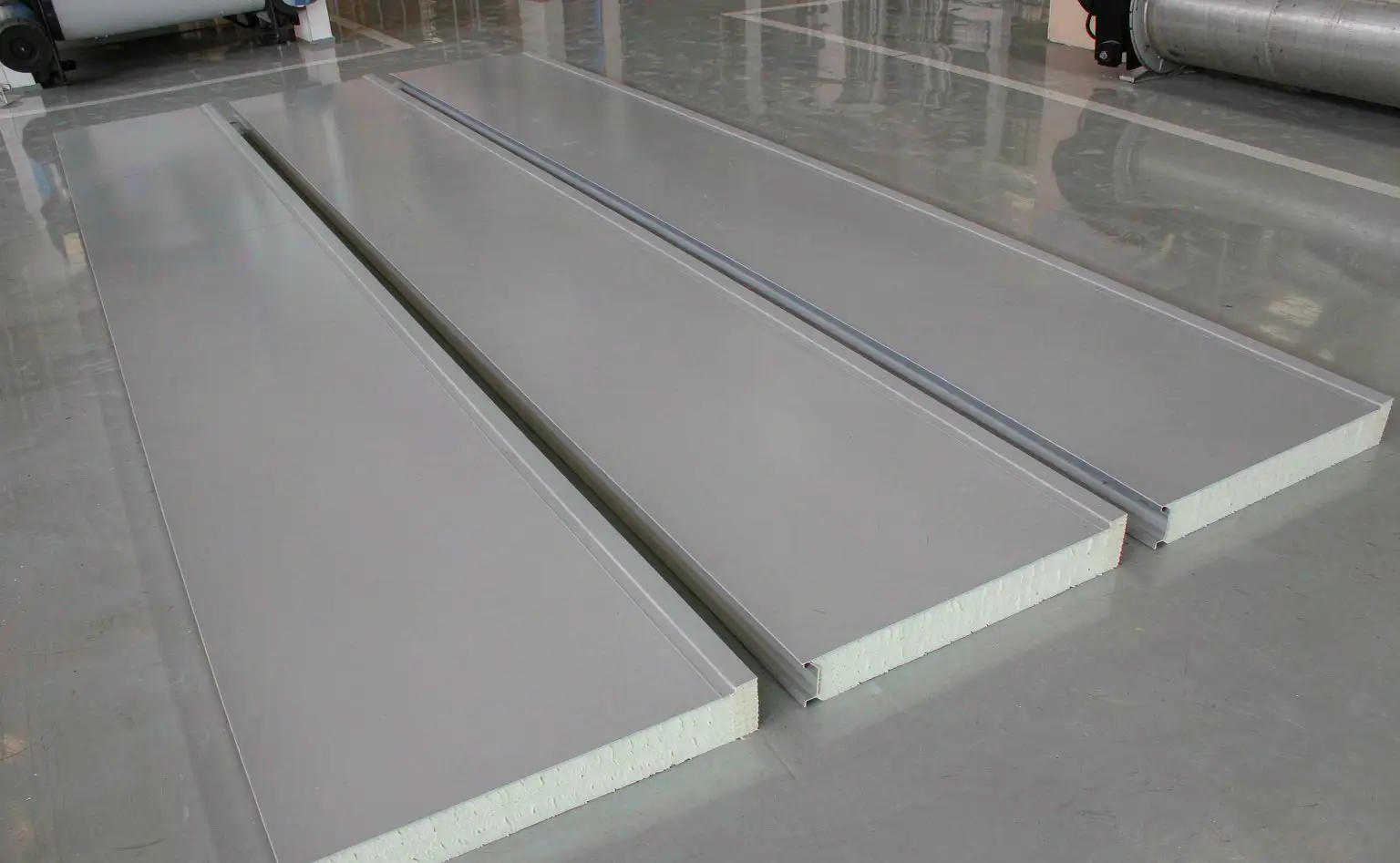
1. Mould starts in the foam core and the edge seam, not on the coated face
Take a sandwich panel apart: two colour-coated steel skins, a core between them, four sealed edges and a tongue-and-groove joint along the sides. Steel does not feed mould and the coating does not either; the two places that fail are the core and the edge seam.
The core goes first. PU and EPS cores are closed-cell, but the cell walls still take up moisture, both from water left in the foam and from damp that migrates in later. Mould grows on the cell walls, works its way out at the cut end, and the face still looks clean until you open a seam and find a grey-green layer.
The edge seam is the water door. Every panel is sealed on four sides, and there is a joint between panels on site. Rain, dew and site humidity get in through those gaps, spot the exposed core and then travel inward.
Why a surface spray is not enough. Spraying the coated face looks like a treatment but never reaches the core. The moment the panel is cut, drilled or fitted with a window opening, the fresh end is bare core again and the earlier work is gone.
2. Foam and stack are counted separately
The table lines up the core, the edge, the stack and the packing. The foam is counted as a percentage of foam weight, the paper in sheets of active matter, and the two are not convertible.
| Part | Material | Product and level | Stage | Control point |
|---|---|---|---|---|
| Foam core | PU / PIR / EPS compound | iHeir-FP 0.5%-1.5% | Into the compound before foaming | Of foam weight, evenly stirred |
| Rock wool / magnesium core | Inorganic core | No dosing | – | Edge seal and store humidity only |
| Edge seam and joint | Edge adhesive, sealant | Carried by the adhesive, trial first | Edge sealing | Full bead, no void |
| Stack and packing | Finished panels, stretch film | iHeir-D one top and bottom, 0.1-0.2g | Stacking, wrapping | Only works in a closed wrap |
One boundary. The FP in the compound handles the core itself, the vapour sheet handles the space inside the wrap. A well-dosed core still lets the edge seam mould in a damp stack, and a sheet alone leaves every colony inside the foam untouched.
3. Dosing the antimicrobial into the foam compound
The level is counted on foam weight at 0.5%-1.5%. Thin, low-density panels take the upper figure and thick panels the lower; an export order with an antimicrobial rate on the specification goes straight to 1.5% rather than somewhere in the middle.
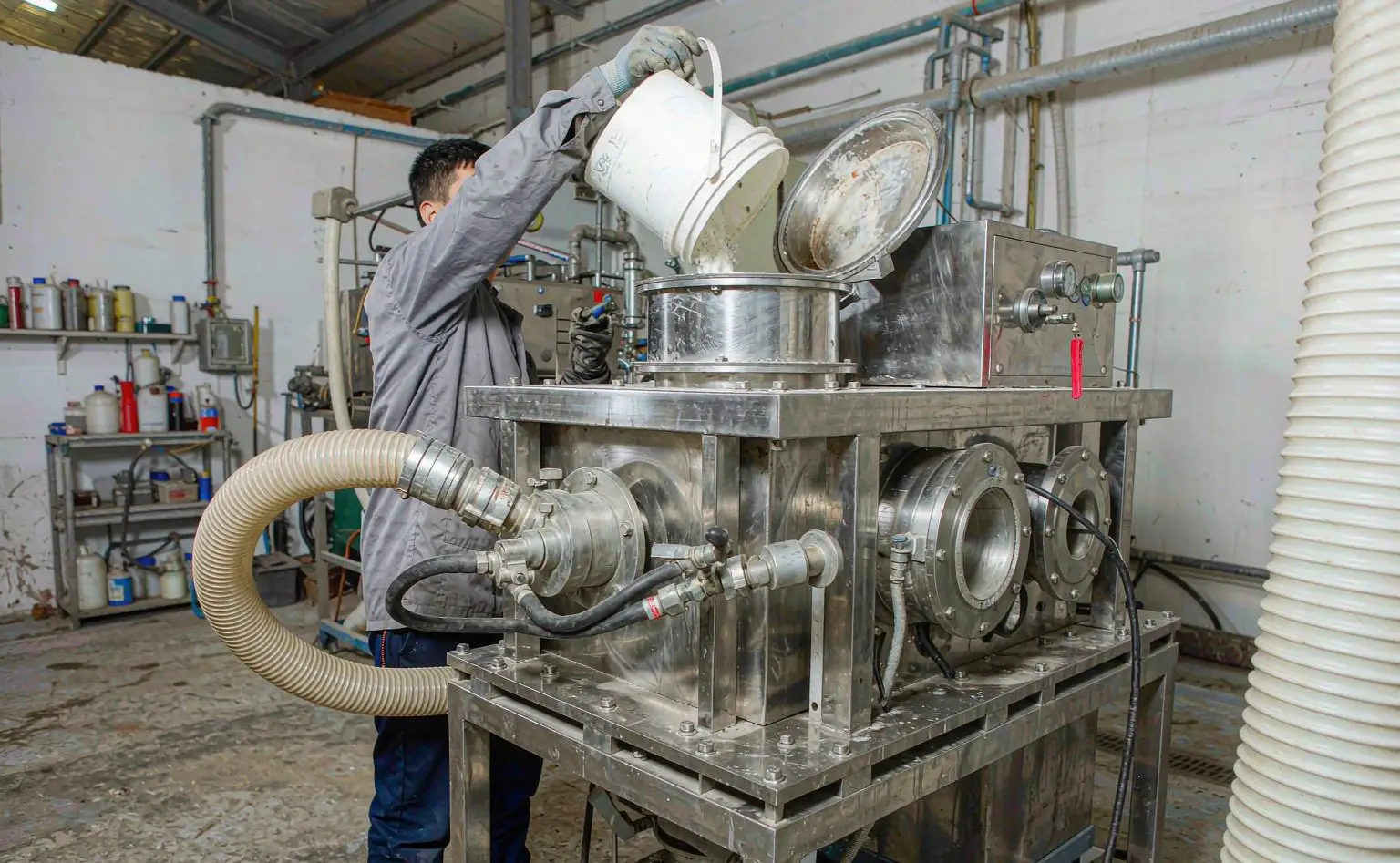
How to feed it. iHeir-FP is a clear liquid and goes in the same way as a colour paste: added to the foam raw material, stirred mechanically until even, then fed to the foaming machine. On a compound tank with a circulation pump, let the pump run several passes afterwards so the agent does not sit on the tank floor.
EPS and PU are not the same job. EPS bead moulding carries the agent in with the raw material and is the simplest route. Polyurethane is a two-component reactive system and iHeir-FP is a water-borne product, so water reacts with isocyanate; before dosing a PU compound, run a small trial and check foam rise, cell uniformity and dimensional stability after cure. If the trial does not hold up, leave the compound alone and protect the panel from the edge adhesive and the packing instead.
Temperature and pH are not the constraint. iHeir-FP is stable from pH 1 to 11 and stable to light and heat, so the foaming window sits well inside it; oral LD50 is above 5000 mg/kg with a skin irritation score of 0 and a sensitisation rate of 0, so normal shop-floor protection is enough. What does need control is metering: hand-scooping gives a different number every batch, and the antimicrobial rate of the panel swings with it.
4. Edge sealing and cut ends
Panels leave the plant sealed on four sides, but on site they get cut, drilled and fitted with frames, and every cut exposes bare core. An exposed end has no coating and no edge adhesive, so it takes water first and moulds first.
Fill the edge groove. The adhesive in the edge groove has to be a full bead, not a wipe over the surface. A void is a small water pocket: moisture goes in and cannot get out, mould grows between the adhesive and the steel where nobody sees it.
Treat the cut end. Brush the cut end with the same treatment liquor before fitting, and seal anything you cannot reach back with edge adhesive. Skip this step and the agent in the foam only works in the middle of the panel while the edges spot as before.
Close the joint. Water in a tongue-and-groove joint is the hardest to dry, so follow the maker’s overlap and check for gaps that let light through.
5. Panel stacks and containers: one sheet top and bottom
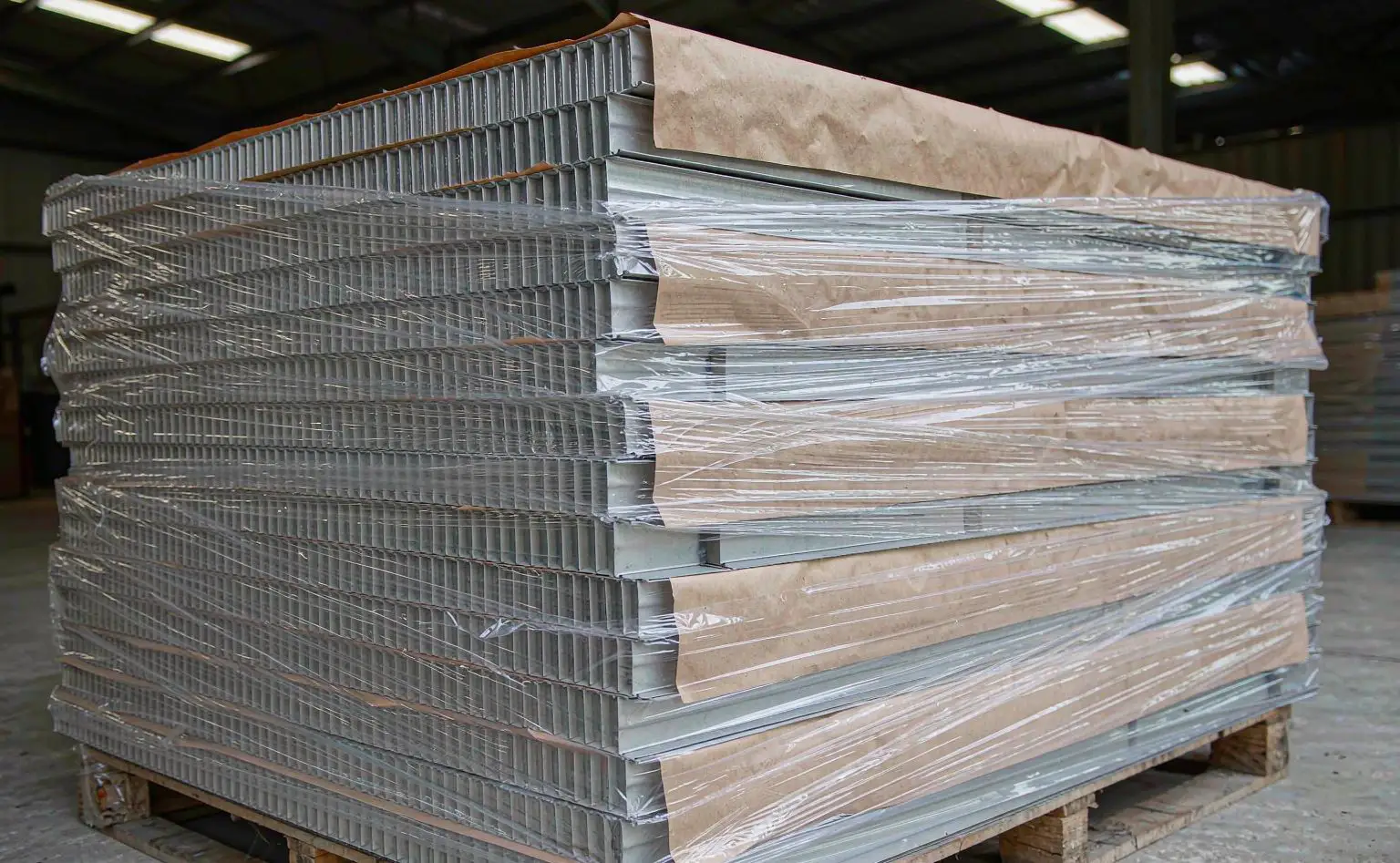
Finished panels are stacked and wrapped, and the wrap turns the stack into its own small climate. Lay one iHeir-D vapour sheet in the base and one on top, each carrying 0.1-0.2g of active matter; for a stack over two metres high, add one in the middle.
Why both ends. The base sits on the floor and takes water first, while the top meets the film where day-night temperature swings condense water and drip. Sheets at both ends release inward and cover the whole stack; a sheet only in the base leaves the top layer to spot as before.
Trial compatibility first. Seal three times the normal dose with a sample panel, mist a little water, separate with paper and inspect after a few days for a dulled coating, softened edge adhesive or a darkened galvanised part. iHeir-D carries 70%±5 solids and can corrode poor-quality metal when damp, so thin-coated panels get the trial first.
Storage and loading. Stack on timber bearers at least 10cm off the floor, keep store humidity below 60% RH, wipe the faces dry before loading, and hang desiccant sticks in the container. Other export warehouse routines follow the same logic, and the dosing side is covered in antimicrobial foam dosing.
6. Questions on cores, levels and sheets
Q: 0.5% or 1.5%, a three-fold difference?
It depends on density and what the buyer inspects. Low-density thin panels, site storage and orders needing an antimicrobial report take 1.5%; thick panels on fast domestic turnover take 0.5%. Both count on foam weight.
Q: What if the ends are already spotted?
For light cases, cut the end back, plane off the mould layer, brush the fresh end with treatment liquor and reseal the edge. If mould has reached the cells and the foam smells musty, downgrade the panel rather than mixing it back into the good stack.
Four points to take away: dose iHeir-FP at 0.5%-1.5% of foam weight through a metered feed and stir it even, trialling any PU compound for rise and cell structure first; fill the edge groove with a full bead and brush every cut end before fitting; lay one iHeir-D sheet in the base and one on top at 0.1-0.2g each, one more in the middle for tall stacks, after a three-times-dose compatibility trial; grade mould resistance to GB/T 24346-2009 and send antimicrobial rate to ISO 22196 or GB/T 31402. A kilogram of antimicrobial and a pack of sheets go out for a trial, with MOQ on the iHeir-FP product page.


