




 View Count:25
 Date:2026-11-16
Can gearbox mould be prevented before the crate is closed? Sand holes in the casting hold moisture, cleaning liquid stays in the seal chamber, and a crate that is not dry seals the water against the paint, so what the customer sees on opening is blistering with growth under the film. The route is to bake the casting at 60-80℃ after shot blasting, put 0.1-0.2 g iHeir-D gas-phase sheets in the seal chamber and breather before oil fill, and hang 8-10 T-1000 sticks in a 20 ft container. This article gives the drying criteria and the dosing.
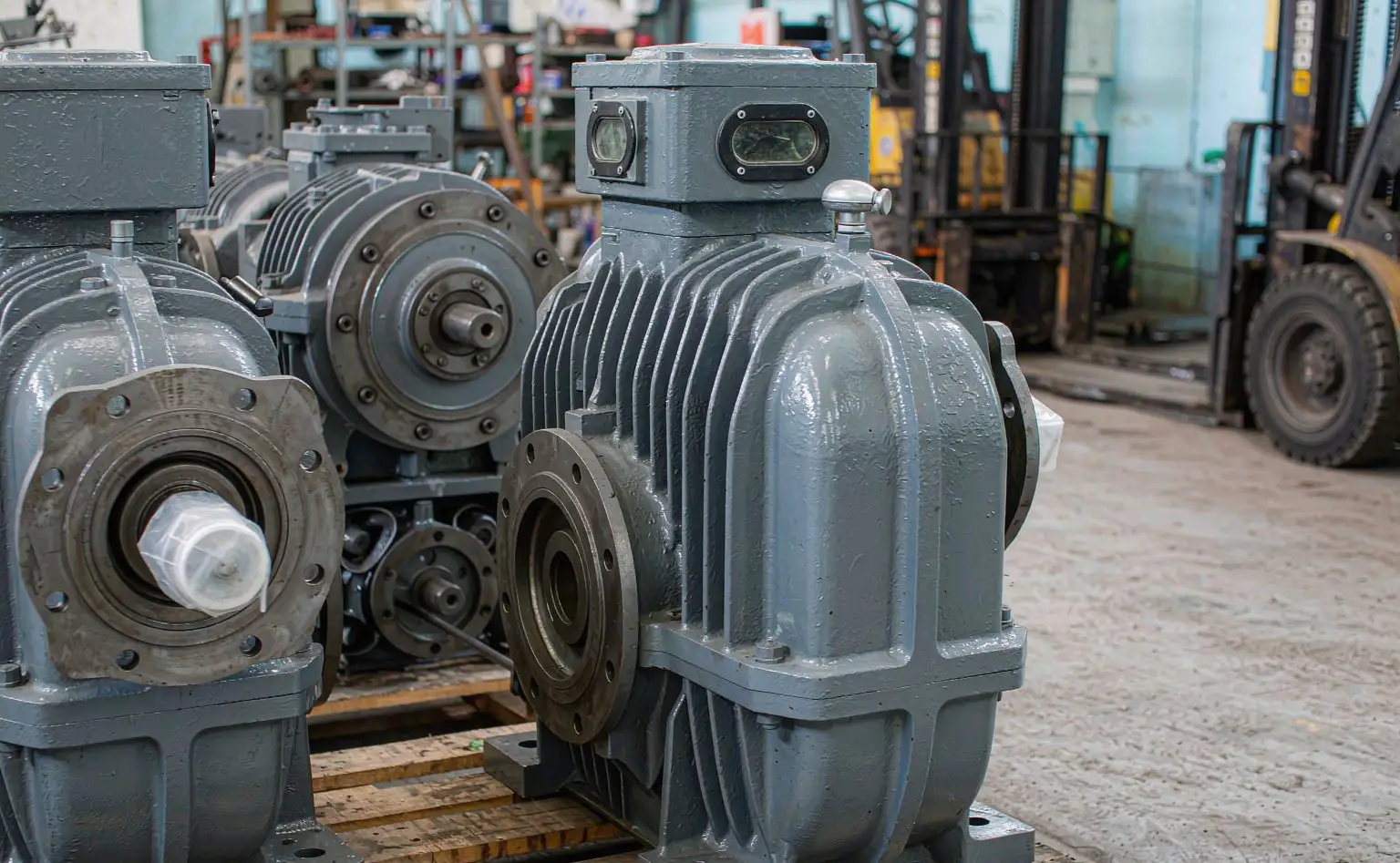
1. Where gearbox mould comes from: sand holes, seal chamber, breather, crate
A gear unit is a cast iron housing with end covers, oil seals, a breather and an output shaft, and it passes through blasting, painting, assembly, oil fill and packing, and the growth follows those steps.
Sand holes come first. HT200 and QT450 castings carry micro-porosity and sand holes, and bare iron after shot blasting starts to rust within hours in a damp shop, while water inside the pores only leaves with heat. Paint over a damp casting never bonds properly, vapour is sealed under the film, and within weeks small blisters rise and break into growth.
The seal chamber and breather come second, and are the most overlooked. Housings are washed after machining, so cleaning liquid stays in the seal chamber, the bearing seats and the breather thread. The cavity before oil fill is semi-enclosed, vapour cannot escape, and by the time oil goes in the water is locked behind the seal.
The crate comes third. Export crates are heat-treated to ISPM 15, but treatment is not drying, and boards at 15%-20% moisture are common; timber blocking and foam inside absorb in the same way, so a closed crate is a moisture source of its own.
2. How to dry before painting: 60-80℃ until the weight stops moving
“Bake it two hours” does not transfer across wall thickness; run temperature plus weight.
Into the tunnel the same day. A casting is most active straight after blasting, and leaving it overnight before painting wastes the blast. Set the tunnel at 60-80℃ and the dwell by wall section: about two hours for a thin end cover, three to four for a heavy housing. Let it fall below 40℃ before the spray booth, because a hot part condenses in there just as readily.
The weighing method. Weigh the same part twice, an hour apart; a difference under 0.1% counts as stable. Sample 3-5 parts per batch and keep the record alongside the film thickness record. Castings with many sand holes get more dwell, not more heat.
Fill the holes first. Visible sand holes and gas porosity are repaired and sanded before drying. Painting over an open pore leaves a vapour path, and growth pushes out where the film is thinnest.
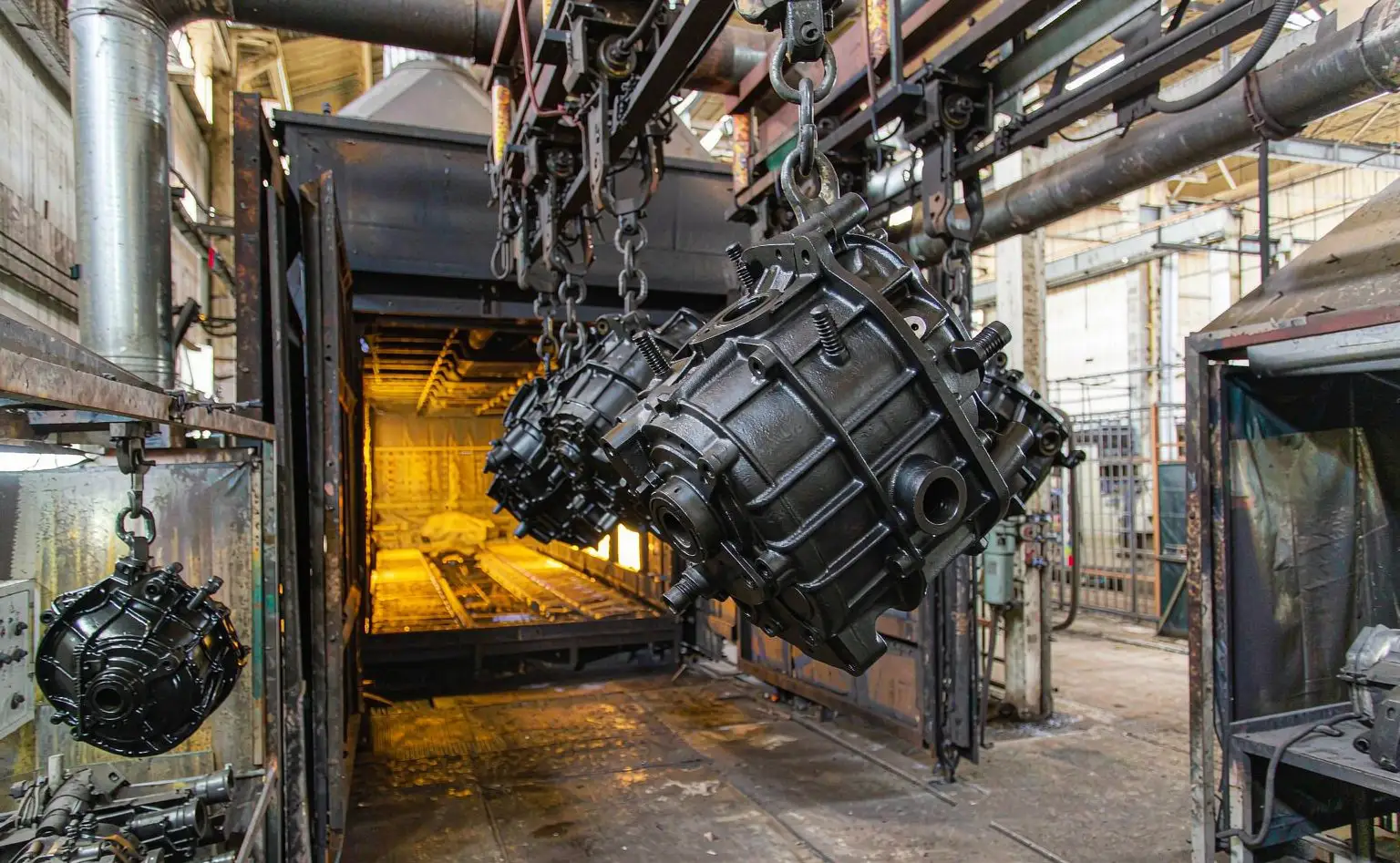
3. Seal chamber and breather: sheet in before oil, cap closed in store
The cavity is a job for vapour-phase paper, which releases slowly into a closed space and covers the weeks between assembly and oil fill.
How many. Each sheet carries 0.1-0.2 g of active. A single-stage unit takes one sheet in the seal chamber, a two-stage or heavy-duty housing takes two, and the small breather cavity takes half a sheet or one folded. Fix the sheet on the upper inner wall beside the oil sight port, never on the seal lip.
When in, when out. Fit after assembly once the cavity is blown dry, and remove before oil fill. After washing, blow out the seal chamber, bearing seats and breather thread with compressed air until no water marks remain; a sheet that has taken up water is replaced, not dried and reused.
The breather separately. The breather is the breathing path and the door water uses. Put a sheet inside before the cap goes on, fit the cap facing down so it cannot hold water, and plug the breather during storage, swapping to the production cap before dispatch.
| Part | Material | Product and level | Stage | Control point |
|---|---|---|---|---|
| Housing casting | HT200 / QT450 | No additive, dry it | After blasting, before paint | 60-80℃, weight drift under 0.1% |
| Seal chamber | Cast cavity | iHeir-D 1-2 sheets (0.1-0.2 g each) | After assembly, before oil | Blown dry, out before filling |
| Breather | Plastic or metal cap | iHeir-D half to one sheet | Before the cap goes on | Cap facing down, plugged in store |
| Export crate | Boards and blocking | iHeir-D 2-4 sheets per crate | Packing | Board moisture at or below 20% |
| Container | 20 ft / 40 ft | T-1000 8-10 / 10-12 sticks | Loading | On the door, off the cargo |
One boundary. The oven takes water out of the casting, the sheet covers what is left in the cavity and the crate, and the stick covers the air in the container. Paper cannot replace drying and a stick cannot replace paper.
4. Paint and assembly: keep water out before the film goes on
Blistering under paint is a water problem, not a paint problem. Three things belong to the paint shop: rinse residue, booth humidity and cure time.
Rinse residue. Degreasing and phosphating need a full rinse and dry, because water in welds and pores becomes the defect under the film; use deionised water for the last rinse and check the surface after the dry-off oven.
Booth humidity. Hold the booth and flash-off zone below 65%RH and use a dehumidifier in the humid season rather than opening the doors; at high humidity the film skins slowly and vapour is trapped in the wet layer.
Separate assembly. Keep assembly away from painting, do not wash that floor and do not stack damp parts; put oil fill apart from washing so liquid cannot splash into a closed cavity.
5. Crate and container: paper inside, sticks in the box
A gear unit is heavy and packs tight, and this stage decides whether the crate is opened to growth three months later.
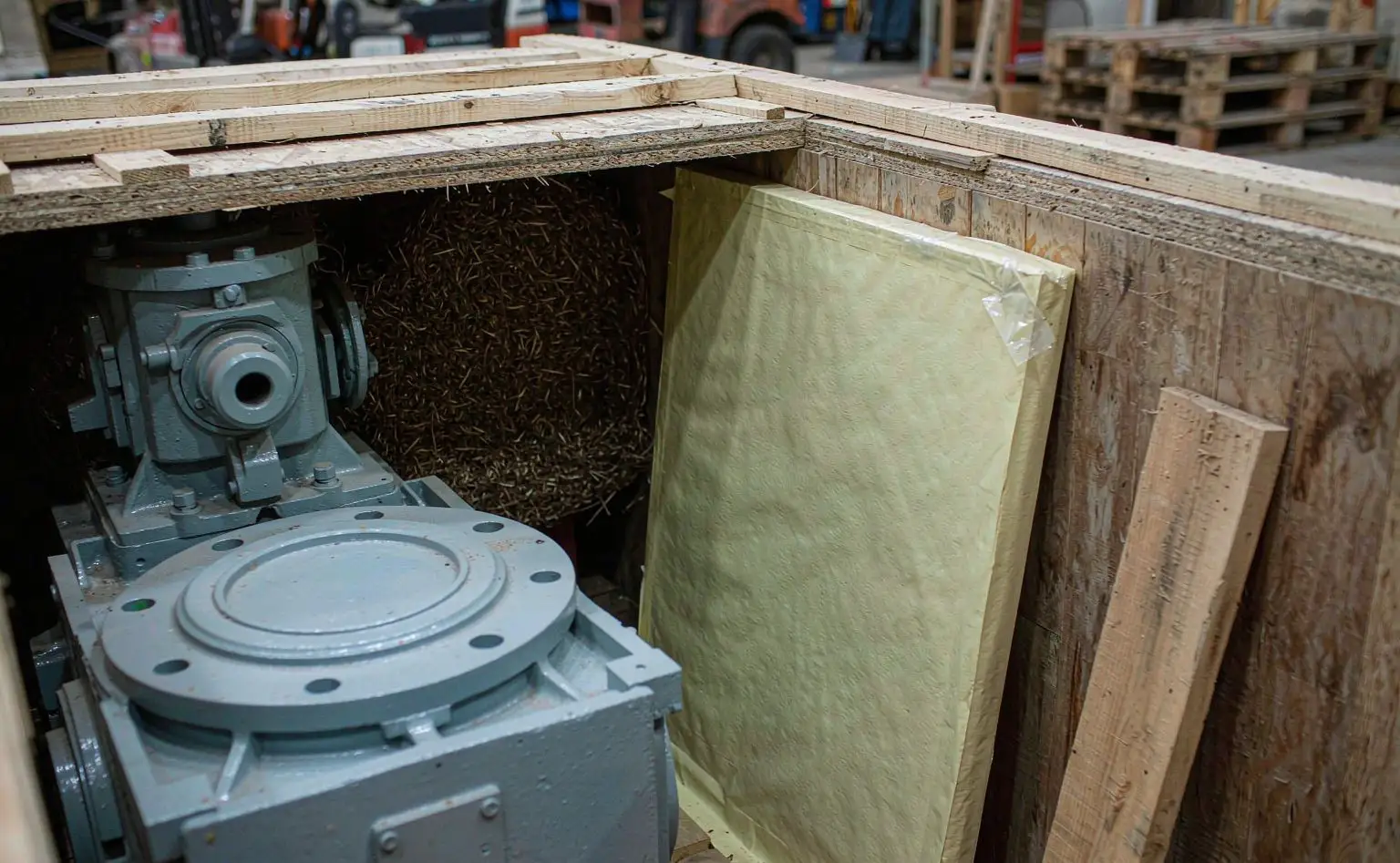
Control board moisture. Test incoming boards and replace or dry anything above 20%; line the crate with a barrier film, leave a 2 cm gap between machine and wall, and block the feet so the unit does not sit on the condensing floor layer.
Sheets per crate. One unit takes two sheets, two or more take three to four, each at 0.1-0.2 g, fixed at the upper corners of the inner walls and kept off the painted faces and the blocking.
Sticks in the container. Hang 8-10 T-1000 sticks in a 20 ft and 10-12 in a 40 ft, on the rings inside the door, staggered top and bottom. The stick uses a natural plant-fibre carrier, contains no chloride and is pH neutral, so it does not attack cast iron or plating. Related practice is in bearing rust oil and drying rods and transformer crate humidity control.
6. Questions from the line
Q: Does cast iron itself grow mould?
A: No. Growth sits on and under the film: moulding sand, cutting fluid and cleaning liquid feed it, condensation waters it.
Q: What temperature should the oven run?
A: 60-80℃ is enough, with dwell doing the work; a stable weight at under 0.1% drift over an hour is the release criterion. Higher heat risks the machined dimensions.
Q: Does the sheet in the seal chamber affect oil fill?
A: It is removed before filling. The sheet only covers the gap between assembly and oil fill; once oil is in, the seal and the oil level do the job.
Q: With sheets in the crate, are sticks still needed?
A: Yes. Sheets cover the small volume in the crate, sticks cover the container air, and the day-night swing there moves far more water.
Four closing points: bake the casting the same day it is blasted at 60-80℃, two hours for a thin cover and three to four for a heavy housing, releasing it at under 0.1% weight drift and no water marks, with sand holes filled first; blow the seal chamber and breather dry after assembly and fit iHeir-D at 0.1-0.2 g per sheet, one in a single-stage unit and two in a two-stage, out before oil fill; hold crate boards at or below 20%, two sheets for one unit and three to four for several, with a barrier film and a 2 cm gap; hang 8-10 T-1000 sticks in a 20 ft and 10-12 in a 40 ft on the inside of the door. Mould resistance can be verified to ASTM G21 and GB/T 1741, and lead times are on the iHeir-D product page.


