




 View Count:37
 Date:2026-11-14
How does instrument transformer mould land on the process? A dry-type unit is a cast epoxy body with pressboard insulation, primary terminals and a secondary terminal box, and the growth is not in the resin: it sits on the cast surface, between the paper layers and in the crate. The route is to dry the cast body until it stops losing weight, and to put one iHeir-D gas-phase sheet at 0.1-0.2 g between the paper layers. This article gives the drying criteria and the dosing.
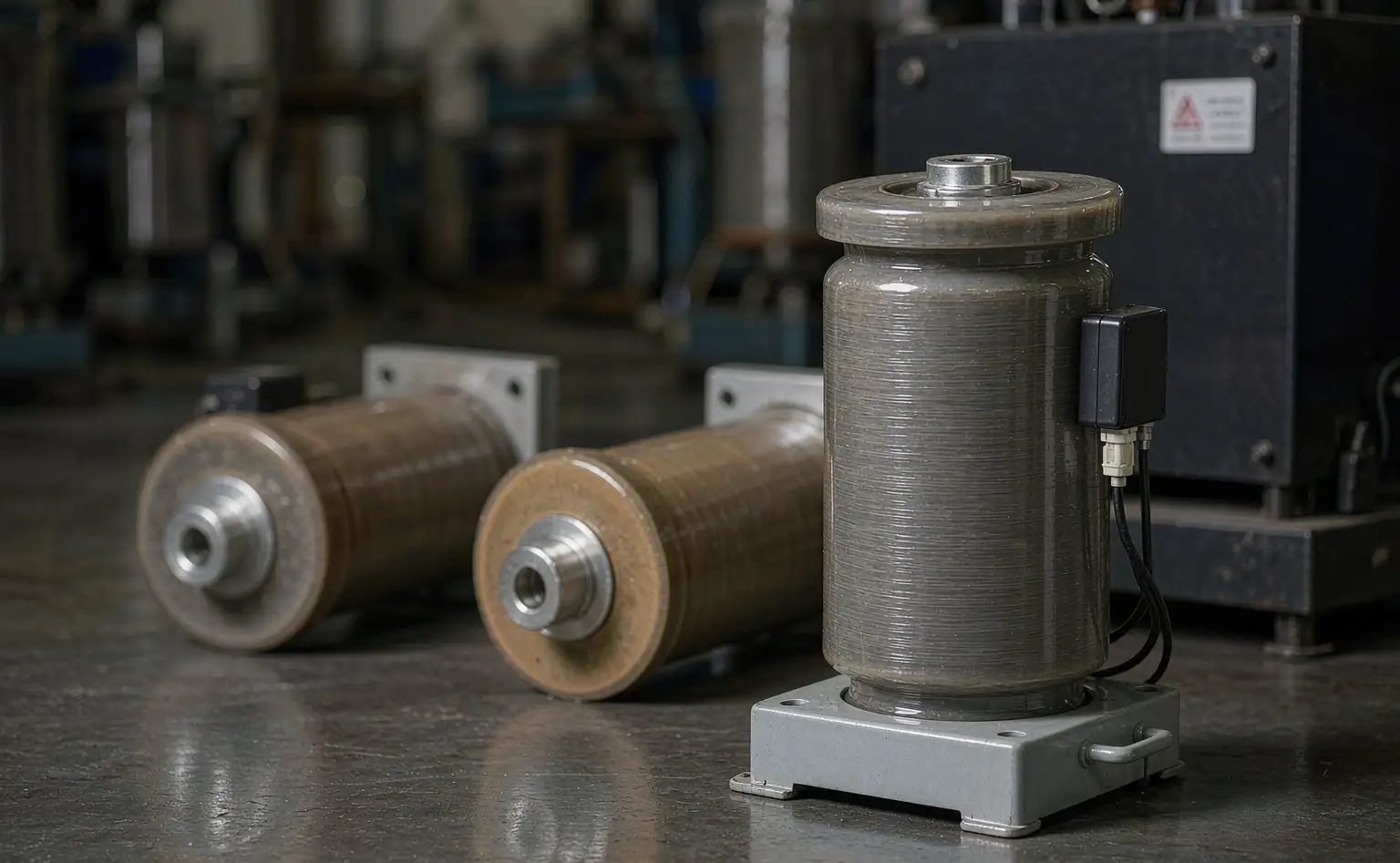
1. Where transformer mould comes from: cast surface, pressboard, crate
A cast-resin dry-type unit carries the primary conductor and the secondary winding inside an epoxy system, with a moulded outer face, pressboard for layer and wrap insulation, and primary terminals, a secondary box and a mounting plate outside.
The cast surface is where condensation lands. Epoxy itself takes up little water, but the moulded face holds release agent, which lowers surface energy and collects dust. A part coming out of post-cure hot meets cool shop air and a film of water forms at once; spots appear first on the parting line, on sanded sprue marks and in nameplate recesses.
Pressboard is the real absorber. Board follows the ambient humidity and can reach 8%-10% in the humid season, and because it sits against the winding and the core, damp board in a closed crate means a ring of spots when the crate is opened two months later.
The crate is the third source. Export crates are heat-treated to ISPM 15, but treatment is not drying and 15%-20% moisture is common; foam and paper dividers inside absorb in the same way.
2. How far to dry the cast body: a stable weight beats a clock
“Bake it for four hours” does not transfer between wall thicknesses and shop climates. A stable weight plus no free water on the surface is the criterion that can be reused.
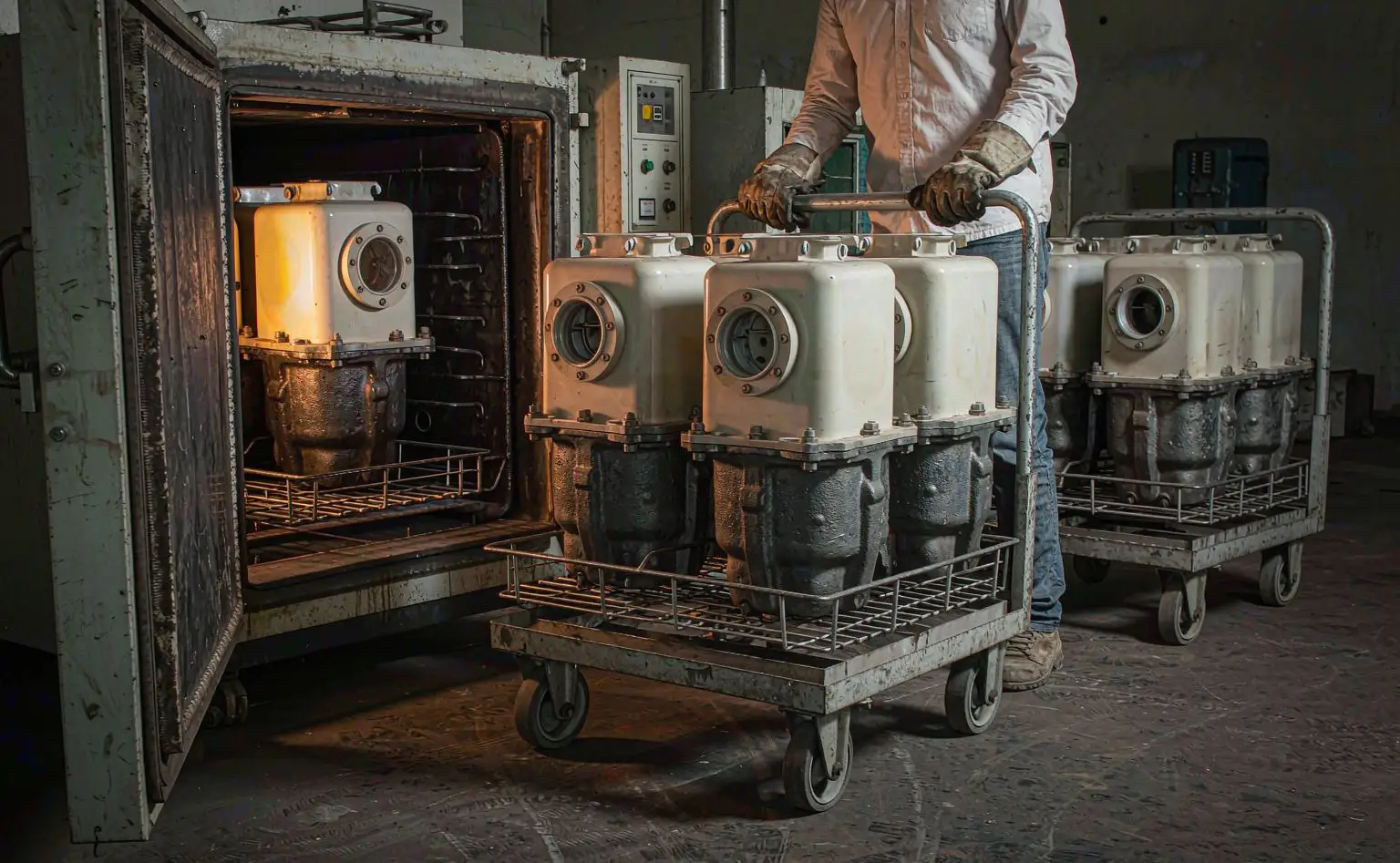
Cool before the oven. A part straight from post-cure is hot, and putting it into a cooler oven condenses water on the surface, which wastes the whole step. Let it come down in a 45%-65%RH shop until it is no longer hot to the touch, then run 60-80℃, with dwell set by wall thickness.
The weighing method. Weigh the same unit twice, two hours apart; a difference under 0.1% counts as stable. Sample 3-5 units per batch and record it on the process card. Thick current transformers often take a full shift, thin voltage transformers three to four hours.
Do not chase time with heat. The epoxy system has a glass transition, and pushing the oven temperature releases internal stress unevenly, which shows up later in a partial discharge test. Add dwell rather than degrees. On the paper side, board coming in above 9% is dried before use.
| Part | Material | Product and level | Stage | Control point |
|---|---|---|---|---|
| Cast body | Cast epoxy | No additive, control water | After post-cure | 60-80℃, weight drift under 0.1% |
| Between paper layers | Electrical pressboard | iHeir-D 0.1-0.2 g per layer | Stacking, wrapping | One per layer, off the terminals |
| Secondary box | ABS or PC | One D sheet inside | After assembly | In before the lid closes |
| Crate and container | Timber crate, 20/40 ft | T-1000 1-2 per crate, 8-10 / 10-12 in the box | Packing and loading | Off the unit, off the wall |
One boundary. The oven takes water out of the casting and the board; the vapour sheet covers what is left in the packed space; the desiccant covers the air in the crate and the container. Each has a job, none replaces another.
3. Sheets between the pressboard: one per layer, flat on the board
A vapour-phase sheet releases slowly into a closed space, so the denser the stack, the more the dosing has to sit between layers rather than in the corners of the box.
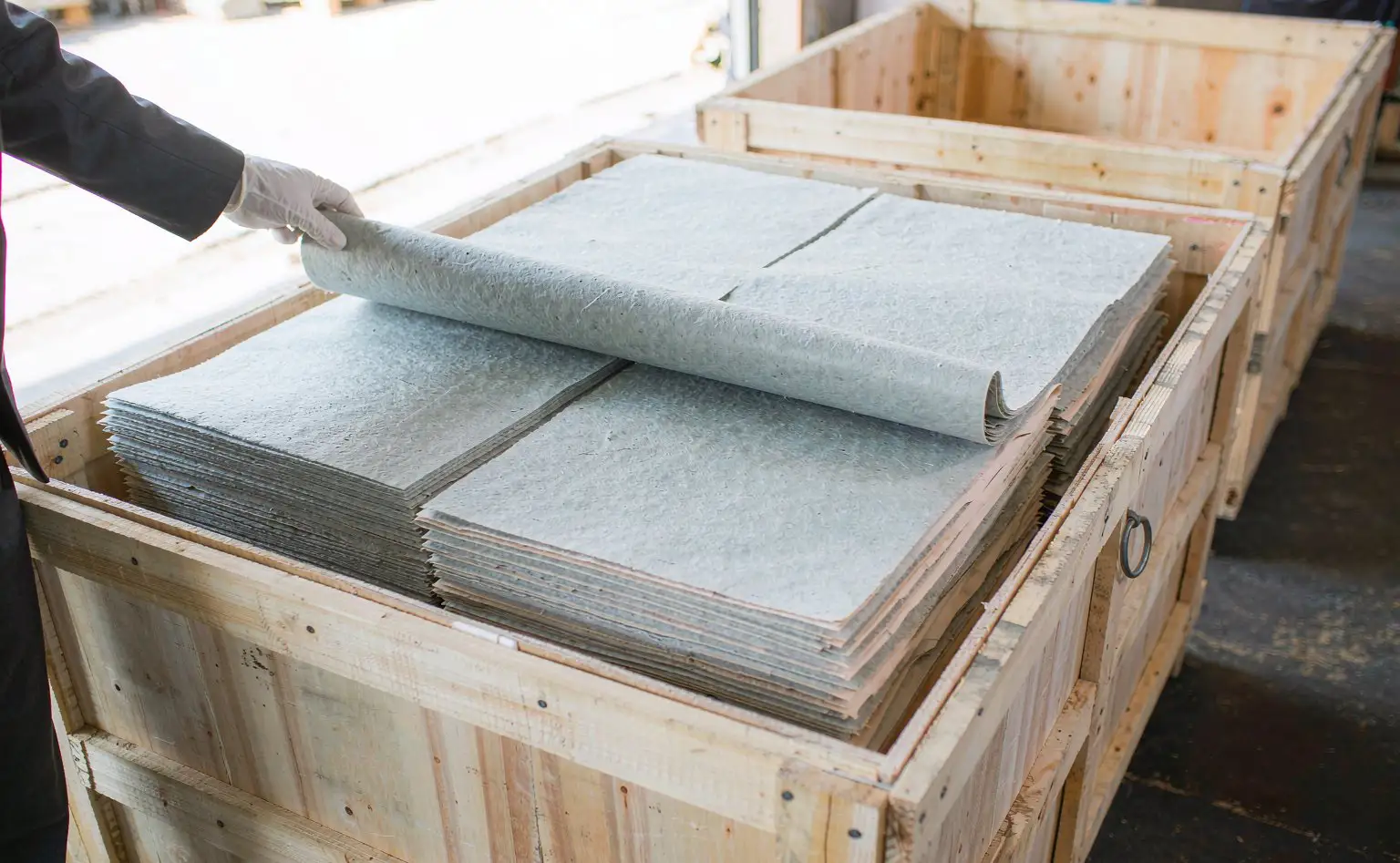
Both stacking and wrapping. Board arrives in stacks; insert one sheet every 10-20 boards as it is stacked and top up as it is drawn down. When wrapping a winding, put one sheet between board and winding and one between board and core. Dose is 0.1-0.2 g per sheet, set by the air volume, not by weight.
Bag it to make it work. Cut board and wrapped sub-assemblies go into a PE bag or a lidded tote; left open for two days the active volatilises and the sheet is wasted.
Off the primary terminals and threads. Terminals are usually tin or silver plated and threads have to hold torque. iHeir-D can corrode poor-quality metal in damp conditions, so interleave a neutral paper between sheet and terminal, or keep the sheet inside the board sandwich.
The secondary box is separate. A plastic box is small and closes well, so one 0.1 g sheet is enough; fit it before the lid goes on, never against the terminal block.
4. Prove metal compatibility: three times the dose, seven days
A transformer carries a lot of metal: primary terminals, secondary blocks, mounting inserts, nameplates. They share a closed space with the sheet, so the first question is whether anything changes colour.
Method. Take three terminals and three inserts from the same batch, seal them in a PE bag with iHeir-D at three times the normal dose, and hold at 40℃ and 90%RH for seven days. Then look for dulling, clouding or a hazy bloom on the plating and for rust in the threads.
Reading the result. Colour matching the control means run the normal dose. Slight dulling means moving the sheet inside the board sandwich so it no longer touches metal. Rust means keeping sheets to the board packing only and controlling the unit with the desiccant instead.
Keep a control set. Store one with the shipment so a claim can be answered with a comparison rather than an explanation.
5. Crate and export: control the wood, hang sticks in the box
Control crate moisture first. Test incoming export crates, dry or replace anything above 20%, line the crate with a barrier film and leave a 2 cm gap between unit and wall rather than pressing it to the boards.
Dose per crate. Put 1-2 short T-1000 sticks in each crate, tied to a fixing on the wall, never on the unit and never against the casting, with D sheets per layer in the paper packing. For container export hang 8-10 sticks in a 20 ft and 10-12 in a 40 ft.
Store and load. Hold the finished store below 60%RH, keep pallets 10 cm off the floor and 30 cm off the wall, and open one crate before loading to check the board edges and terminals for smell and hazy plating. Related practice is in transformer pressboard and wooden crate and switchgear cabinet supports and rods.
6. Questions from the line
Q: Does the cast epoxy itself grow mould?
A: Not inside the resin. Growth is on the surface, where release agent, sanding dust and condensation meet, and it starts on the parting line and in the nameplate recess.
Q: The board is dried, do we still need the sheet?
A: Yes. Drying removes the water of that moment; the board takes up moisture again once packed, and the sheet covers storage and transit.
Q: How many sheets in a stack?
A: One every 10-20 boards at 0.1-0.2 g, adding more where the stack is high or the bag is loose.
Q: Will the sheet blacken the terminals?
A: Not at the normal dose, but thin plating and bare copper threads are sensitive. Run the seven-day bag test at three times the dose and move the sheet inside the board sandwich if colour shifts.
Four closing points: cool the cast body in a 45%-65%RH shop, then run 60-80℃ until two weighings two hours apart differ by under 0.1% and the surface is free of water, adding dwell rather than degrees; insert iHeir-D every 10-20 pressboard sheets at 0.1-0.2 g, one sheet between board and winding and one between board and core, with the bag closed and the sheet off the terminals; put 1-2 short T-1000 sticks in each crate and hang 8-10 in a 20 ft and 10-12 in a 40 ft container while holding the store below 60%RH; test metal parts at three times the dose for seven days and verify mould resistance to ASTM G21, with a one-kilogram sample available ahead of the order and lead times on the iHeir-D product page.


