




 View Count:30
 Date:2026-11-13
What makes swimwear mould so hard to stop? A lot is folded, bagged and stored for a fortnight; the bags are opened at the buyer’s inspection and the lot is rejected, and rework and air freight cost far more than the treatment. The place to fix it is the finishing range: nylon fabric runs the stenter trough with iHeir-BJ textile mildew inhibitor at 2%-3% o.w.f., pick-up held at 70%, and each bag then takes one sheet of iHeir-D carrying 0.1-0.2 g. This article gives the bath, drying and bag dose.
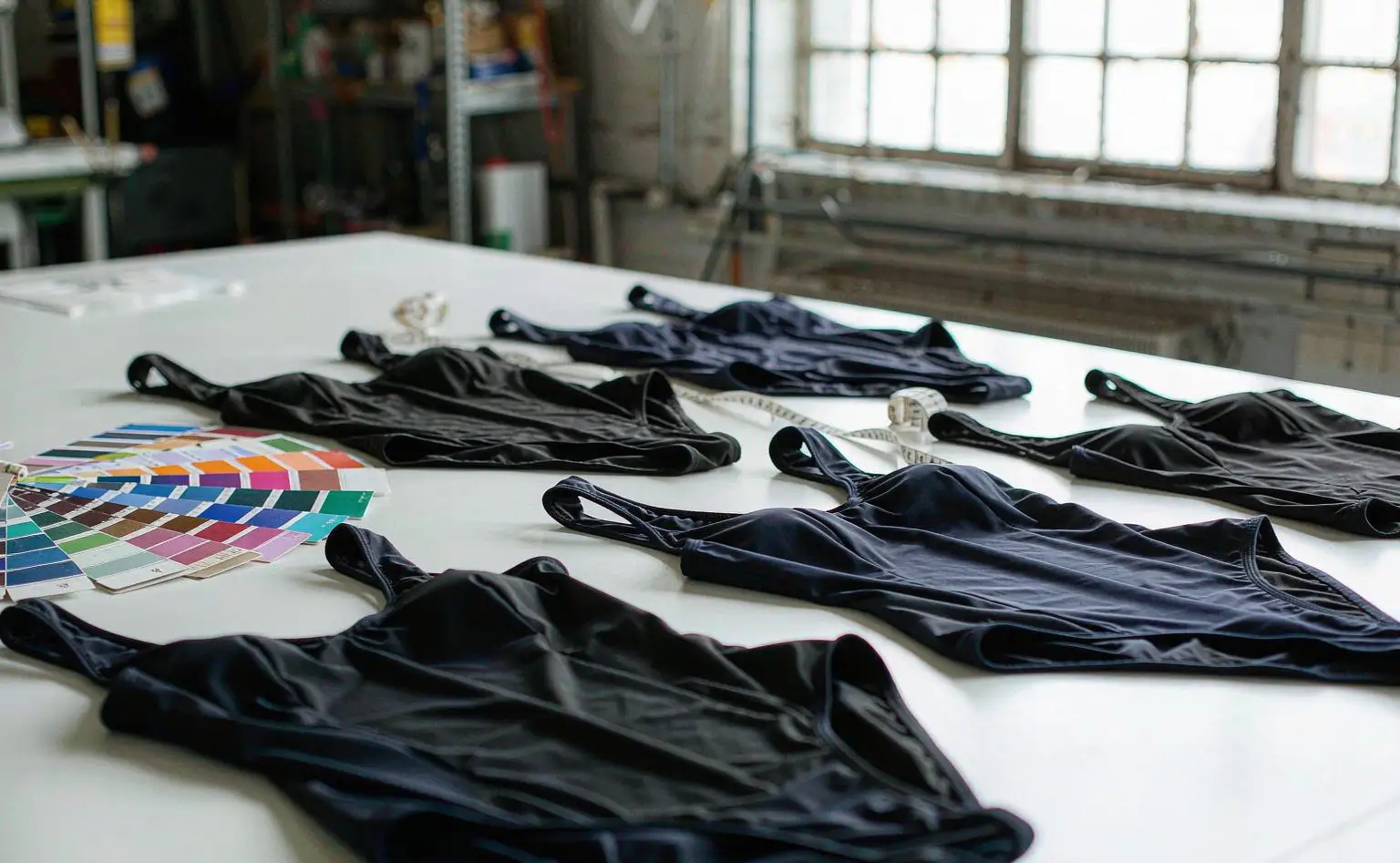
1. Where swimwear mould comes from: fabric, seams and the air inside the bag
A swimsuit body is nylon knit with elastane, and nylon holds little moisture, so the face is not the weak point. Growth appears in three fixed places: finishing auxiliaries left on the fabric, the poly-cotton tape in seams and bindings, and moisture sealed inside the bag after folding.
Residues are the food. Levelling agents, softeners and antistats from the dyehouse are fatty-acid or surfactant chemistry, and whatever survives the wash stays on the fibre. Past 75%RH those residues take up water first.
The tape fails first. Straps, bindings and linings in poly-cotton take up moisture faster than nylon, so spots appear in the tape and stitch holes first, then spread along the seam.
Bag moisture is the hardest part. Suits are folded warm from the stenter, no air moves between the layers, and once the bag is closed the residual moisture has nowhere to go. Inspection passes and two weeks later the bag smells.
2. Where the finishing step sits: before cutting, never after sewing
The route is knitting, dyeing and finishing, cutting, sewing, packing. Treatment can only go in at the stenter finishing stage, while the fabric is still on the roll and the mangle presses the liquor evenly into the fibre. Once cut and sewn, spraying gives an uneven result and often shading on the elastane.
Two conditions come before that. The fabric must be desized and washed clean, because the less auxiliary residue is left, the better the inhibitor bonds. And elastane hates heat: plain nylon can be set above 170°C, while a swimwear quality with elastane needs a lower temperature and a longer dwell, or the elastic recovery drops and the suit goes slack after a few wears.
| Part | Material | Product and level | Stage | Control point |
|---|---|---|---|---|
| Face fabric | Nylon and elastane knit | iHeir-BJ 2%-3% o.w.f. | Stenter finishing trough | 21-50°C, pH around 6 |
| Seam tape | Poly-cotton, cotton tape | Carried in the same bath | With the fabric | Shade checked on a strike-off |
| Garment | Sewn suit | No further treatment | Done before cutting | Moisture to spec before folding |
| Poly bag | OPP, PE film | iHeir-D 0.1-0.2 g per sheet | Bagging | Sheet kept off metal hardware |
One boundary. The bath covers the fabric and the seam tape themselves and stays in the fibre; the sheet in the bag covers the closed space during storage and transit. Neither replaces the other. Treat only the fabric and bag moisture still blooms spots; rely only on the sheet and the residue on the fabric is still food.
3. Making up the bath and padding: how 2%-3% o.w.f. lands on the cloth
o.w.f. is on the weight of fibre, not on the weight of the bath. For 100 kg of fabric, 2% means 2 kg of iHeir-BJ and 3% means 3 kg. Get the basis wrong and the dose is out by an order of magnitude.
Pre-mix before the trough. Stir the measured iHeir-BJ into 9-13 times its volume of clean water first, then add it to the stenter trough in portions. Tip a whole drum in and the local concentration is too high, uptake is uneven and the hand of the fabric varies across the roll.
Water and pH. Use soft water and hold the bath at pH 4.5-8.5, with around 6 steadiest in production. iHeir-BJ is cationic and must not share a bath with anionic auxiliaries; run an anionic softener as a separate pass or switch grade.
Pick-up at 70%. Set the mangle to a 70% wet pick-up so the liquor carried by the fabric is steady and the 2%-3% dose lands where it should. A 10-point swing moves the add-on by more than a tenth.
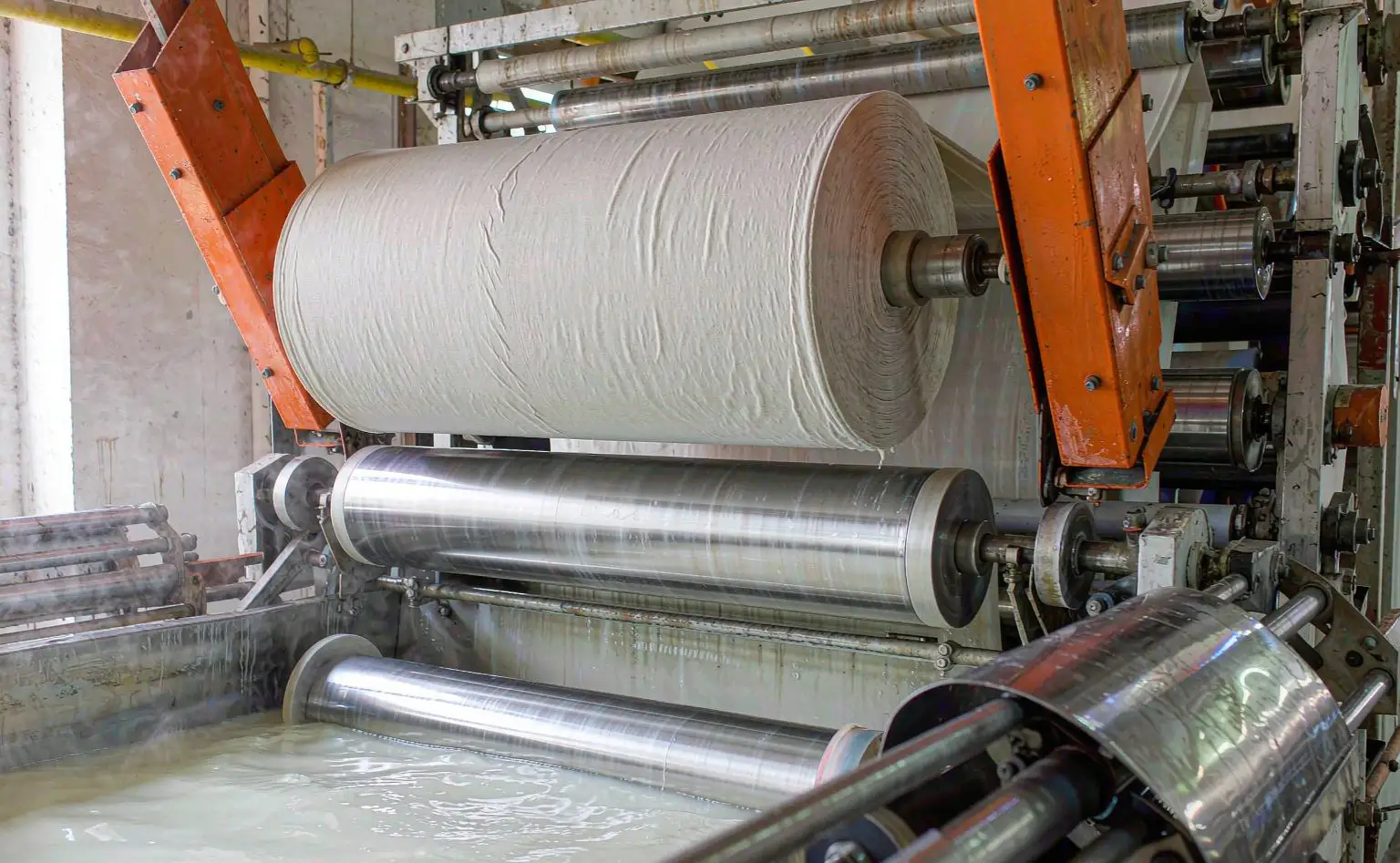
4. Drying and garment making: moisture breaks more lots than the additive
Dried to the process moisture before cutting, which most plants on elastane knits hold under 8%; the test is dry to the hand and steady on the scale. Cut it damp and the water is trapped between stacked layers, and the inhibitor holds growth down but not the musty smell.
Split the stenter into two zones. The first zone takes the water out, the second sets at a temperature below the elastane limit. Better to add 20 seconds of dwell than 10°C of heat: push the temperature and both elastic recovery and gramme weight drift.
Cutting room and temporary storage. Hold the cutting room at 45%-65%RH, never leave cut pieces out overnight, run a dehumidifier in the humid season and keep stacks 30 cm off the wall and 10 cm off the floor.
Do not add water at sewing. Some lines wipe the workpiece with a damp cloth so it feeds better, which throws away everything the finishing stage did.
5. The sheet in the bag: what one 0.1-0.2 g sheet covers
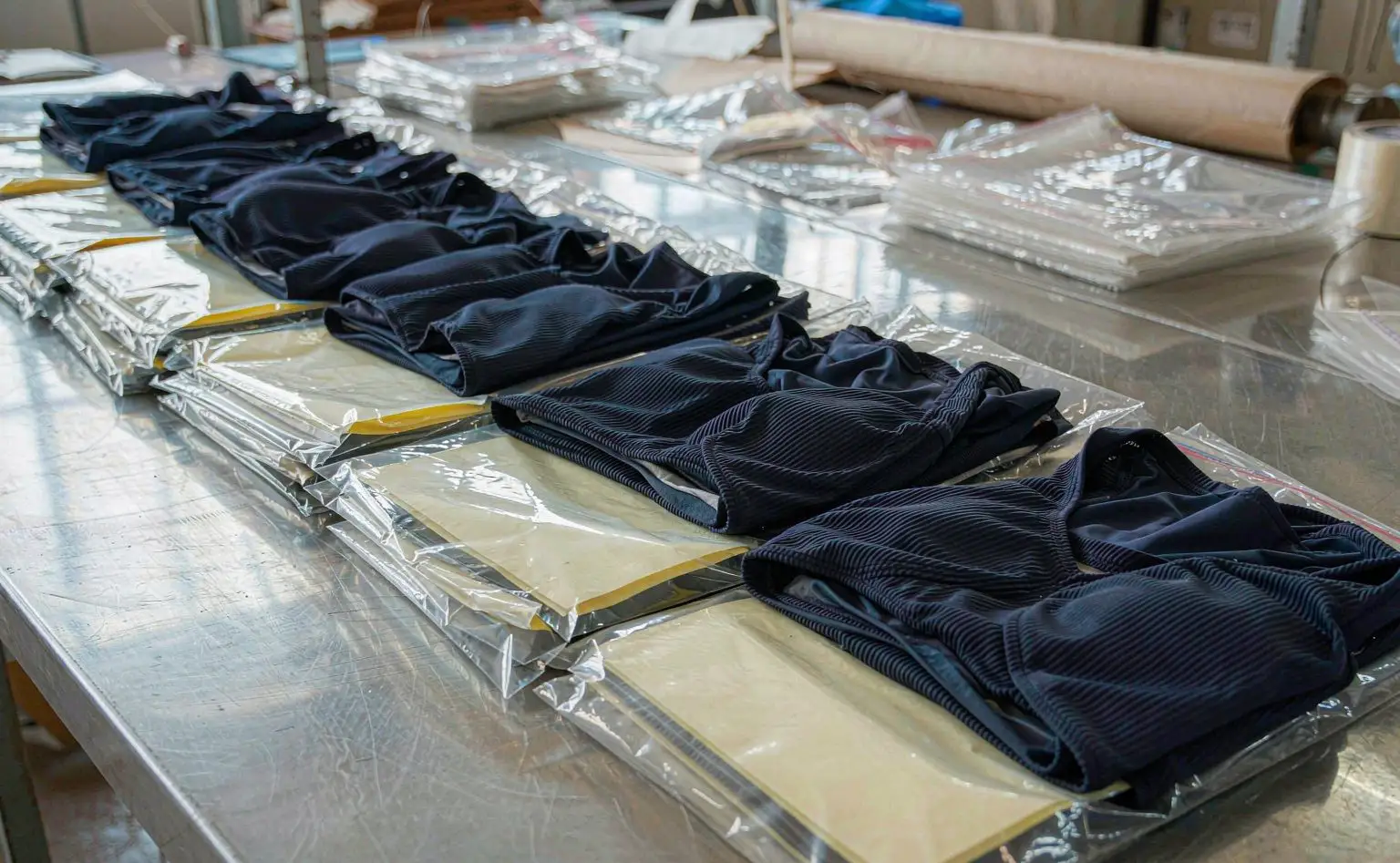
This stage uses iHeir-D gas-phase anti-mould paper, each sheet carrying 0.1-0.2 g of active. A vapour-phase inhibitor works by slowly releasing into a closed space, so the bag has to close: a wide open mouth or a perforated film loses half the effect.
How much space one sheet covers. A single-piece poly bag around 30 × 40 cm takes one 0.1 g sheet; a multi-piece gift bag, or a large bag after vacuuming, takes one 0.2 g sheet or two at 0.1 g. The more air inside, the higher the dose.
Run a compatibility test on the hardware. Damp conditions let iHeir-D corrode poor-quality metal trims, and strap adjusters and back hooks are usually metal, so test at three times the normal dose: seal sheet and hardware in one bag for seven days and check for discolouration. If in doubt, fold the sheet into the bag bottom so it never touches the metal.
Cartons and export. Seal the inner bag, pack by colour code and never mix damp trims into the carton; hold the store below 60%RH and line the container. Swimwear and cycling jerseys are both elastane knits, so the low-temperature route is in the cycling jersey bath, and trough dosing in tablecloth setting and regain.
6. Questions from the line
Q: The bath already carries the inhibitor, do we still need the sheet?
A: Yes. The bath covers fabric and seam tape, the sheet covers the closed bag during storage and transit, and each has its own job.
Q: What is the difference between 2% and 3%?
A: Double the add-on. Short-cycle orders are covered at 2%; full-container exports, long sea transit and heavy poly-cotton trims go to 3%. Set it by order cycle on the process card.
Q: How low should the stenter run on elastane fabric?
A: Trial by fabric type and elastane content, dropping temperature rather than pushing heat through. Run a 3-metre sample, check elastic recovery and gramme weight, then scale up.
Q: A bagged lot has already spotted, can it be saved?
A: Surface spots wipe off, but the mycelium is already in the seam and the binding and it comes back. Downgrade or rework the lot rather than shipping it as first quality.
Four closing points: run the nylon through the stenter trough with iHeir-BJ at 2%-3% o.w.f. pre-mixed into 9-13 times its volume of water, at 21-50°C and pH 6 in soft water, never with anionic auxiliaries; pad at 70% pick-up and dry under 8% before cutting, holding the cutting room at 45%-65%RH; bag each suit with one iHeir-D sheet at 0.1-0.2 g, seal it and test metal hardware at three times the dose; hold the store below 60%RH and line the export container. Performance can be verified to GB/T 24346 or AATCC 30, a one-kilogram sample can be sent ahead, and lead times are on the iHeir-BJ product page.


