




 View Count:61
 Date:2026-09-29
Nonwoven mould can be held back, but the route has to match the line. Rolls off spunlace, needle-punch and spunbond lines take iHeir-PG by padding at 20-40 g/L with 70% pickup and drying at 100-170 degrees, batches of made-up articles are immersed at 2-4% o.w.f., finished pieces are sprayed at 25-50x dilution, and mould-led work switches to iHeir-BJ at 2-3% o.w.f. This article covers the dosing route for each, the split between mould and antibacterial specifications, and the packing and storage layer.
1. Mould or bacteria: two separate specifications
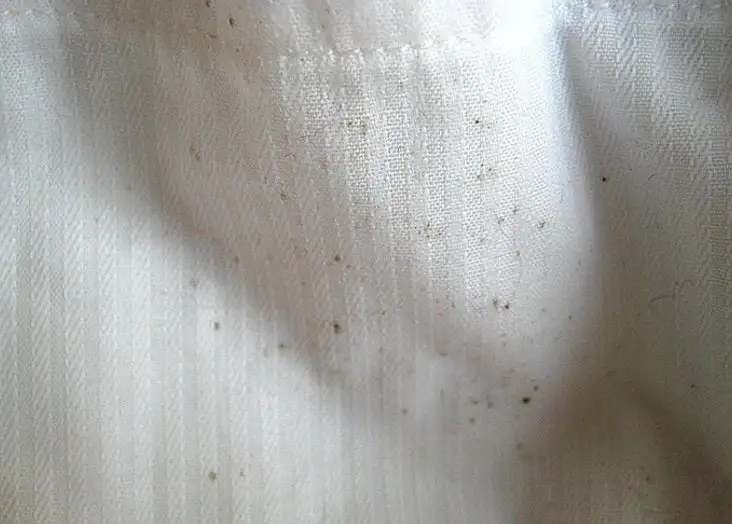
The first step is to separate the two jobs. Mould protection targets fungi, which show as spotting — the grey-green patches and the smell that appear on rolls during a wet season or a sea passage. Antibacterial protection targets bacteria, which show as odour, discolouration and hygiene figures that fall short, and it matters most on material worn against skin or used in sanitary applications. The standards and the agents differ: mould is read from a growth rating such as GB/T 24346-2009, antibacterial performance from a reduction figure such as GB/T 20944.3 or ISO 22196. One passing result says nothing about the other.
The second layer is construction. Nonwoven is a fibre web bonded by heat or entangled by water jets, so it has high porosity and takes up moisture quickly — but once a roll is wound, the layers press against each other and the core dries very slowly. Add the water and size carried in from spunlace and finishing, and as soon as the ambient humidity rises, growth starts at the wound edge, the folds and the core. The point is not to add one more pass; it is to hold pickup, drying and the moisture content before winding.
2. The three routes at a glance
The table lists the line, what is treated, the product, the figures and the points to watch, so it can be used as the first draft of a process card.
| Line / stage | Treated part | Product | Figures | Points to watch |
|---|---|---|---|---|
| Finishing pad line (spunlace, needle-punch, spunbond) | Roll goods, web material | iHeir-PG composite antimicrobial agent | Pad at 20-40 g/L | pH 6-8, ambient temperature, 70% pickup, dry at 100-170 degrees; no heat setting needed |
| Immersion | Rolls, filter bags, wipes | iHeir-PG composite antimicrobial agent | Immerse at 2-4% o.w.f. | 50 degrees for 20-30 minutes, then dewater and dry at 100-170 degrees |
| Spraying (formed articles) | Bags, filter bags, folds and seams | iHeir-PG composite antimicrobial agent | Dilute 25-50 times and spray evenly | Set spray volume by thickness and line speed, and re-spray folds and seams; shake before use |
| Mould-led finishing | Rolls and articles at high risk | iHeir-BJ textile mildew inhibitor | Padding at 2-3% o.w.f. | Bath 21-50 degrees, pH 4.5-8.5; cationic, never with an anionic auxiliary |
| Packing end | Nonwoven bags and inner packing | iHeir-D vapour-phase sheet | 0.1-0.2 grams of active content per sheet | Place by pack volume, packed with the article |
| Warehouse humidity | Closed stores and racked stock | CH-10 drying and deodorising pack | Absorbs 200% or more of its own weight | Holds for 270-300 days; stand rolls upright, off the floor and away from the wall |
Six rows, one conclusion: finishing decides whether the web carries protection, the article and packing stage decides whether formed goods grow mould in the store, and warehouse humidity decides whether the first two survive to delivery.
3. The pad line: how to set the iHeir-PG figures
Padding is the most reliable dosing point on a roll line. iHeir-PG runs in the finish bath at 20-40 g/L, with the working liquor at pH 6-8 and ambient temperature, pickup at 70% and drying at 100-170 degrees Celsius. It needs no heat setting, so a normal drying line will do, which saves a step where there is no setting frame — a common situation on spunlace and needle-punch lines. Shake the drum before use.
Which end of the band to use depends on two variables: weight and end use. Light, highly porous material carries little liquor and sits at the low end; heavier material that also has to meet a reduction figure and survive washing sits at the high end. Evenness matters more than the headline rate — where one section of a roll picks up too little liquor, growth and a failed hygiene figure both start there, so hold bath level, roller pressure and drying temperature together. Run a laboratory coupon for both growth and bacterial reduction before scaling up.
4. Immersion and spraying: rolls and formed articles
Small batches and odd widths go by immersion: iHeir-PG at 2-4% o.w.f. for 20-30 minutes at 50 degrees, then dewater and dry at 100-170 degrees. The route has a low equipment threshold and suits items such as filter bags and wipes; the trade-off is that bath concentration drifts with throughput, so top up against the volume processed and keep the record rather than running one concentration all day.
Articles already formed and difficult to wet out are sprayed: dilute the working liquor 25-50 times and spray evenly, setting volume by thickness and line speed. Re-spray folds and seams first, because they pick up the least liquor and grow mould first. Air dry or pass through the drying line afterwards. Where a batch is mainly about mould with antibacterial as a secondary requirement, switch to iHeir-BJ at 2-3% o.w.f. by padding; remember that BJ is cationic and must not run in the same bath as an anionic auxiliary, so an anionic hydrophilic agent or softener has to be a separate pass.
5. Packing and storage: the double layer
A nonwoven bag is both a finished product and somebody else’s packaging, so mould protection has to work at both ends. Finish the bag on one of the three routes above, then place iHeir-D vapour-phase sheets at 0.1-0.2 grams of active content each, scaled to the space and the piece count, inside the inner pack with the goods rather than outside it — vapour-phase protection works through distribution in a closed space, so sheets outside the carton do nothing.
At the warehouse, do not rely on a dehumidifier alone. Stand rolls upright, keep them off the floor and away from the wall, and run stock first in, first out. For a closed store, CH-10 absorbs 200% or more of its own weight and holds for 270-300 days, which suits transit stores that cannot be dehumidified continuously. One wording point on acceptance: a passing bacterial reduction figure is not a passing mould result. Run both tests, and coupon from material that has been stored for a period rather than from fresh stock only.
6. Common questions
Q: Can one pad line handle both mould and antibacterial work? Yes, but as two passes. The specifications and the agents differ, and a shared bath tends to weaken both. Where both are cationic and the line runs continuously they can be sequenced with a rinse in between, but confirm both figures on a first-bath coupon.
Q: Does a spray top-up change appearance or hand feel? At 25-50x dilution the liquor pick-up is far below a pad, so appearance and hand feel barely move once dry. The key is evenness: two thin passes beat one heavy pass, which otherwise leaves stiff patches and colour variation. Filter bags, where air permeability matters, need their own permeability check.
Q: Can the storage stage be skipped? No. Finishing decides whether the web carries protection, and storage decides whether it survives. Racking off the floor, holding the store dry and placing vapour-phase sheets at packing all cost less than a rework. The roll side is covered in nonwoven roll mould in the workshop and warehouse, and the filter side in nonwoven filter bag mould in storage.
Nonwoven mould control comes down to matching the route to the line: rolls on the iHeir-PG pad route at 20-40 g/L, batches by immersion at 2-4% o.w.f., formed articles by spraying at 25-50x dilution, mould-led work on iHeir-BJ at 2-3% o.w.f., and iHeir-D and CH-10 to close the packing and storage layer. Samples and minimum order details are available on request.


