




 View Count:45
 Date:2026-11-02
How is watch mould prevented, and why do the crystal and case stay clean while strap and box spot first? A strap lining sits against skin with no airflow, so sweat works into the pores, and a flock-lined box turns into a sealed damp chamber once the lid closes. The strap takes iHeir-PF leather anti-mould agent at 0.05%-0.2% of hide weight during chrome tanning, fatliquoring or finishing, and the box takes an iHeir-D sheet at 0.1-0.2g of active matter. This article covers where each stage sits, the doses and the packing rules.
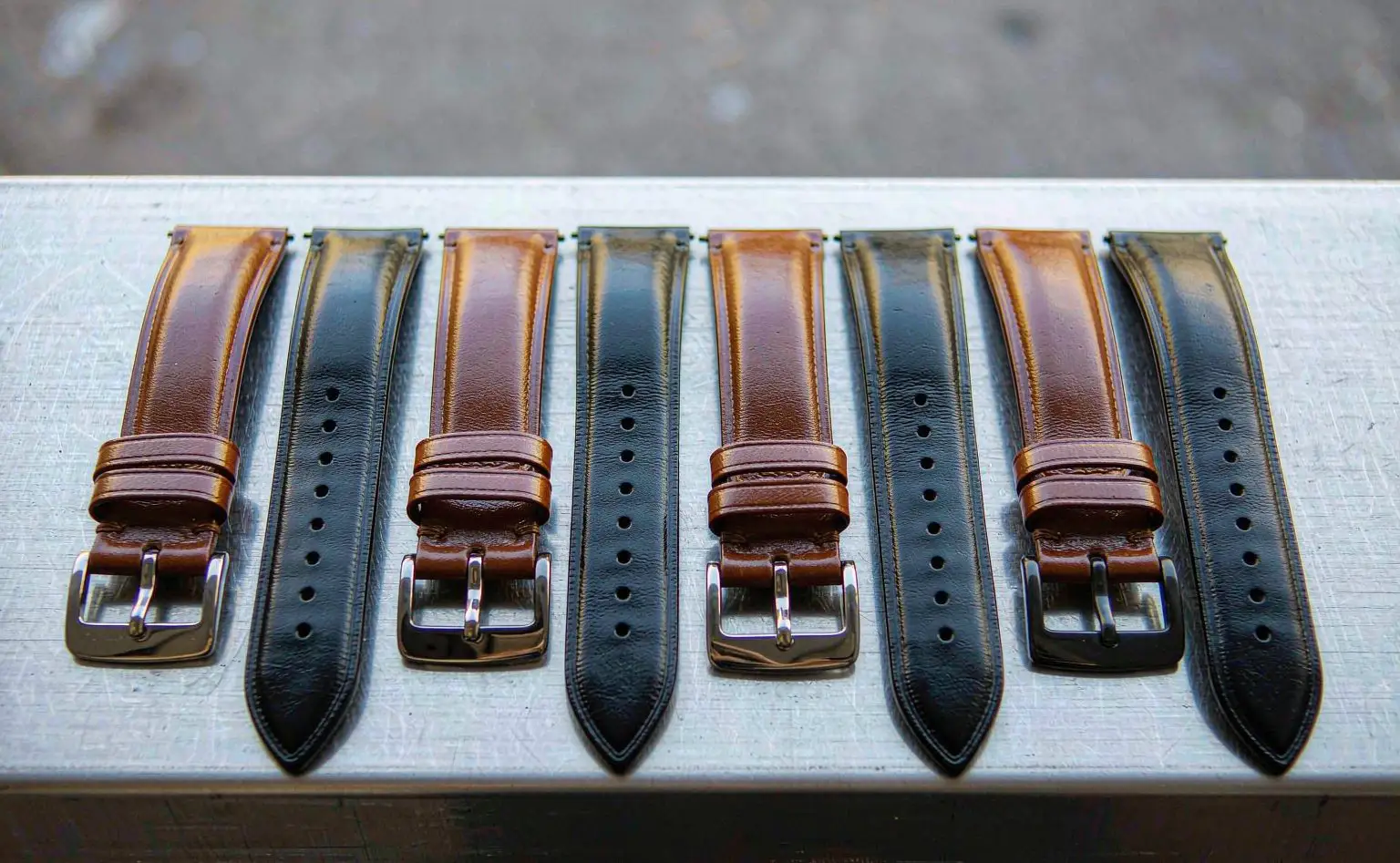
1. Mould starts on the strap lining and inside the box
Take a watch apart and the build is mixed: stainless case and buckle, sapphire or mineral crystal, movement, leather strap, board box with flocked lining and a cushion. Metal and glass do not grow mould. The leather strap and the box lining do, and each passes mould to the other.
The strap fails on sweat and sebum. A strap is a face leather and a lining leather laminated together. The lining sits against the wrist and takes a day’s sweat in summer, leaving salt and oil in the pores, with the worst build-up at the punched holes, the stitch line and the fold. Over a storage period those organics take up moisture and mould grows from the lining outwards: the surface darkens, feels tacky and will not wipe clean, and rework usually means a new strap.
The box fails on moisture uptake. Flocked fabric, foam and grey board all absorb water, and a closed lid makes a semi-sealed volume. Held for months in an overseas warehouse, the box wall and the flock spot first, and the mould then transfers to the strap and case. The box costs little and still downgrades the whole watch.
2. Leather takes the agent, paper takes the sheet
The table lines up the strap, the metal parts, the box lining and the outer carton. Leather is dosed on hide weight, paper is dosed as active matter per sheet, and the two figures are not convertible.
| Part | Material | Product and level | Stage | Control point |
|---|---|---|---|---|
| Leather strap | Chrome-tanned hide, face and lining | iHeir-PF 0.05%-0.2% of hide weight | Chrome tanning, fatliquoring or finishing | Bath pH must not exceed 8 |
| Case and buckle | Stainless steel | Outside this article: rust protection and wiping per part | Before assembly | Degreased and blown dry |
| Box lining | Flock, foam, grey board | iHeir-D paper at 0.1-0.2g per sheet | Casing and closing | Compatibility trial first |
| Outer carton | Carton board, pallet | Paper per carton, humidity control | Packing, storage | Store below 60% RH |
One boundary. An agent in the leather does not excuse the box: lining mould transfers to the strap, and the box is what a buyer sees first. Nor does a good box help a lining still loaded with sweat and oil. Both stages have to run.
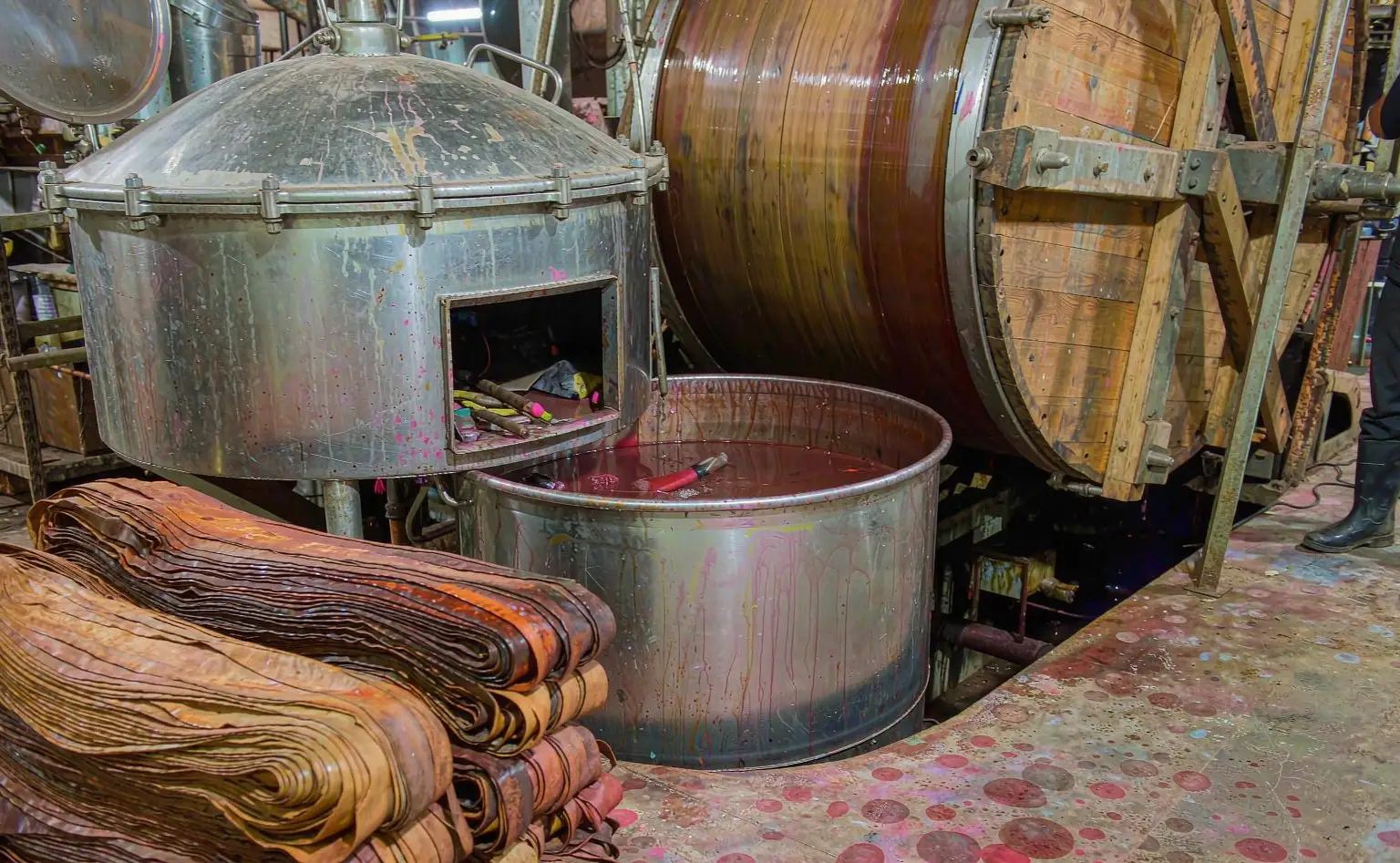
3. Strap leather: the agent goes in at tanning, fatliquoring or finishing
Straps take iHeir-PF leather anti-mould agent at 0.05%-0.2% of hide weight. It is an emulsifiable liquid with 30±1% active matter, pH 3-8 as a 1% solution and an acute oral LD50 of at least 1441 mg/kg, in 25kg and 200kg plastic drums.
Which stage. Chrome tanning (wet blue), fatliquoring and finishing all accept it, added to the treatment liquor and mixed through. Export strap makers most often use the fatliquoring bath: it is already an oil-water system, so the agent travels into the fibre with the fatliquor, far more evenly than a spray on the finished strap, and hand and gloss stay put.
Three hard rules. First, order of addition: pour the agent into the water, never water into the agent, or it lumps. Second, pH: it must not be used above pH 8, so an alkaline deliming or strong alkaline retan bath wastes the dose. Third, keep the drums away from lime and soda ash.
A common miss. A strap is two leathers laminated, and factories that treat the face only find mould starting from the lining. Run both through the bath, or treat the whole hide at fatliquoring and cut strips afterwards, which removes the second handling step. The wider tannery route is in our leather factory anti-mould plan.
4. Watch box: where the sheet goes and how many
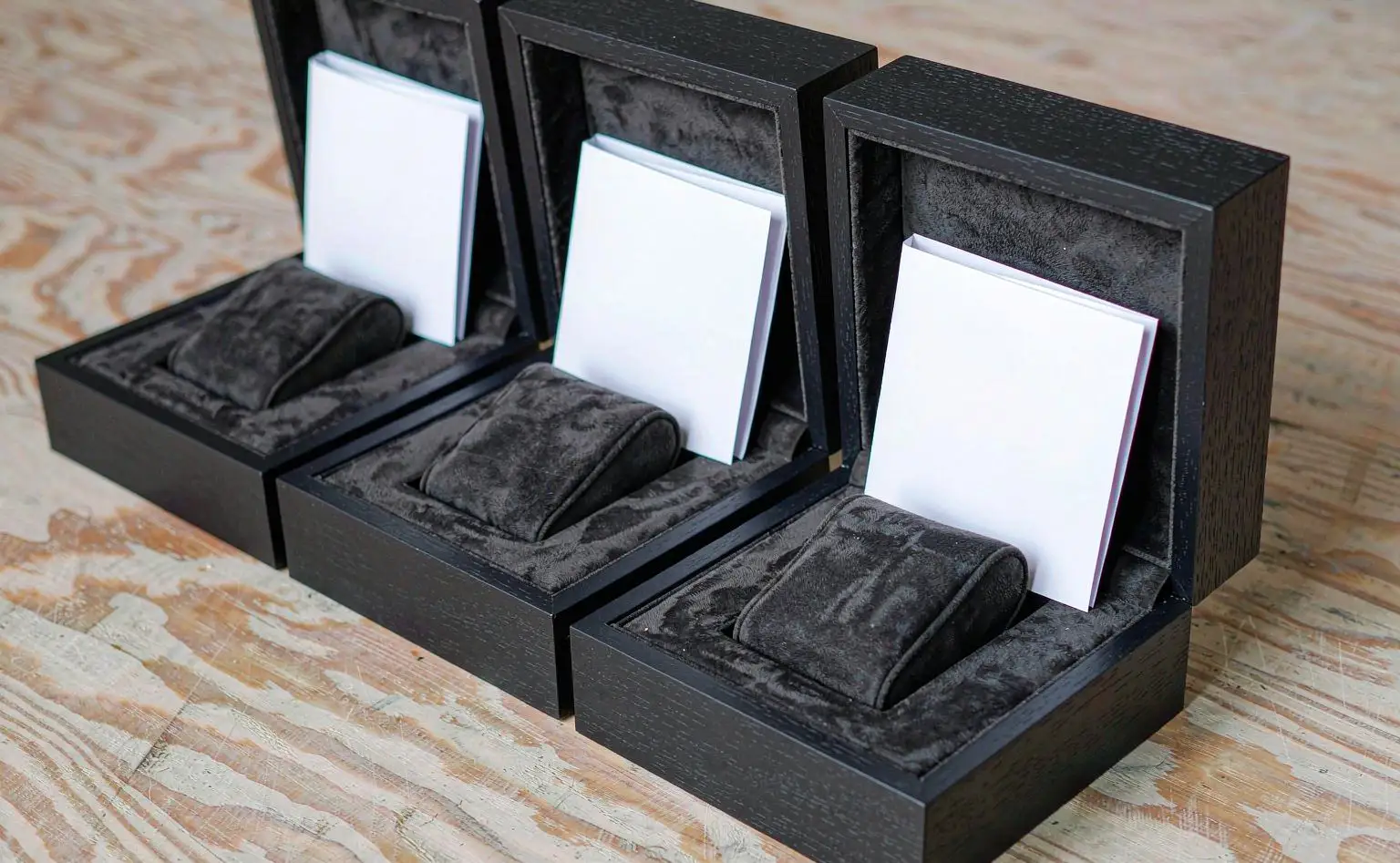
The box stage uses iHeir-D gas-phase anti-mould paper. It is a speciality ink carrying anti-mould particles, coated or printed onto paper and dried to make the sheet, which then sits sealed in the box with the product and covers the gaps by vapour. The dose basis is 0.1-0.2g of active matter per sheet, adjusted for box volume, lining area and storage time: one sheet for a standard single-watch box, two for a long or double box, placed against the inside of the lid or under the cushion rather than pressed on the case.
Placement matters more than count. The vapour has to diffuse, so the sheet belongs on the side with the largest air space and must not be buried under the foam cushion. The lid has to close into a semi-sealed volume; boxes with a wide gap get a paper sleeve or a blister before cartoning.
Run a compatibility trial first. Boxes carry stainless buckles, plated badges and dyed flock. Put three times the normal dose into the box under test, mist a little water, keep the sheet off the case with a paper separator, close the box and inspect after a few days for fading or dulled metal. Poor alloy buckles really do corrode in damp conditions. Sheet selection is covered in choosing anti-mould packaging paper.
5. Assembly, packing and export
Risk at assembly sits in the hands: straps go from stores onto watches, sit overnight in a bench bin and pick up moisture, and the wiping cloth is itself oily. Draw straps daily, dehumidify the bench, change the cloth per shift and check each lining before casing.
At packing, add one sheet inside the box, sleeve or blister it, and put cartons on pallets 10cm off the floor and 10cm off the wall below 60% RH. For sea freight, container condensation does more damage than shop humidity, so leave an air path and keep cartons off the wall; see preventing container rain.
Release at three levels: strap leather to ASTM G21 or ISO 846 for 28 days, sampling one piece of face leather and one of lining; box lining to GB/T 24346-2009; complete boxes for 30 days at 30℃/85% RH, opening to check flock, foam and the strap lining face. Pass all three before the order ships.
6. Questions on sheet-only protection, hand feel and spotted straps
Q: If we only put a sheet in the box and skip the strap, will it survive one sea leg?
On a short route, usually. Over long storage, no: the source sits in the fibre, and a sheet only works on the air in the box.
Q: Does the agent change the hand or the shade of the strap?
At 0.05%-0.2% of hide weight, hand is unchanged under normal processing. Where shade matters, dose half a hide, run sample straps, leave 7 days and compare colour and softness.
Q: The straps have already spotted. Can we just wipe them?
Wiping removes the bloom, not the growth in the pores, and it comes back within days of casing. Light spotting can be cleaned, dried and given a supplementary anti-mould pass; heavy spotting is better handled by replacing the strap than by pushing rework to the week before shipment.
Four points to take away: dose the strap at chrome tanning, fatliquoring or finishing with iHeir-PF at 0.05%-0.2% of hide weight, pouring the agent into the water and keeping the bath at or below pH 8, and treat face and lining both; put iHeir-D paper in each box at 0.1-0.2g of active matter per sheet, one for a single box and two for a long box, after a trial at three times the dose; draw straps daily, dehumidify the bench and change wiping cloth per shift; store below 60% RH and leave an air path in the container. A 1kg sample of the agent and a pack of sheets can go out for a trial first; MOQ and lead time are on the iHeir-PF product page.


