




 View Count:46
 Date:2026-11-02
How is bicycle mould handled, and why does a sound frame ship with saddles and tyres that spot? A saddle is PU foam under a PVC skin, and open-cell foam will not dry itself out; tyres and grips are rubber and TPE with nothing in the compound to hold mould back, so long storage turns the sidewalls white. The saddle foam takes iHeir-FP foam antimicrobial at 0.5%-1.5% of foam weight, and the tyre and grip compound takes iHeir-JS117 at 0.5%-1.0% of compound weight. This article covers where each goes, the mixing and the packing.
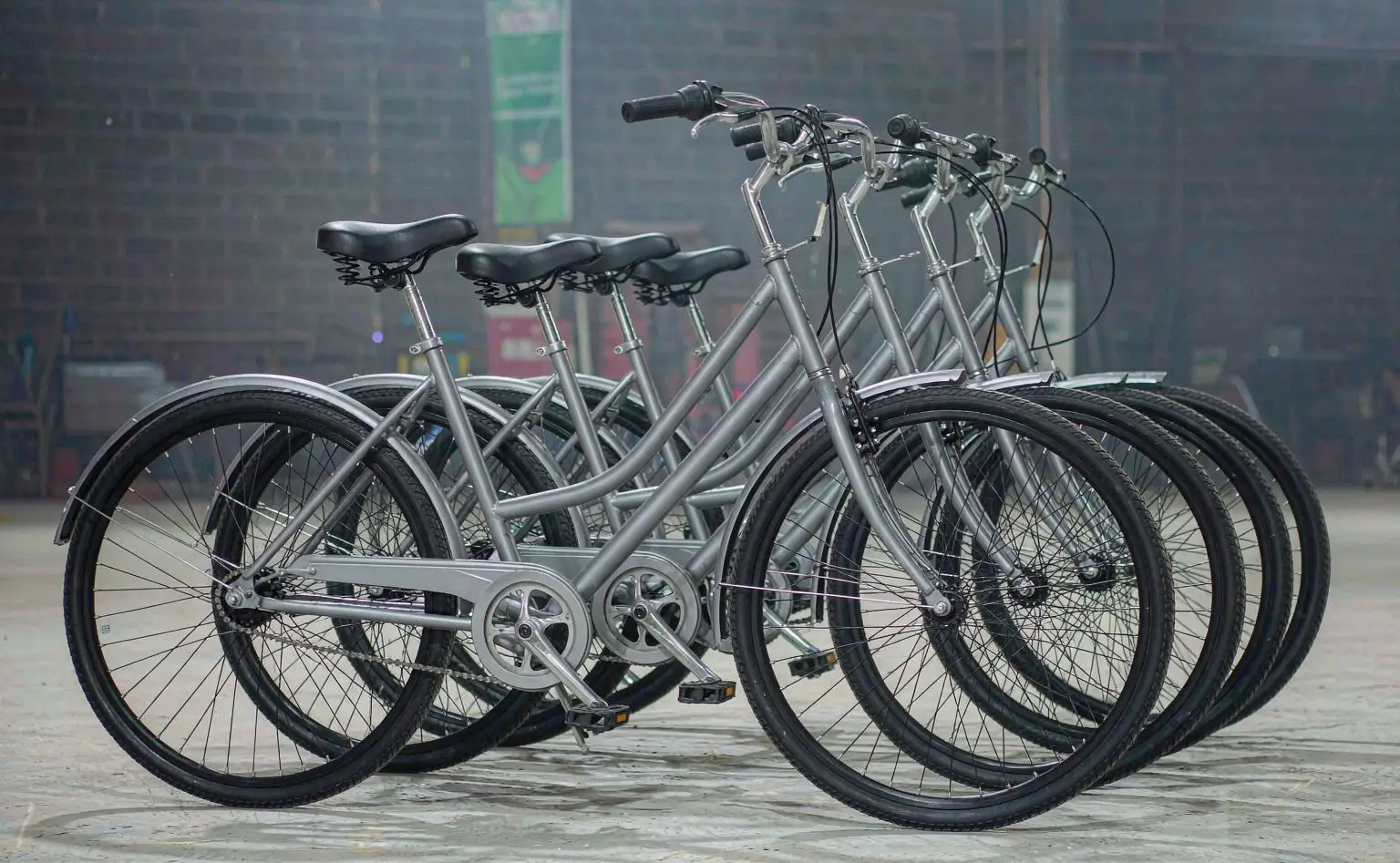
1. Mould starts in the saddle foam, the grips and the tyre compound
A bicycle splits into three material groups: frame, bars, chain and spokes are metal, and lamps and lenses do not take up water; saddles, grips and pedal overmoulds are foam and elastomer; tyres, inner tubes and brake rubber are rubber. Metal fails by rust, not by mould. The other two groups mould.
The saddle fails through open-cell foam. PU foam is open cell, so water entering at the stitch line travels through the cells; the surface dries in a day of sun while the core stays damp. The foam carries no antimicrobial of its own, so a batch made in the wet season and then held thirty to forty days at sea comes out with spots on the underside and around the stitch line that will not wipe off.
Tyres and grips fail through the compound. Rubber moulds mostly on bloom and release-agent residue at the surface; stacked sidewall against sidewall with no air between, a wet week is enough for a white film to form. Grips are TPR or foamed PU with a textured grip face where sweat and wash water collect, and they spot in the same way.
2. Foam parts and rubber parts are dosed separately
The table lines up the saddle foam, the grips, the tyres and the packing. Foam is dosed on total foam weight, rubber and elastomer on finished part weight, and the two percentages are not interchangeable.
| Part | Material | Product and level | Stage | Control point |
|---|---|---|---|---|
| Saddle | PU foam plus PVC skin | iHeir-FP 0.5%-1.5% of foam weight | Foam premix | Added like pigment, mixed through |
| Grips, pedal overmoulds | TPR, foamed PU | iHeir-JS117 0.5%-1.0% of part weight | Compound mixing | Pre-blend with a little compound |
| Tyres, inner tubes | Natural and synthetic rubber | iHeir-JS117 0.5%-1.0% of compound weight | Internal mixer or mill | Long enough mix, even dispersion |
| Frame and packing | Metal, carton | Rust protection per part, humidity control per carton | Assembly, packing | Air path in the container |
One boundary. An antimicrobial in the foam does not excuse the tyres, because tyre mould comes off the compound surface and the additive in the foam never reaches it. Nor do good compounds save a saddle whose stitch line holds water. Two stages, run separately, are what makes it whole-bike protection.
3. Saddle foam: the antimicrobial goes into the premix like pigment
Saddle foam takes iHeir-FP foam antimicrobial at 0.5%-1.5% of total foam weight. It is a clear liquid, stable from pH 1 to 11, rated up to 99.99% antibacterial, with an acute oral LD50 above 5000 mg/kg, supplied in 25kg drums.
Where it goes. Straight into the foam premix, added the same way as pigment: stir it into the polyol side first, then run the normal foaming process. Do not spray after foaming, because a spray sits on the skin while the open cells stay untreated; and do not pour it into the mould cavity, where the temperature is high and the residence time too short to disperse it evenly.
Three points. First, band the dose: 0.5%-0.8% covers a standard saddle, while export orders with high regrind content or long storage go to 1.0%-1.5%. Second, compatibility: run a trial first and check foam density and resilience, because a liquid addition at the top of the range can disturb the cell structure. Third, keep the water out: control the moisture in the polyol and colour paste, since an antimicrobial does not license running wet.
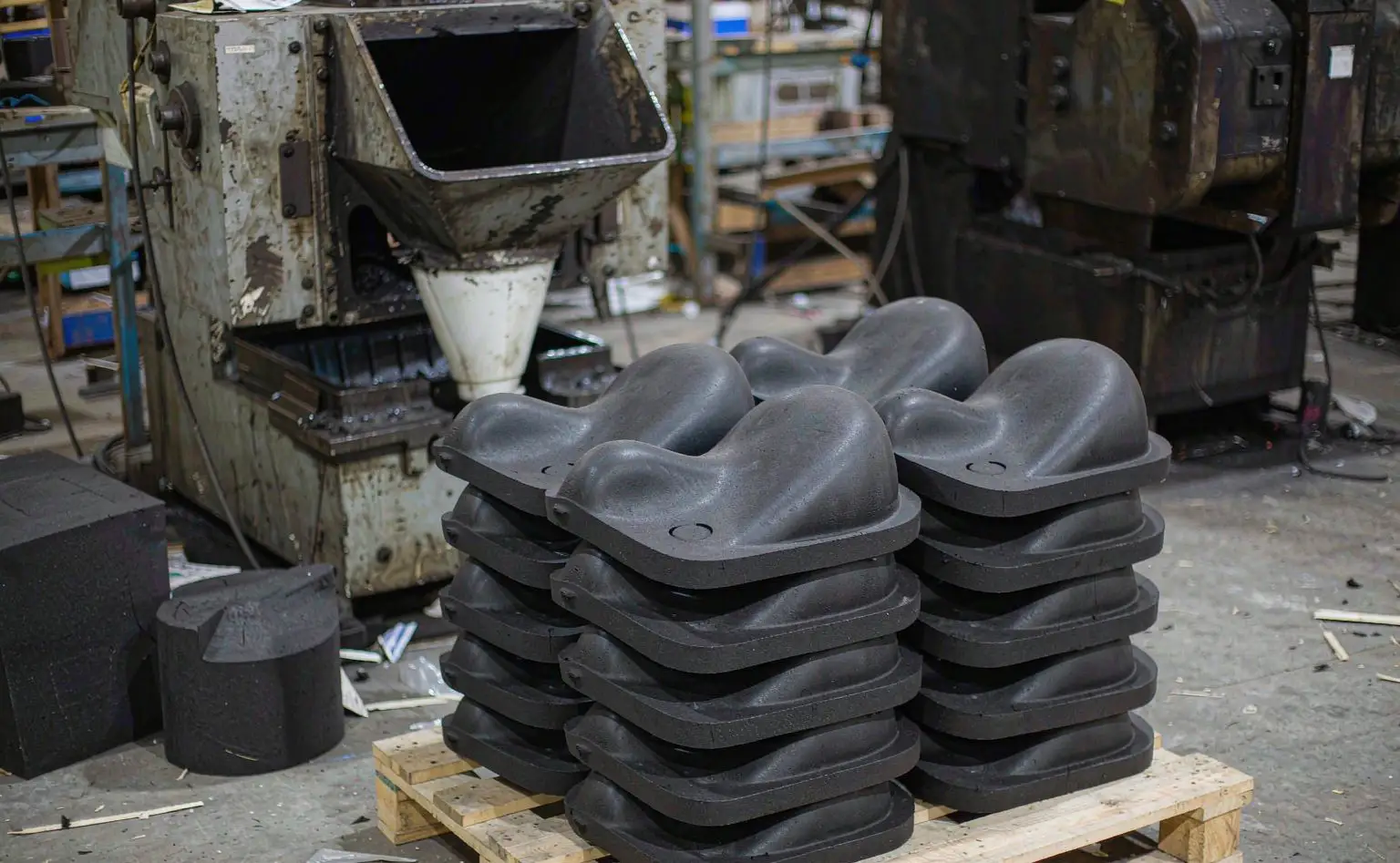
4. Tyres and grips: the powder goes in with the compound
Tyres, inner tubes and grip compounds take iHeir-JS117 plastic anti-mould powder at 0.5%-1.0% of finished part weight. It is a nitrogen heterocycle phenol-alcohol compound with more than 97% active matter, a white to pale yellow powder of 380 kg/m³ bulk density and 110μm mean particle size, insoluble in water, resistant to leaching and arsenic-free, in 25kg drums.
How to mix it. Add it in the internal mixer with carbon black and the other additives, or pre-blend it with a small amount of compound on the mill and then feed the strip. The particle size is not fine, so dusting it onto the compound surface tends to lump; a short mix leaves white specks, which show as patchy bloom after curing and leave the protection uneven.
Two cautions. First, temperature: the active matter holds up at normal rubber curing temperatures, but avoid long dry mixing at high temperature. Second, colour: trial pale sidewalls and coloured grips for shade before a production run. The wider selection route is in our rubber anti-mould formulation notes, and the foam route in dosing foam versus post-treatment.
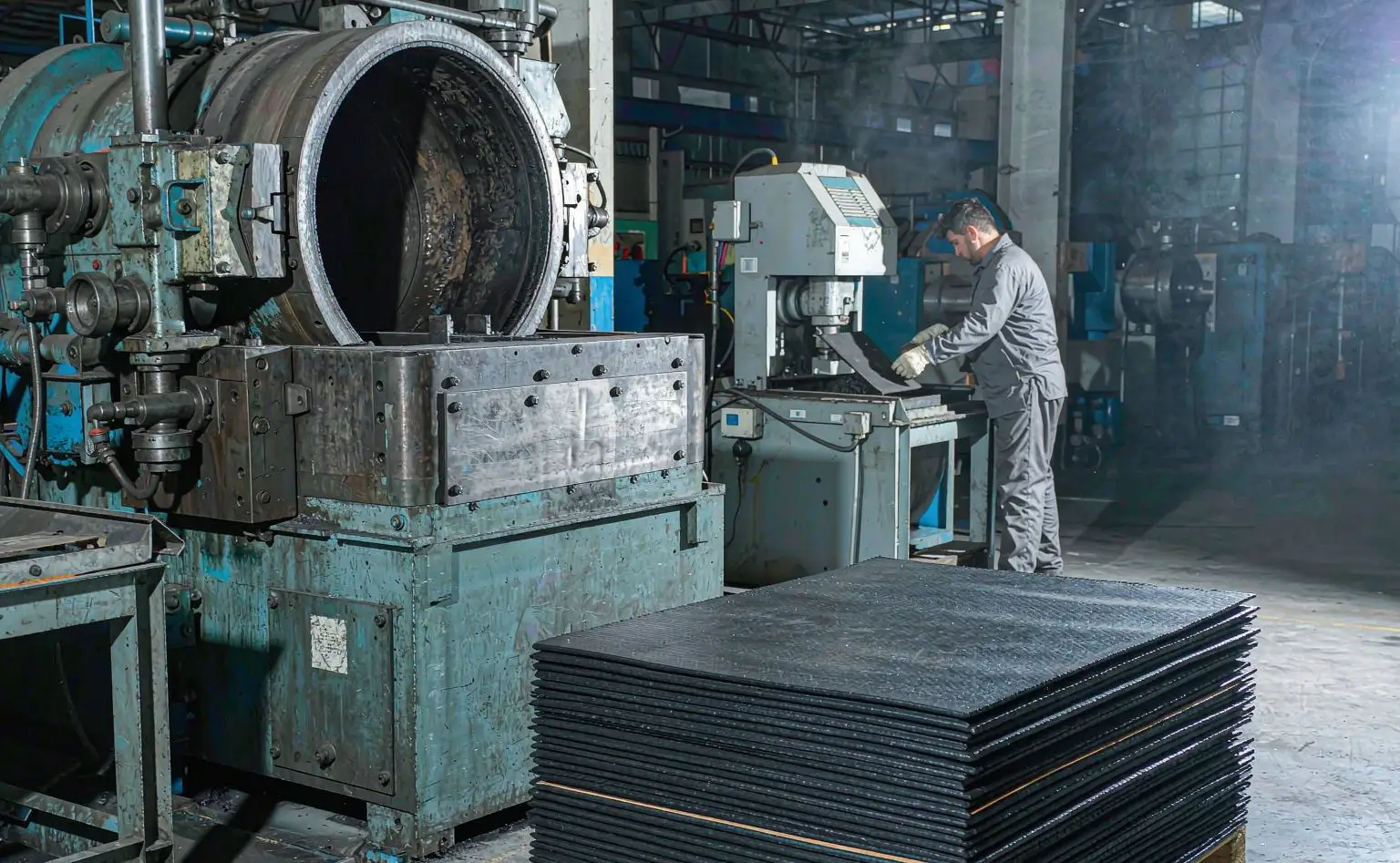
5. Assembly, packing and export
Risk at assembly is rain: bikes that come off the line and stand in the loading area collect water in the saddle underside and the grip texture, and bagging them wet seals that water in. Blow the saddle underside and the grip gaps dry with compressed air before bagging, and add a spot check on any batch that ships in rain.
At packing, bag the saddle, wrap the frame in bubble film or EPE, and put cartons on pallets 10cm off the floor and 10cm off the wall below 60% RH. Whole bikes usually ship in a full container, where condensation does more damage than shop humidity, so leave an air path and keep cartons off the wall; see preventing container rain.
Release at three levels: saddle foam to ISO 22196 or ASTM G21, sampling the underside and the stitch area; tyre and grip compound to ASTM G21 for 28 days; complete bikes for 30 days at 30℃/85% RH, unpacking to check saddle, grips and sidewalls.
6. Questions on skins, curing and bikes already spotted
Q: With the antimicrobial in the foam, does the PVC skin still need work?
Yes. The skin is a dense layer and mould sits in the stitch line and the embossed grooves, so dose the skin compound with JS117 at 0.5%-1.0% as well, or treat the back of the skin before stitching.
Q: Will the powder in the tyre compound affect curing or wear?
At 0.5%-1.0% the effect on cure and physical properties is small in a normal recipe. Sensitive recipes deserve a small trial batch, comparing the cure curve and hardness before fixing the band.
Q: The bikes in the warehouse have spotted. Can they still ship?
Split by part first. Light surface spotting on a saddle can be cleaned, dried and given a supplementary pass; mould inside the foam and heavy white bloom on sidewalls are better handled by replacing the part, because washing it off only hides it until the sea leg.
Four points to take away: dose the saddle foam with iHeir-FP at 0.5%-1.5% of foam weight in the premix, added like pigment and stirred into the polyol, going to 1.0%-1.5% on high-regrind or long-storage orders; dose tyres, tubes and grip compounds with iHeir-JS117 at 0.5%-1.0% of part weight in the mixer or on the mill, pre-blended to avoid lumps; blow the saddle underside and grip gaps dry before bagging and spot check rain-day batches; store below 60% RH and leave an air path in the container. A 1kg sample of each product can go out for a trial first; MOQ and lead time are on the iHeir-FP product page.


